
An angle-grinder bundle can make a retail offer clearer—or create a box of mismatched parts. A buyer choosing a private-label kit should begin with a defined first task, then select only accessories that work with the exact grinder, guard and instructions. More pieces do not necessarily make a better offer.
This guide shows how importers can build accessory bundles for different customer segments, compare the cost of complexity and prepare a pack-out checklist. It concentrates on practical procurement decisions, not a universal list of “best” discs.
Choose one primary customer job
The first question is what the customer intends to do when opening the box. Cutting steel tube, removing a weld, trimming tile and preparing concrete are distinct jobs. Each may call for a different accessory, guard or extraction arrangement. A kit marketed for everything can become inaccurate if the included items only support one use.
Write a short job statement for the SKU: “occasional metal cutting in a home workshop” or “fabrication-site weld clean-up,” for example. Then list the minimum tool, accessory and protective information required for that job. Ask the sales channel whether customers already buy their preferred consumables. A professional customer may prefer a bare grinder; an entry-level retail customer may value a clearly labelled starter disc.
Do not infer customer demand from a competitor's large box photo alone. Consider how retailers explain the kit, how replacement consumables will be stocked and whether the added accessories raise shipping volume without adding useful value.
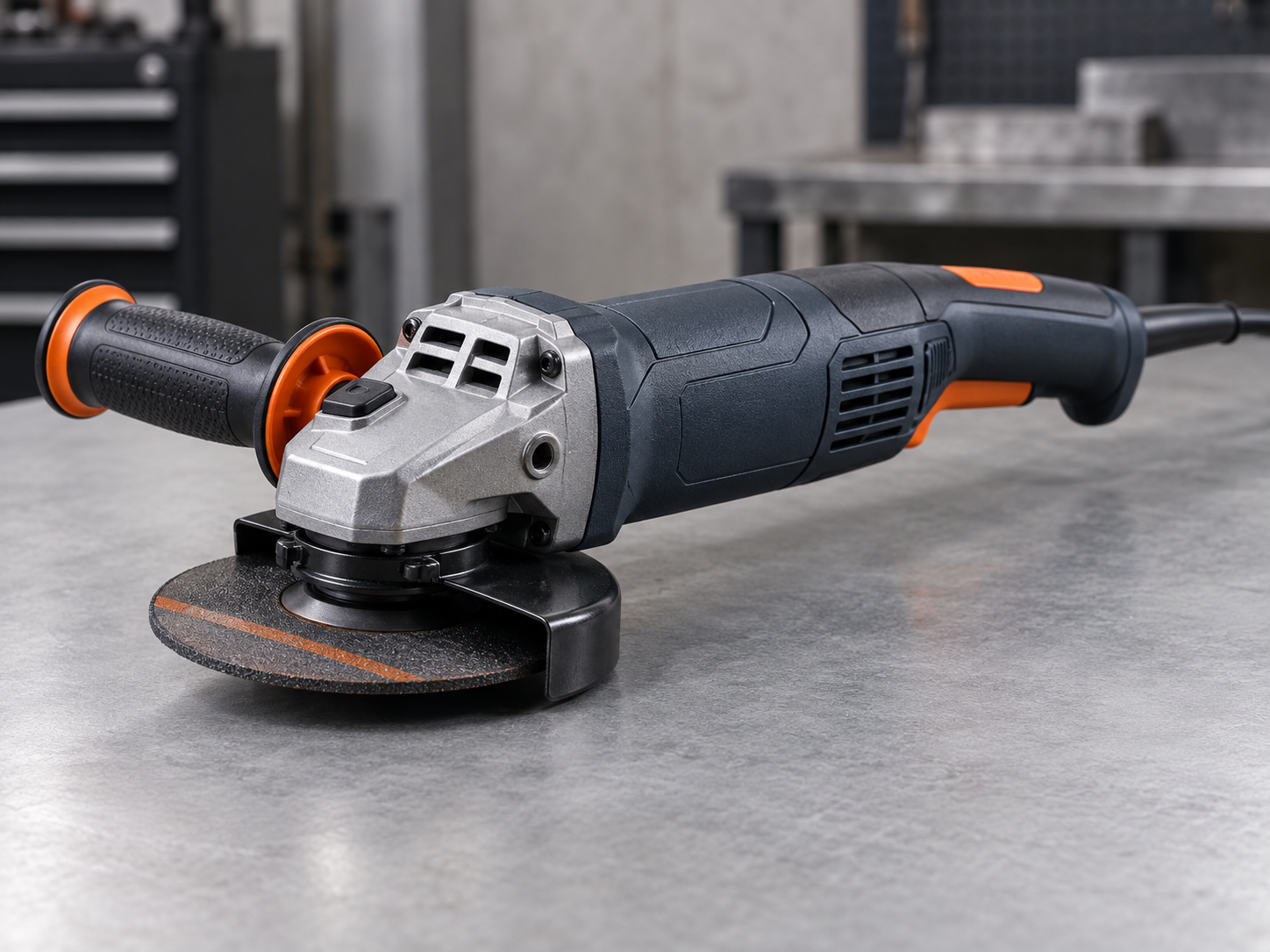
Caption: Bundle contents should follow a defined customer application, not simply fill the carton.
Keep cutting, grinding and finishing distinct
A cut-off wheel is used for edge cutting according to its maker's instructions. A grinding wheel or flap disc serves a different contact pattern. The cutting-versus-grinding guide explains why similar diameters do not make accessories interchangeable. 3M's cut-off wheel product guidance also warns against using its cut-off wheel for grinding; apply the instructions of the actual wheel packed in your kit.
For each proposed disc, record the maker, SKU, diameter, bore, maximum operating speed, intended material and operation. Verify it against the approved grinder's maximum spindle speed and mounting system. The wheel-RPM compatibility guide provides a buyer checklist. Never substitute a lower-rated wheel because it is cheaper or looks similar on the shelf.
Think about the guard. A bundle that includes both cutting and grinding accessories must have the appropriate guarding arrangements and instructions for the intended uses. If the user needs a second guard or adapter that is not packed, the apparent value of the bundle is misleading. Decide whether the two-task kit is truly simpler than two application-specific SKUs.
Compare three realistic bundle levels
A bare-tool package may include the grinder, its specified guard, auxiliary handle, mounting hardware, wrench where required and manual. It can suit customers who select their own accessories, but the listing should make “wheel not included” conspicuous.
A starter kit adds one approved accessory for one defined task. This can make a retailer's offer straightforward: the customer understands the first application, while replacement accessories are offered separately. Include a correct, specific product photo and a box-contents list.
A multi-application kit adds several accessories and perhaps additional guards, adapters or storage. It can reduce the customer's first-purchase friction, but the buyer must validate every combination. The bill of materials, carton dimensions, packing check and after-sales support become more complex. Cost each component and its inspection work, not just the quoted factory price.
Validate the complete package
Ask the supplier for a physical pack-out sample. Open it in the order a customer would. Are the discs identified and protected? Are the guard and handle easy to locate? Does the manual name the exact supplied accessories and warn against misuse? Is the wheel rating legible? Are any optional accessories shown on the carton as if included?
OSHA's abrasive-wheel requirements illustrate why guarding and speed compatibility must not be treated as decorative details. Legal requirements vary by country; the importer should arrange an appropriate destination-market compliance review. A brief factory demonstration cannot establish compliance on its own.
At sample approval, photograph every component laid out with its model or part identifier. During shipment inspection, compare sampled cartons with the approved layout and bill of materials. Pay special attention to discs because close-looking consumables can be mixed in packing. A pack-out error changes the customer's actual product, even when the motorised tool is correct.
Mid-article sourcing CTA: Deciding between a bare tool and a starter kit? Send your channel, first-use task and target price position to discuss a sample configuration.
Plan replacement sales and support
The included consumable will wear out. Retailers need a clear path to a suitable replacement, with model-specific limitations. A replacement chart can show compatible size and accessory type, but should be version-controlled and supported by real product information. Avoid universal claims based only on the word “angle grinder.”
Also plan spare handles, guards, flanges and wrenches as applicable. These items are easy to overlook in a bundle quote yet can determine whether a customer can use or service the tool later. The power-tool spare-parts planning guide covers the wider importer workflow.
Consider whether replacement consumables are profitable or practical for your channel. If the retailer will not stock them, the product page should still state the specification a customer needs to source an appropriate item elsewhere. Do not tie support to a proprietary accessory if none has been validated or available.
Avoid bundle claims that create returns
State box contents item by item. Distinguish included from recommended accessories and from items used only in lifestyle photography. If a photo shows a dust shroud and vacuum for concrete work, but the carton does not contain them, label the arrangement clearly. Likewise, do not claim a grinder is “ready for tile cutting” if a suitable wheel and instructions are absent.
When changing the bundle for a promotion, issue a new SKU or clearly version the contents. The e-commerce listing, sales sheet, carton artwork and warehouse pick list must all match. Many apparent product-quality complaints begin as mismatches between what the customer expected and what was packed.
The ToolViron angle-grinder range can support the initial model conversation, but the approved bundle should have its own specification sheet.
Cost the bundle beyond the unit price
An accessory bundle adds procurement lines, incoming checks, pack-out labour, carton space, translation work and possible after-sales stock. Request a costed bill of materials that identifies every disc, guard, flange, wrench and printed insert. Compare the total landed package with a bare-tool offer plus separately sold consumables. A cheaper ex-factory kit is not necessarily cheaper to support.
Look at the channel's replenishment pattern. If retailers sell replacement discs frequently, a starter wheel can introduce the accessory range. If the channel has no plan to stock compatible discs, a large introductory bundle may postpone rather than solve a customer problem. Ask the sales team how customers will replace the first consumable when it wears out.
Packaging design should protect fragile accessories and keep markings legible. A disc pressed against the grinder housing during transit can arrive damaged even when the outer carton appears fine. Use a shipment sample and a suitable transport test plan for the actual carton. Do not assume that a display-box mock-up is equivalent to a production pallet.
Create a change-control rule for promotions
Retail promotions often add “one free disc.” Before approving one, ask whether the disc has been checked for speed, mounting, guard and intended use on the tool. Include it in the revised bill of materials and pack-out photo. Update the product listing with a new bundle identifier or dated variant. A temporary promotion should not create a permanent compatibility ambiguity.
If an accessory supplier changes, maintain a sample and documentation for both old and new versions. Customer service should know which batch received which item and what replacements are approved. A disc that looks almost the same can have a different rated speed or intended material. The importer should not present it as identical without review.
Finally, ask whether the bundle is easy for a first-time customer to understand. A kit with several unlabeled wheels can appear generous yet require expert interpretation. A smaller kit with clear descriptions, actual replacement part numbers and a coherent manual may produce better customer outcomes and fewer avoidable returns.
Build a channel-specific bundle matrix
One kit does not have to serve every retailer. Prepare a simple matrix with customer segment, first task, tool model, included wheel, guard, handle, case and replacement accessory path. A general hardware store may want a clearly labelled starter configuration. A metal-fabrication dealer may prefer a bare tool and its own range of specialised wheels. A contractor channel may value a case and spare consumables but demand stricter part identification.
Compare the matrix with actual sales data or customer interviews where available. Do not add a ceramic cutting wheel merely because a competitor includes one if your customer base mainly works in metal. Equally, do not remove a required guard to hit a price target. The first-task statement should remain the filter for every proposed accessory.
If the buyer launches several variants, keep them separate in the warehouse and online catalogue. A “bare tool” picture on a starter-kit page creates under-selling; a fully accessorised image on a bare-tool page creates misleading expectations. Use different SKUs, pack-out photos and clear included-versus-optional labels.
Use a pilot order to check assumptions
A small first shipment can help validate which bundle sells, but the safety and compatibility checks must be complete before the pilot. Track what customers ask at the point of sale: do they understand the included wheel, do they need another guard, do they ask for replacement discs? These observations inform the next assortment decision.
Collect pack-out errors separately from product failures. A missing flange or wrong disc can look like a poor-quality grinder complaint, but the corrective action is different. Photograph the customer-received contents and compare them with the approved kit. If the error repeats, review the packing line and inspection method.
At the end of the pilot, compare actual margin after returns, accessory sales and service cost—not just the initial gross margin. A kit that appears more valuable because it contains many items may cost more to explain and support than a focused starter offer.
Final buyer sign-off checklist
Before release, ask four people to sign off the same physical kit. Product management confirms the intended customer task and that every image shows the correct contents. Technical quality checks wheel type, speed rating, guard, mounting hardware and sample-test record. Logistics confirms carton protection and pack-out identifiers. Customer support confirms it can answer replacement-disc and missing-part questions from the model code.
The sign-off should include photographs of the open carton and every item laid out, with part numbers visible where practical. If the supplier changes a disc or guard after that approval, the sign-off no longer describes the kit. Require a short change notice and a new review. This is not bureaucratic overhead; it is the simplest way to prevent a well-designed retail bundle from becoming an inconsistent shipment.
For translated markets, also check the names of cutting and grinding accessories in every language. A translated product page may accidentally call a cut-off wheel a grinding wheel, changing what customers expect. Resolve the terminology before printing labels or sending marketplace data. A focused kit is only useful when its purpose is communicated consistently.
A buyer's decision after the pilot
Once a pilot order has sold through, review which items customers used and replaced, which accessories stayed unused, and which questions retailers could not answer. A starter disc that consistently drives replacement sales may justify keeping it. An extra accessory that causes confusion or is incompatible with customers' main task may be better sold separately with clearer information.
Check whether any returns were caused by missing pack-out items rather than motor or gearbox faults. If so, revise the packing process and carton illustration before changing the tool design. Keep the approved sample photo at the packing station and include the small components—flanges, wrench and handle—in inspection criteria.
For the next order, issue a new bundle revision if contents change. Preserve the earlier bill of materials for customer service. This gives the retailer a stable answer when an owner asks what wheel originally came with a specific kit.
Frequently asked questions
Should every grinder kit include a cutting disc?
No. Include it only if cutting is the defined first task and the exact wheel, guard and mounting arrangement have been approved. Professional buyers may prefer a bare tool.
Can one kit include cutting and grinding wheels?
It may, but each intended use needs a compatible tool–accessory–guard configuration and clear instructions. Validate both rather than assuming that equal wheel diameter is enough.
How many accessories are ideal for a private-label kit?
There is no universal number. Choose the smallest set that supports the intended customer job and can be inspected, replaced and explained accurately.
What should shipment inspection check?
Compare the actual box contents, wheel markings, guard, handle, manual and artwork with the approved sample and bill of materials. Record any substitutions.
Conclusion
The strongest grinder bundle is the one that makes a real first task easier without obscuring compatibility or safety. Define the user, validate every supplied accessory and keep pack-out records aligned with marketing. An extra disc is not value if it creates uncertainty about use.
End-of-article CTA: Request a ToolViron grinder kit quotation or catalogue. Share your target customer, primary application and intended box contents so the sample review starts with the right configuration.
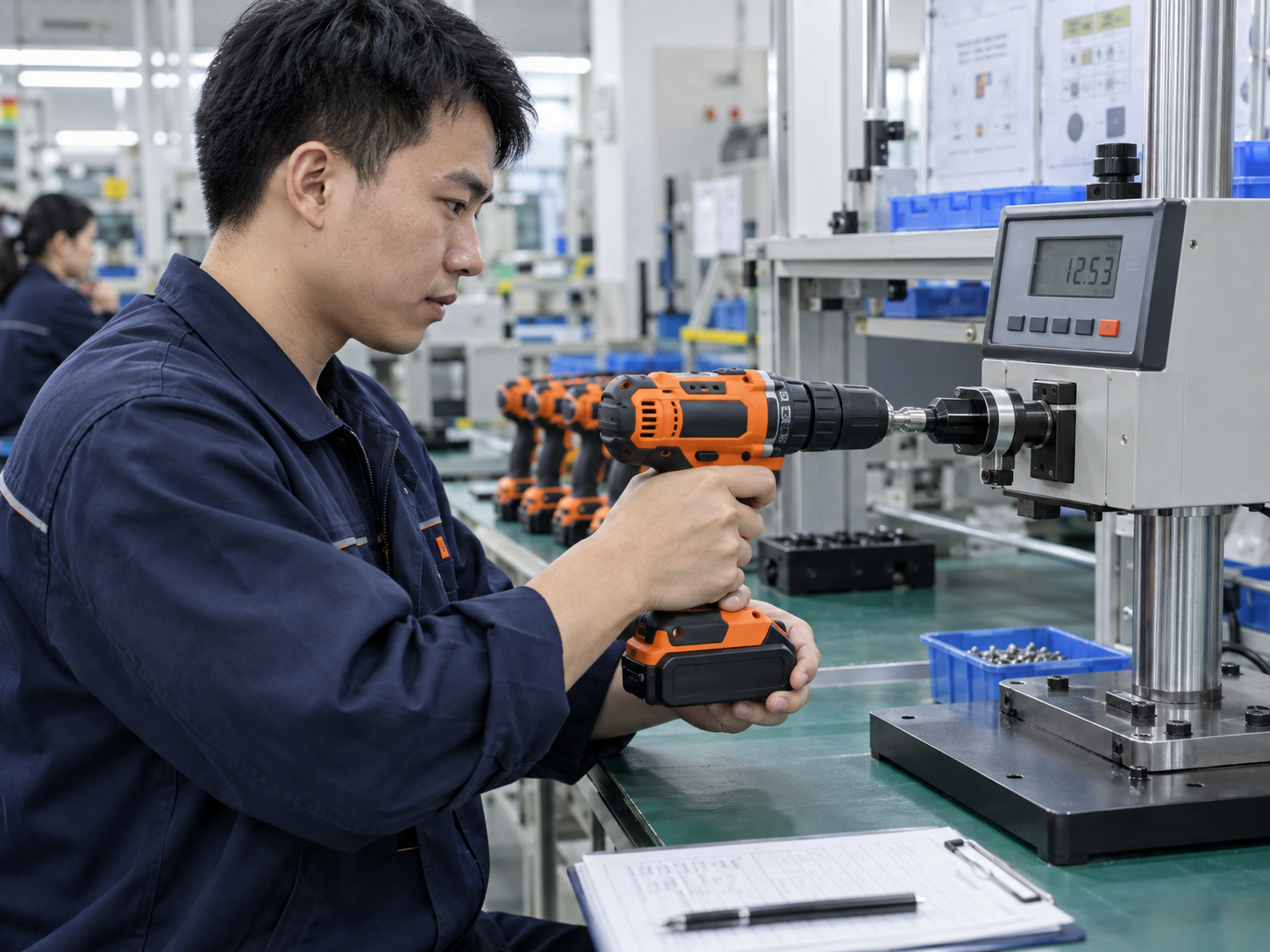
Caption: Pack-out checks should compare each accessory and document against the approved bundle.
Images illustrate product and inspection topics; they are not documentary evidence of a specific ToolViron test or customer project. Confirm the exact model and market requirements before ordering.