
A brushed angle grinder can be a sound choice for a distributor, but the purchase decision should include what happens when a customer asks for service. Carbon brushes are wear components in many brushed motor designs, yet “brushes are replaceable” is not a complete after-sales plan. The part must match the model, qualified personnel must have an approved service route, and a loss of power must be diagnosed rather than automatically attributed to brush wear.
This article is about range and service design, not a repair tutorial. Unplug or isolate a tool before any authorized inspection and follow the exact manufacturer's manual. Some designs require service-center work. Bosch Professional's model-specific spare-parts list illustrates why brush sets are identified by tool model and part number; a visually similar brush is not automatically interchangeable.
Decide what “serviceable” means for the market
A buyer should first define the selling channel and warranty promise. Will repairs be handled by a distributor workshop, an authorized third party or replacement of the complete tool? Is the buyer expected to stock brushes locally? How long will spare parts be supported after a model is discontinued? These decisions affect pricing, spare inventory and customer expectations before the first shipment leaves the factory.
Not every grinder is brushed. Some current models use brushless motors and have a different service profile. Do not write a brush-maintenance page into the carton of a brushless product. Even within a brushed family, revisions can change the brush holder or part dimensions. Use the approved model and serial or revision range to identify a spare.
The general power-tool spare-parts service guide covers wider stocking strategy. This article focuses on one common grinder wear component and the fault-triage boundary around it.
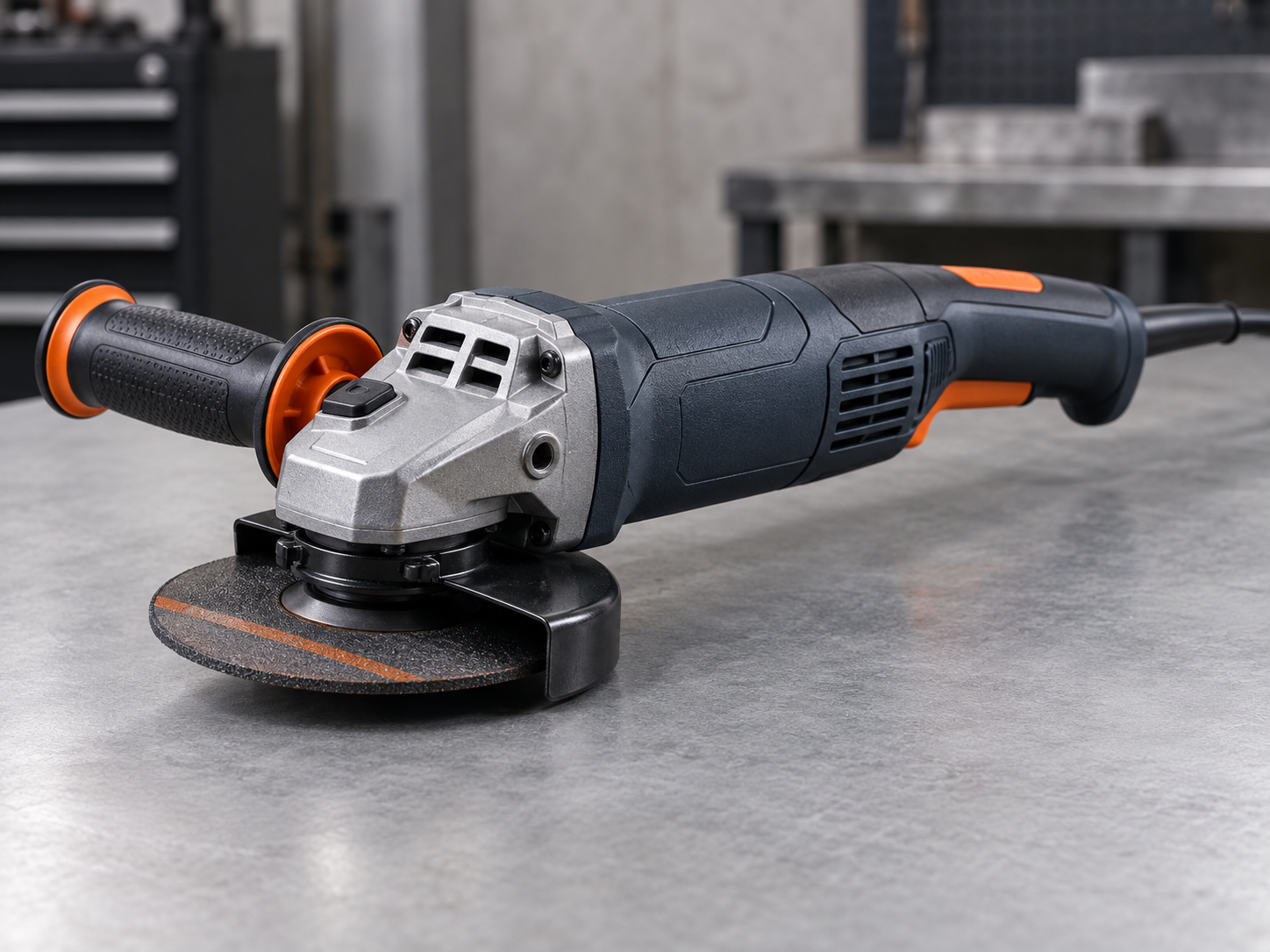
Caption: The service plan should identify the exact model and compatible brush set.
Build a controlled spare-parts record
Ask the factory for a spare-parts list tied to the saleable model revision. For a brush set, the record should include part number, quantity per tool, identification image, packaging, order unit, revision compatibility and any replacement instructions meant for qualified service. Record the supplier's expected availability and lead time, but do not publish a support promise that has not been contractually agreed.
Keep the part record connected to the grinder's serial or batch coding. If a motor or holder changes during production, the service team must know which units accept which brush set. A generic online listing that says “fits 100–125 mm angle grinders” is risky; disc size is unrelated to brush dimensions or electrical fit.
Stock a modest, evidence-based quantity initially. Forecast from installed base, expected duty, warranty experience and local repair strategy, not from an arbitrary percentage of the first order. Revisit the quantity as actual claims emerge. Over-ordering spares for a model that later changes can tie up cash and create incorrect substitutions.
Distinguish brush wear from other symptoms
Intermittent operation, loss of power or unusual sparking can have several causes. They may involve switch, cable, connections, motor components, dust contamination or brush wear, depending on the design. A service intake form should capture model, age, operating pattern, accessory used, visible damage and the customer's description. Do not tell a customer to open the grinder or run it with its housing removed.
Qualified service staff should follow a diagnostic sequence from the maker, not replace brushes as a default cure. If a unit has abnormal noise, overheating or a damaged cable, the issue may require a different repair or removal from service. Replacing the wear component without investigating the system can make a serious fault less visible and create a repeat return.
For returned tools, record whether the symptoms occur only under load and whether the accessory or power supply is involved. A grinder that stalls on an unsuitable wheel may be experiencing an application problem, not a motor wear problem. The service team should check the approved disc, guard and operating conditions while maintaining safe electrical boundaries.
Agree who is allowed to perform the work
A manufacturer may permit user-accessible brush replacement on one design and require an authorized service center on another. The distributor's instructions must follow that distinction. Even when access caps exist, the process can involve electrical and mechanical hazards; local warranty and regulatory obligations also matter. Do not promise “easy DIY replacement” merely because a cap is visible.
Train the service network to use identical approved parts and to document the unit identity, work performed and post-service checks. If a repair changes the tool's safety-critical condition, the qualified service procedure should define how it is verified before return. Keep discarded parts or photographs where they help confirm wear and the original complaint.
Provide a customer-facing route: whom to contact, what purchase and model information to supply, and whether the tool should be shipped with its accessory removed under the service instructions. A clear route reduces unsafe improvisation and makes warranty decisions more consistent.
Evaluate serviceability during sample approval
The product team can ask an authorized technician to review access, part identification, likely service time and whether the manual is clear. That review is separate from a customer demonstration. A grinder that is inexpensive to buy but expensive or impossible to support may be a poor fit for a professional channel.
Compare brushed and brushless alternatives as whole programmes. A brushless model may reduce brush-related maintenance but have a different purchase cost, electronics service profile and spare-parts requirement. The correct choice depends on the user, duty and channel; “brushless” should not be presented as “maintenance-free.” The corded versus cordless grinder article adds the power-platform dimension.
Ask whether the tool contains a visible wear indication or manufacturer-defined replacement criterion. Do not invent a universal brush length or replacement interval. Those values, if relevant, must come from the exact design documentation. A service training card can summarize the approved instructions but should not replace the full manual.
Mid-article sourcing CTA: Planning a brushed grinder range? Send the model, intended channel and warranty service approach for a spare-parts and sample review.
Keep production and service revisions aligned
An approved grinder sample might use one motor assembly while a later production run uses another. If the change affects brush compatibility, the after-sales stock must be updated before shipment. A supplier change notice should identify old and new part numbers, affected serial range, interchangeability and any instructions or training changes. The supplier change-control article explains the wider approval process.
At shipment inspection, verify that the tool model, manual revision and serial or lot code match the support file. Counting spare brushes inside a factory box is not enough. The regional service partner must be able to identify the right part when a unit returns months later.
If the importer markets the grinder under its own brand, ensure the service contact and warranty wording reflect the actual arrangement. An OEM supplier cannot operate a local service network by implication. Clarify which party pays for diagnosis, parts, freight and repeat repair under the commercial agreement.
Use return data to improve the product
Classify returns by symptom and confirmed cause. Track brush wear separately from switch failures, cable damage, gear issues, accessory misuse and “no fault found.” Relate the counts to units sold and operating age. A high number of brush replacements might reflect heavy duty or long life rather than a defect; premature wear on new units may indicate a process or component issue. Context matters.
When a pattern appears, retain representative returned parts and request a factory investigation. Ask whether a component change, assembly issue or application mismatch contributed. The corrective action should have an owner and verification step. Replacing brushes on every returned unit may hide the underlying cause.
Make the data useful to the sales team too. If customers routinely use a light-duty grinder for sustained industrial tasks, the product may be positioned incorrectly. A range change or clearer duty guidance could be more effective than an expanded brush inventory.
Model the full service cost
A brush set may be inexpensive while diagnosis, labor, freight and repeat repair dominate the cost. Compare at least three routes: authorized local repair, regional exchange and whole-tool replacement. The best choice depends on selling price, user expectations, availability of trained technicians and legal obligations. A trade customer may value rapid turnaround more than the cheapest part; a low-cost retail channel may prefer replacement over lengthy service.
Ask the supplier to quote the brush set separately from the tool and to state lead time, minimum order and revision support. Add local freight and labor before calling a design “easy to service.” If a service partner needs a specialized fixture or a post-repair electrical check, include that capacity in the plan. A parts list alone is not a functioning service network.
Do not use warranty economics to deny a valid customer claim. The cost model is for product design and service planning; customer rights must be honored under the relevant market rules.
Identify the right part after a model change
Consider a grinder sold under one retail name but produced with two motor revisions. The service technician may see the same housing and disc size on both, yet the brush holder differs. The importer should keep a serial-range lookup and photographic part comparison. If the supplier says the new brush is backward-compatible, obtain written confirmation and verify it in a controlled service review.
At purchase, mark spare packs with the model and revision range; do not rely on loose unlabeled components in a drawer. At service intake, record the tool identifier before ordering a part. A wrong brush that appears to fit can cause damage or repeated failure, so compatibility must be a controlled technical claim.
When the model is discontinued, agree a last-buy or successor-part plan. Inform the service network before the old stock disappears. A discontinued spare without notice can turn an otherwise repairable grinder into a customer dispute.
Use return evidence to set priorities
A distributor can review a quarterly cohort: units sold by model, age at return, confirmed brush wear, other motor faults and no-fault cases. If brush cases are rare, stocking more sets may not improve service. If one revision shows early wear, ask the supplier for component and process evidence rather than ordering a larger inventory to compensate.
The review should include what happened after repair. Did the same tool return again? Was another part actually the cause? A successful brush replacement that lasts only days is a warning that diagnosis or a related motor component may be wrong. Keep this feedback in the product file and use it when choosing the next grinder platform.
Make the customer promise testable
If marketing says spare brushes are available, a customer should be able to find the right part and a qualified repair route in the destination market. Test that journey: give a service agent the retail model and serial range, ask them to identify the part, price and lead time, then confirm the local technician can perform the approved procedure. A part number buried in a factory spreadsheet is not the same as after-sales availability.
Write any warranty statement around the actual support arrangement. If the importer offers tool exchange rather than local brush replacement, say that clearly. If professional users need rapid service, agree response and stock expectations with the repair partner before claiming minimal downtime. Honest service information can be a stronger selling point than a vague “easy maintenance” badge.
After a service partner replaces brushes on a training unit, ask them to document the actual steps, tools, part identification and post-service checks permitted by the manufacturer's procedure. That exercise can expose a supposedly serviceable model whose housing, wiring or spare-part access is impractical for the target market. Record any distinction between warranty repair and paid maintenance so retailers give consistent advice.
Frequently asked questions
Are carbon brushes universal across angle grinders?
No. Brush dimensions, lead arrangement, holder design and motor specification are model-specific. Use the exact approved spare part and confirm revision compatibility.
Does loss of power always mean the brushes are worn?
No. Switch, cable, power supply, motor or application issues can produce similar symptoms. A qualified service diagnosis should establish the cause before parts are replaced.
Should customers replace brushes themselves?
Only if the exact product manual permits it and local conditions support it. Otherwise direct them to a qualified or authorized service route. A visible access cap is not permission to bypass the maker's instructions.
How many brush sets should an importer stock?
Base the initial quantity on installed base, duty, service strategy and supplier lead time, then adjust using actual return data. There is no useful universal percentage for every grinder programme.
Conclusion
Brush serviceability is a commercial system, not a feature tick box. A distributor needs exact part identity, revision control, qualified diagnosis, a customer route and feedback from returns. That plan makes a brushed grinder easier to support without making unsafe repair promises.
Send your requirements
Share your grinder model, expected order, destination market and after-sales approach. ToolViron can discuss the spare-part and documentation questions to settle before production. Send your requirements to begin.
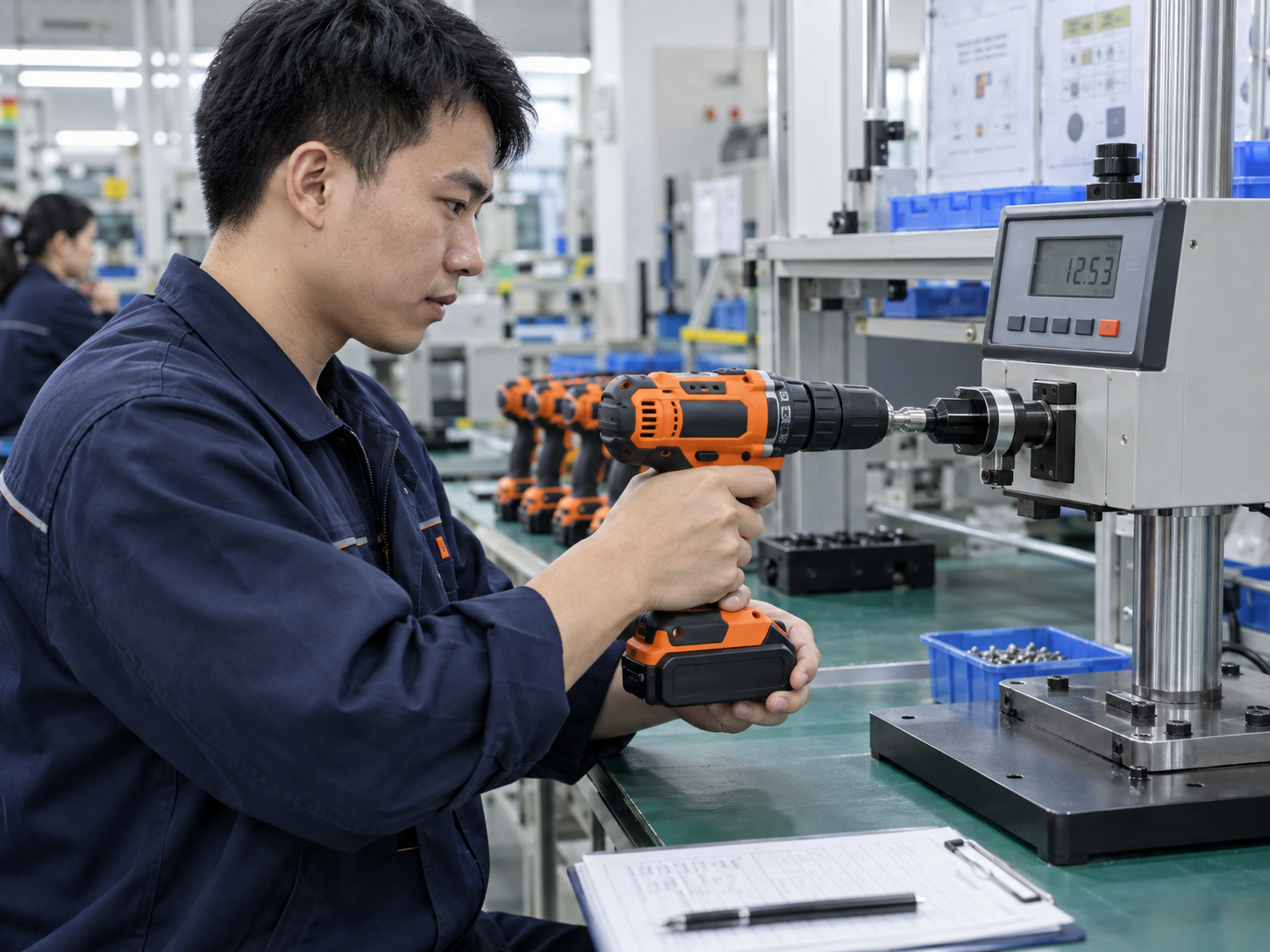
Caption: Part and model records connect production decisions to future service.
Images illustrate product and inspection topics; they are not documentary evidence of a specific ToolViron test or customer project. Confirm the exact model and market requirements before ordering.