
Two angle grinders can look similar on a shelf and feel very different in use. A buyer may attribute the difference to the motor when the wheel, workpiece, grip or maintenance condition is the real cause. Vibration is therefore a useful evaluation topic, but it is easy to turn an uncontrolled demonstration into a misleading “low-vibration” claim. The defensible approach is to compare production-intent samples under documented, representative tasks and keep the result separate from workplace exposure assessment.
NIOSH has long identified vibrating hand tools as a contributor to hand-arm vibration risk and advises attention to tool design, maintenance and work practices; its vibration guidance is a useful starting point for occupational context. A distributor's product comparison cannot establish a safe exposure duration for every user. Employers and operators must apply the applicable rules and the tool's instructions in their own work setting.
Define which vibration question the buyer is asking
There are at least three different questions: does one grinder feel smoother in a defined task, does a declared vibration value meet a specification, and what exposure might a worker receive during a shift? They require different evidence. A brief hands-on sample can inform handling. A declared value needs a standard test method and model identity. An exposure assessment considers actual tasks, duration and controls. Treating the first as proof of the third is a serious category error.
For product selection, specify the disc diameter, wheel type, workpiece and operation. Grinding a weld, cutting a tube and surface finishing with a flap disc do not impose the same load or contact pattern. The buyer should also define whether the target customer uses the tool intermittently or for repeated sessions. A brief DIY task and sustained fabrication work have different handling priorities.
Ask for the exact model's instruction manual and any declared vibration information. Confirm the accessory and operating mode to which a declaration applies. Do not compare figures from unlike methods or different generations as if they were a head-to-head test. If the supplier has no comparable declaration, use a bounded sample evaluation and avoid absolute marketing language.
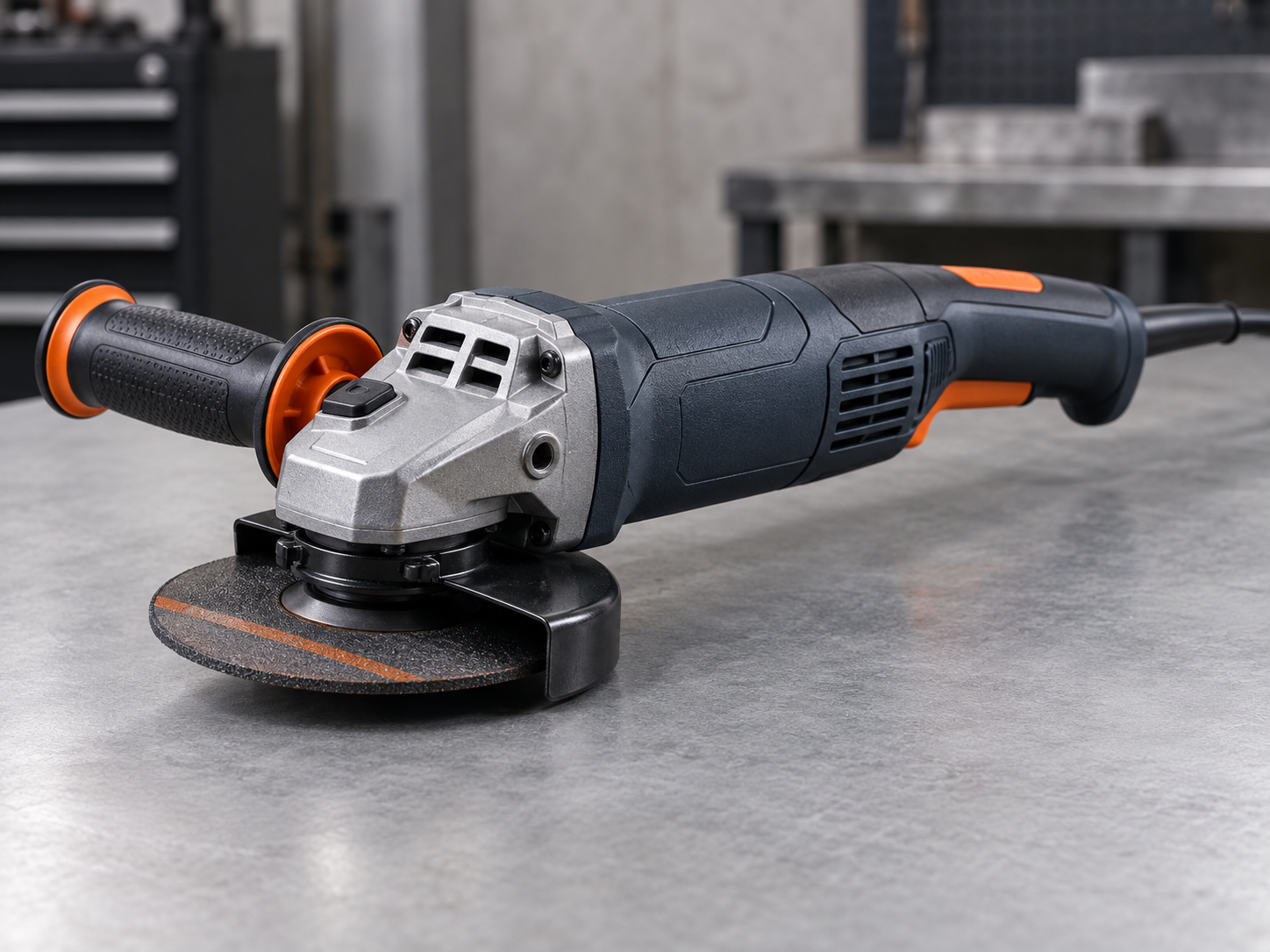
Caption: A fair vibration comparison requires matched wheels and a stated workpiece.
Control the accessory and machine condition
Wheel balance and condition matter. Inspect each wheel for damage and compatibility before mounting according to the grinder and abrasive maker's instructions. Use the correct guard and handle. A chipped, unevenly worn or poorly mounted accessory can change vibration and present a separate safety hazard. OSHA's portable grinder rule addresses wheel inspection, operating-speed compatibility and guarding in U.S. workplaces.
Compare new or similarly conditioned wheels of the same relevant specification. If grinder A uses a premium new wheel and grinder B uses an old wheel from a demonstration bench, the result tells you little about the grinders. Note flange, arbor and wheel-bore fit; a mismatch can cause apparent roughness or more serious problems. The existing arbor and flange fit checklist addresses that mounting system in more detail.
Inspect the tool itself: guard secure, side handle tight, spindle play absent within the maker's limits, ventilation clear, switch operation normal and no unusual noise at no load. A damaged sample should not be used to characterize a product family. Record the serial or lot identification of every tested unit. If vibration appears only on one sample, the cause may be an individual defect rather than the design.
Plan the application test
Use a safe, controlled work area with trained operators, secured workpieces and PPE selected for the task. Define the same steel grade or other substrate, wheel condition, contact area and number of passes for both tools. One operator can run paired samples in a randomized order where practical, then another trained operator can repeat a smaller subset to see whether the handling impression is robust.
Record work duration, pause points, tool speed setting if relevant, disc condition before and after, surface finish and any interruptions. Avoid instructing an operator to apply a fixed force by guesswork; a defined task outcome, such as removing a marked weld area, is more reproducible than “press hard for one minute.” If the product has an anti-vibration handle, compare the saleable configuration, not a stripped tool body without its supplied part.
The handling record should distinguish an impression from a measurement. “Operator A perceived more vibration during this cut” is an observation. A numerical acceleration value requires suitable equipment, calibration, method and qualified analysis. Do not label a phone app reading as an engineering vibration declaration. If a customer needs exposure data, involve a competent occupational specialist.
Compare the total working result
A grinder that feels smoother but removes material much more slowly may not be the best tool for the intended job. Another may cut rapidly but be heavier or less comfortable during sustained work. Record task time, material outcome, wheel consumption, grip comfort and any overheating or switch difficulty alongside vibration observations. The aim is a balanced product choice, not a single “lowest vibration wins” chart.
Consider maintenance. NIOSH notes that uneven wear or alignment can increase vibration transmitted to a user's hand. A service plan that keeps wheels, bearings and handles in good condition may matter as much as an initial showroom impression. A distributor should explain replacement accessories and maintenance routes without promising that users can repair internal parts without qualified service.
Look at the user population. A small-hand user, a gloved user and a worker in an awkward position may judge the handle differently. A sample panel does not need to be large to reveal an obvious reach problem, but it should be diverse enough to avoid equating one engineer's preference with every customer's experience.
Mid-article sourcing CTA: Comparing grinder samples for a trade range? Send the disc type, material and expected work cycle so the handling test can reflect your customers' tasks.
Write claims carefully
“Low vibration” is a comparative claim that needs a reference, test method and defined configuration. A product listing should identify the model and declared value where applicable and point readers to the manual, rather than asserting the tool prevents hand-arm injury. Avoid using the phrase “safe for eight hours” unless a qualified assessment under relevant workplace rules actually supports it for the stated task and exposure.
If a test result is published, include the wheel, material and method. A concise statement such as “In an internal sample comparison using matched wheels on the stated steel coupon, operators reported lower perceived vibration for sample A” is bounded. It is not a universal property of every wheel or workload. Better still, provide the underlying report to trade buyers so they can judge its relevance.
Review image and video claims. A photograph of a worker grinding without the appropriate guard or PPE undermines a safety-conscious article. If visual assets are generated for marketing, do not present them as evidence of a real factory test. The article visuals on this page are illustrative.
Connect testing to receiving and after-sales
A shipment check should confirm the approved handle, guard, flange and included wheel where supplied. It should also look for abnormal no-load sound or vibration using a defined safe procedure if that belongs in the inspection plan. A final inspector cannot recreate an occupational exposure study at a shipping dock.
After-sales intake should ask what wheel was fitted, whether it was new, which material was worked, whether the tool has been dropped and when vibration began. A complaint present from first use may differ from one arising after months of abrasive wear. Group cases by model, production lot and accessory type before asking the supplier for a corrective action.
If a change in wheel supplier or handle design is proposed, repeat relevant checks on production-intent samples. The motor need not change for the user experience to change. The related supplier change-control guide provides a process for approving such substitutions.
Account for variation across samples
One grinder that feels rougher than another may be an outlier. Choose units from different cartons or production moments, not five tools from one convenient display. Inspect the same type of wheel on each and record whether any sample has a damaged handle or flange. If a result changes when the wheel is replaced, the accessory deserves investigation before the grinder model is rejected.
A useful buyer report can show observations by individual unit rather than one averaged label. If four samples behave similarly and one is abnormal, a supplier may need to investigate assembly variation. If all five are uncomfortable under the target task, the design or product positioning may be unsuitable. Both outcomes matter, but they imply different corrective actions and different shipment decisions.
Keep the sequence repeatable. Operators can become more familiar with a tool or more fatigued during a long comparison. Rotate tool order, take sensible breaks and stop if a participant reports discomfort. Do not treat a handling panel as a medical study; it is a product-usability check that complements technical measurements.
Plan for the accessory life cycle
Customers will not always use the wheel supplied with the new grinder. They may fit a flap disc, cut-off wheel or cup accessory within the tool's approved range. A distributor should state which vibration declaration or internal test applies to which accessory. If one bundled wheel gives a smooth impression, avoid implying the same experience with every compatible attachment.
Replacement-wheel quality and storage can affect future behavior. Explain in the support file how to identify wheel damage, check marked compatibility and route abnormal vibration complaints. The abrasive-wheel storage guide covers the stock-care side. An accessory failure can become a tool-brand complaint if the retailer cannot separate them.
Make the procurement trade-off explicit
The final choice may balance vibration behavior against weight, material-removal rate, price, switch design, serviceability and wheel availability. Put those dimensions on one comparison sheet and mark which are measured, observed or untested. A product with a lower declared vibration value is not automatically a better commercial fit if the customer's task requires a different disc or if the kit is incomplete.
Ask the supplier for the exact production specification behind the approved result. A changed handle compound, bearing source or flange could alter handling without changing the exterior photograph. Establish whether a repeat lot should receive a simplified vibration or abnormal-noise screen, and who reviews customer reports. A buyer can then maintain a defensible range over time rather than celebrate a single impressive sample.
Use a stop rule for abnormal samples
Before the trial, define what makes a grinder unfit to continue: unusual noise, damaged wheel, loose handle, excessive heat, loss of control or a marked change in vibration. Stop the test and preserve the setup if one of those occurs. Continuing to obtain a complete comparison table can expose staff to unnecessary risk and obscure the fault's first appearance.
Record the abnormal unit separately. It may reveal a production issue worth more attention than the average handling score. Ask whether the cause follows the wheel when it is changed or remains with the tool under a qualified investigation. A buyer can then decide whether to reject one unit, hold a lot or revisit the model design.
The report should show both the planned test and the stop conditions actually applied. That transparency makes the evidence more useful to a supplier and to later shipment inspectors.
The buying team should keep the wheel make, diameter and condition in the comparison file. A replacement wheel may change how a grinder feels, even when the tool model is unchanged. If the proposed retail kit includes a different accessory from the test setup, repeat the handling check with that production-intent accessory before making a comfort claim.
Frequently asked questions
Can buyers compare grinders by catalogue vibration figures alone?
Only when the figures refer to comparable methods, tasks and configurations, and even then they are not a complete description of real use. Review the manual and test conditions, then evaluate handling on the intended application.
Does an anti-vibration handle eliminate exposure risk?
No. It may change vibration transmission or handling for a particular design, but exposure depends on the work, duration, wheel and operator. Employers should conduct appropriate task-specific assessments.
Why can the same grinder feel rougher with a new wheel?
The new wheel may be damaged, poorly mounted, incompatible or different in balance and abrasive construction. Stop using an abnormal setup and inspect the wheel and mounting system according to the makers' instructions.
Should a supplier quote a “safe daily use time”?
Not from a single sample demonstration. Daily exposure depends on the actual task and measured or properly estimated vibration. A responsible supplier provides model-specific information and avoids universal safe-time claims.
Conclusion
Grinder vibration is best treated as one part of a controlled application comparison. Match the accessory and workpiece, distinguish perception from calibrated measurement, and keep product claims within the evidence. The result is a more credible trade range and a better basis for service decisions.
Send your requirements
Share your grinder category, wheel type, target user and application. ToolViron can discuss the sample configuration and factory-side checks relevant to a buyer comparison. Send your requirements to begin.
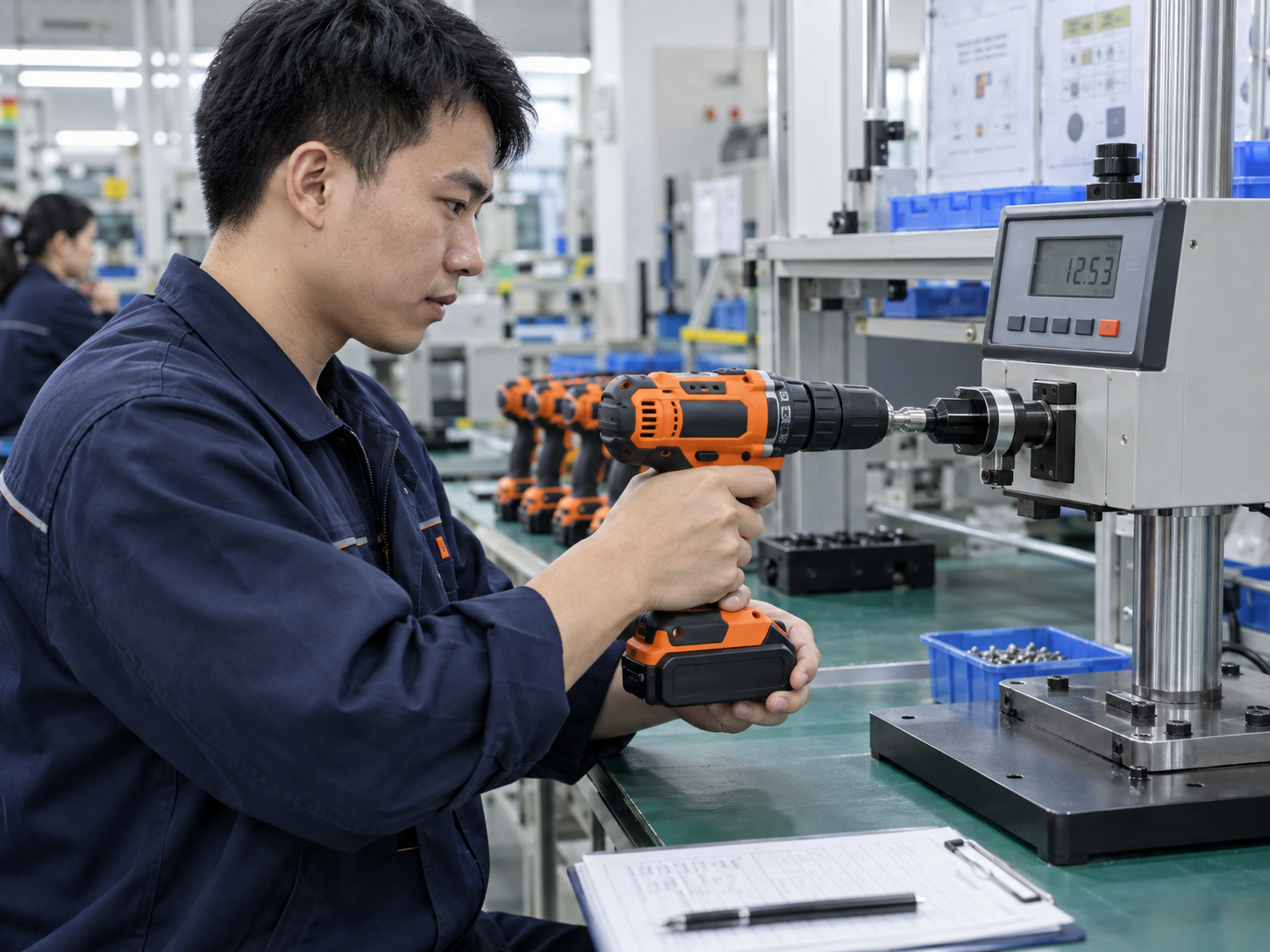
Caption: A documented test has more value than an unqualified “low vibration” label.
Images illustrate product and inspection topics; they are not documentary evidence of a specific ToolViron test or customer project. Confirm the exact model and market requirements before ordering.