
A corded electric chainsaw is not ready for use merely because its plug reaches an outlet. The extension cord, outlet protection, work area and cable route all form part of the operating setup. A retailer should not prescribe one universal cord gauge or length for every saw: the correct requirements depend on the exact model, supply, cord construction and local electrical rules. The useful buyer task is to make those requirements visible and model-specific before the saw is sold.
This guide addresses product-information and assortment planning, not an instruction to operate a chainsaw. Cutting work is hazardous and should follow the manufacturer's manual, training and applicable workplace rules. The U.S. OSHA chainsaw safety publication specifically says extension cords for electric chainsaws should be sized according to the chainsaw manufacturer's instructions. That is a stronger starting point than a generic internet chart.
Define where the customer will use the saw
Ask whether the intended user is trimming branches near a house, cutting prepared firewood in a yard or maintaining a property with long distances from fixed power. A corded offer may be appropriate when a suitable power source is nearby and the cable can be routed clear of the cut, operator and other people. If the task routinely occurs far from power, the retailer should reconsider whether a corded model is the right product at all rather than encouraging increasingly long or improvised cable setups.
Describe the ground and weather conditions. Wet vegetation, uneven footing and outdoor traffic create different hazards from a dry workshop demonstration. The product page must not imply that a corded electric saw is suitable for all weather or locations. The exact model's ingress protection, manual and local electrical requirements govern the permitted conditions. A buyer should ask the supplier for the intended outdoor-use instructions and verify their consistency with the plug and cable supplied.
Installation preparation includes the outlet and route. Where a residual-current device or ground-fault protection is required or recommended by the manufacturer and local rules, the user information should say so accurately. It should also tell customers to inspect the tool cord and extension cord for damage before use. Avoid an article that offers a universal legal prescription across markets; the importer is responsible for checking destination-specific requirements.
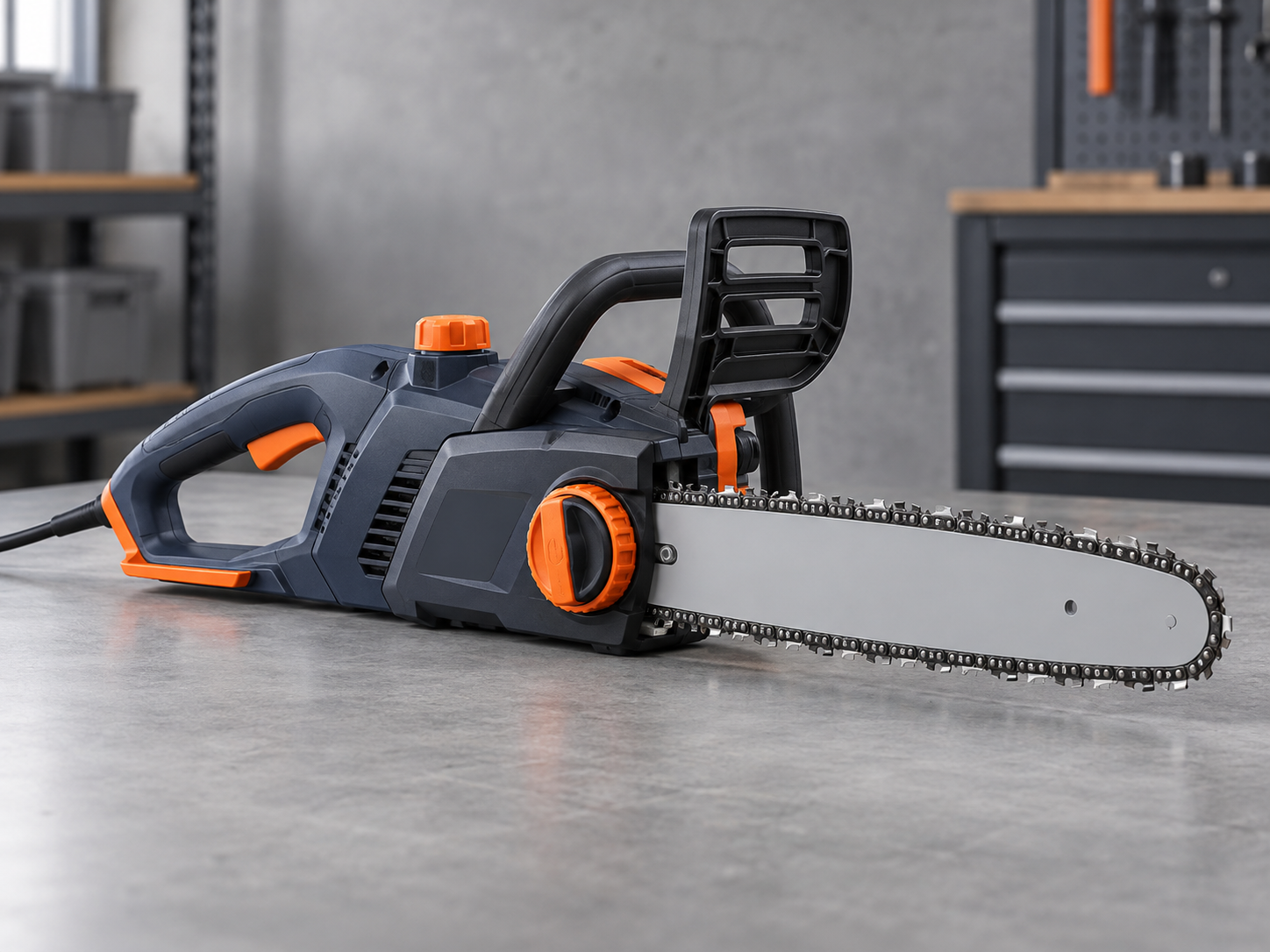
Caption: The saw, power source and cable route should be considered together before the retail offer is approved.
Do not guess cord sizing from the saw's appearance
An extension cord's suitability is related to current draw, length, conductor cross-section or gauge, construction, plug and socket, and the conditions in which it is used. Longer cords can create more voltage drop and heating concerns if undersized. Yet a simple public table with one recommended size can be misleading if the saw's actual rating or market differs. The manual for the exact SKU should state the permitted arrangement or clearly direct the user to the applicable sizing method and qualified advice.
The importer should verify the saw's rating label, plug and cable against the product specification. Then check the manual's cord guidance, including any maximum length, minimum conductor size, outdoor suitability and connector protection that applies to that model. If the manual is a generic booklet copied across several variants, resolve contradictions before sample approval. A saw rated for a different voltage or fitted with a different plug cannot inherit an unreviewed cord chart.
If a retailer plans to sell a companion extension cord, test and document the precise pairing. The cord must be intended for the outdoor conditions and load in question, and its package should not claim universal chainsaw compatibility. A cross-sell is useful only if it removes confusion rather than shifting the buyer into an unsafe configuration.
Plan cable routing as part of the use case
A cord can be snagged by branches, caught underfoot or brought close to the chain if the work area is poorly organised. The product materials should present a safe setup sequence consistent with the saw manual: inspect the area, establish stable footing, plan the cable path away from cutting and keep other people clear. Do not photograph an operator cutting with the extension cord crossing the workpiece or wrapped around a body part. Such imagery can undermine otherwise careful instructions.
The buyer's sample review can include a non-cutting setup walkthrough. Unpack the saw, identify the cord retention or strain-relief feature if supplied, route an approved cord in a controlled mock work area and ask a new user to find the relevant instructions. This tests clarity without turning the review into an unsafe demonstration. If the intended user cannot distinguish the saw's own cord from the extension-cord requirements, revise the manual or packaging.
Cable management is not only a user issue. The supplied tool cord length, strain relief, plug type and storage arrangement affect manufacturing and packing. A too-tight carton can kink the cord; a poorly designed retention feature may be ignored. Record the approved layout and check it at shipment inspection. The voltage and plug selection guide covers broader export variants.
Mid-article sourcing CTA: Selling a corded electric chainsaw? Send the destination market, saw rating and intended use so the plug, cord and instruction requirements can be discussed together.
Build a buyer checklist for the exact SKU
The product file should answer: What is the rated input? Which plug and tool cord are fitted? Is the intended work environment stated? Which extension-cord specification does the manual require? What outlet protection or local electrical precautions apply? Is there a cord-retention feature, and is it described accurately? Are the warning labels and diagrams correct for the market? If any answer is missing, the listing is not ready to make a complete use-case claim.
Ask the supplier to provide the electrical configuration and a draft manual at the same time as the mechanical sample. A saw can cut well in a test but still be unready for retail because the electrical setup is poorly described. The source of truth should be one revision-controlled specification, not separate messages from engineering, packaging and sales.
Do not confuse a corded electric saw with a cordless one in online filters. “Electric chainsaw” covers both; the listing title should state the power source and what is included. The corded versus cordless chainsaw guide explains the broader platform choice. A customer who assumes a corded saw is battery-operated may return a perfectly functioning product.
Plan factory testing and shipment inspection
Factory checks should be tied to the approved variant. The buyer can ask how the correct cable, plug, strain relief, switch, chain brake or other safety controls and labels are verified. The exact tests and acceptance criteria belong to the product's engineering plan; a blog cannot prescribe them for all saws. If an issue is found, the factory should record the affected lot and correction rather than treating it as a cosmetic difference.
At shipment inspection, open sampled retail packs and compare the saw's plug and rating label to the market specification and manual. Check cord condition, carton arrangement, supplied bar and chain, accessories, instructions and warning labels. A regional plug mismatch is not fixed by adding an adapter after packing without an approved change. The ToolViron quality page can help frame the approval and inspection checkpoints.
Electric tool safety is product- and market-specific. IEC 62841-1 describes the general scope of electric hand-held tools and garden machinery, but the applicable chainsaw-specific requirements and national adoption require qualified review. This article is not a conformity assessment, and buyers should not convert an OSHA workplace note into a blanket certification claim.
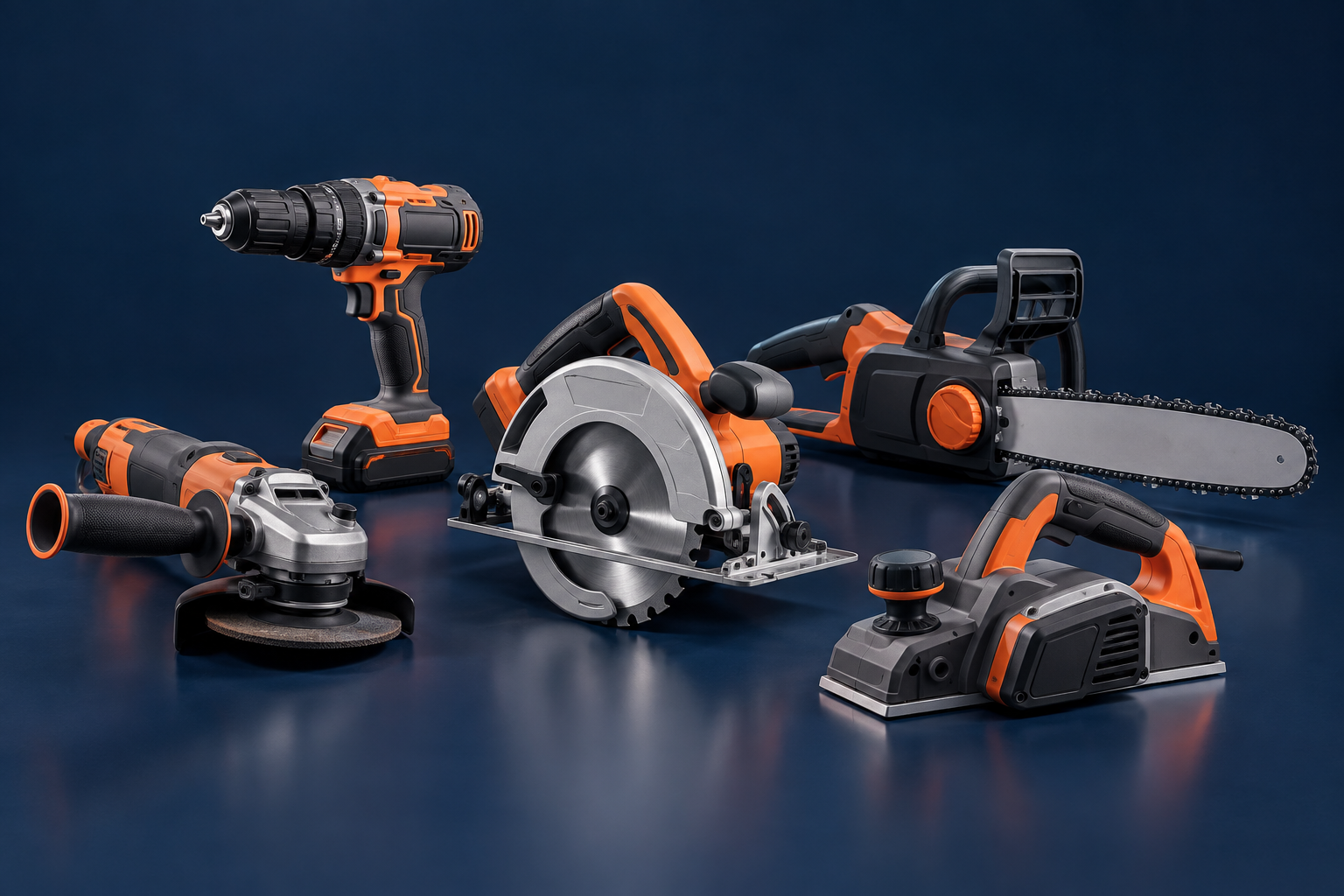
Caption: Illustrative range photography: bar, chain and power configuration must be checked on the actual SKU.
A retailer launch example: suburban yard care
Suppose a hardware retailer expects most customers to cut small amounts of firewood in yards where a suitable outlet is available. The importer selects a corded saw because it avoids a battery system, then discovers that the draft product page says only “plug in and cut.” That phrase leaves out the extension-cord requirement, the need to route the cable away from cutting and the market-specific outlet and weather information. A reviewer should stop the listing until the actual manual and electrical variant are checked.
The buyer requests the saw's input rating, approved plug, tool-cord length and model-specific extension-cord guidance. It then maps a typical customer's work area without prescribing one universal cord. If the practical distance from a suitable outlet exceeds the permitted arrangement, the retailer should not imply that adding another extension cord solves the problem. It may need to offer a cordless alternative or state the corded model's limits more clearly. This is an assortment decision with an electrical-safety dimension.
A sample walkthrough can be conducted without cutting. A trained reviewer opens the retail box, identifies the plug and strain relief, reads the extension-cord section and lays out an approved cable path in a mock yard space. Ask whether the warning is easy to find and whether a customer can tell which cord is supplied. If the manual refers to a retention hook that the actual sample lacks, the product is not ready for sign-off. Correcting this before artwork print is far easier than handling returns after launch.
The retailer should avoid tempting photographs of a saw running in rain or an operator cutting with a cable crossing the log. Such images teach a use pattern even when small-print warnings say otherwise. Product photography can show the saw de-energized beside a clearly routed cord and protective equipment, with a caption stating that the exact manual governs setup. The goal is not to turn a blog into an operating manual; it is to avoid creating a misleading impression.
RFQ and inspection questions for a corded saw
An RFQ should state destination market, voltage and frequency, plug, tool cord, target use area, bar and chain, manual languages, carton, anticipated extension-cord guidance and service parts. Ask the supplier which information is model-specific and which has been copied from a family manual. If a different plug is proposed late, verify that the rating plate, electrical assessment, manual and carton are revised together. The lowest quotation is not comparable if one supplier has omitted market-ready user information.
The shipment inspector should compare several layers: tool nameplate, plug, cord and strain relief, retail carton, manual and accessory list. A correct plug in the carton does not prove that the manual's cord guidance matches it. The inspector should read a few key phrases and compare their version numbers, not simply count pages. Ask the factory how cartons with different regional manuals are segregated so a mixed pallet cannot enter one market.
After launch, categorize customer questions about outlet access, extension-cord size, cable management and performance separately. Repeated questions may show that the listing or manual is unclear. Reports of warm connectors or damaged cords require prompt qualified safety review; service staff should not improvise cord-size advice from a generic web chart. Keep the exact product code with each report so the responsible team can review the configuration actually sold.
A support boundary worth stating clearly
Customer service should not improvise conductor sizes or advise daisy-chaining cords for a particular saw without the model's instructions and qualified review. It can ask for the tool model and rating, cord length and markings, intended location and the manual section the customer is using, then refer the question to trained technical support. If the saw or cord appears damaged, the representative should advise the user to stop and follow the product's service procedure rather than continue a test cut. This boundary protects the customer and gives the importer a way to learn whether its manual is sufficiently clear for the market.
Frequently asked questions
What extension-cord gauge should an electric chainsaw use?
Use the exact saw manufacturer's instructions and applicable local electrical rules. Required conductor size depends on saw rating, cord length and design. Do not copy a gauge from another model's manual.
Can an indoor extension cord be used outside?
Do not assume so. The extension cord must be rated for the intended environment and electrical load. Check the cord's own markings and the saw manual.
Should the retailer include an extension cord in the saw box?
Only when a specific cord has been approved for that SKU and market, its rating and length are documented, and the carton and manual make the pairing clear. Otherwise explain the requirement plainly before purchase.
What should be checked before shipment?
Verify the saw's electrical variant, plug, cord condition, rating label, manual, warnings and packed accessories against the approved sample. The finished carton must match the market's product information.
Conclusion
The safest commercial approach is to treat the corded chainsaw and its power setup as one system. Define the use location, follow the exact model's extension-cord instructions, write clear customer guidance and verify the shipped plug and manual. A vague “outdoor electric chainsaw” listing is not enough to prepare a customer for actual work.
Send your requirements
Share the target market, saw configuration, intended use and product-information needs. ToolViron can discuss a model-specific sourcing and sample checklist. Send your requirements to start.
Images illustrate product and inspection topics; they are not documentary evidence of a specific ToolViron test or customer project. Confirm the exact model and market requirements before ordering.