
A drill accessory kit is useful only when its bits match the work customers intend to do. Wood, metal and masonry demand different cutting geometries and operating methods; the drill body cannot compensate for every unsuitable bit. For a B2B buyer, the practical decision is how to define a small, clear accessory set that makes the tool easier to use without making unsupported “universal” claims.
The choice affects price, packaging, instructions and after-sales questions. A retailer may want a starter kit that helps a first-time buyer install shelves. A trade distributor may prefer a bare tool and a separate, specialised bit range. Both can be valid. This guide explains how to specify the system so the supplier quote and product listing refer to the same contents.
Start with the customer’s material
Write down the materials the customer is most likely to encounter. For furniture assembly and household timber, the kit may need wood bits and appropriate screwdriving accessories. For maintenance work on sheet metal, a suitable metal bit and an explanation of drilling preparation matter. For brick or concrete, the bit and the drill mechanism need to match the substrate. A mixed kit is reasonable only if the tool itself supports the planned tasks and the bits are labelled clearly.
The phrase “multi-purpose drill” can hide several different meanings. It may mean a drill capable of changing between modes, a range of bits in one case, or a product sold to a broad customer group. Buyers should ask which of those claims they are making. A customer cannot select the correct accessory from a box of unlabeled similar-looking bits.
Bosch Professional’s material-specific bit guide describes differences between wood and concrete drilling accessories. It is a useful reminder that the correct cutting edge is part of the result. For a ToolViron programme, any final bit selection should be evaluated with the actual drill configuration rather than copied from another brand’s catalog.
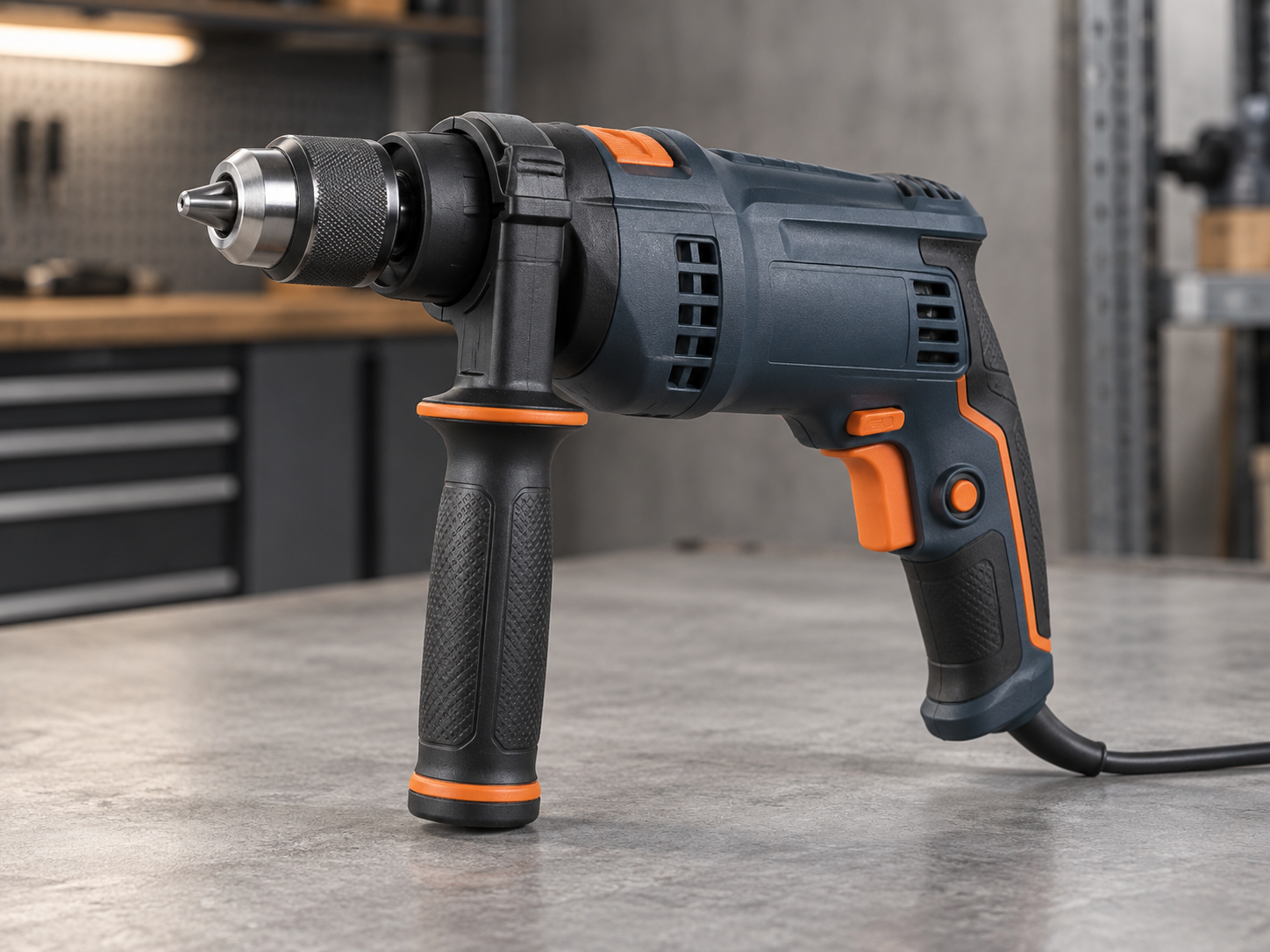
Caption: A starter kit should identify each bit by intended material and fit the supplied drill.
Wood bits: think about entry and exit quality
For wood, the buyer should consider common hole sizes, whether workpieces are softwood, hardwood or engineered board, and how visible the finished hole will be. A bit suitable for a pilot hole may not be the right accessory for a clean larger opening. Some users need accurate starting; others mainly need speed through less visible material. Define the work before choosing the assortment.
Sample testing should record whether the bit starts where intended, how it clears chips, and whether the exit edge splinters on the representative material. Use a backing board where appropriate and follow safe workholding practice. The objective is to understand whether the kit supports the promised application, not to produce a flattering photograph from one exceptional board.
A retailer selling drills for cabinet installation may decide that a small wood-focused starter kit has more value than a broad collection of low-relevance bits. A distributor serving several trades may keep the drill carton simpler and offer specialist bit packs separately. In both cases, the product information should state what is actually included.
Metal bits: specify material and work method
“Metal” covers more than one task. Thin sheet, mild steel and other alloys can produce different cutting conditions. Ask which materials the channel expects and whether the user is likely to drill pilot holes, open larger holes or work in place on installed components. The bit geometry, condition and drilling method affect heat, hole quality and user perception of the drill.
For a sample comparison, use representative metal coupons and control bit condition. A worn metal bit can generate heat and poor progress, leading to an incorrect conclusion about the tool. Record bit size, material, workholding, selected speed and what happened. If a kit includes metal bits, inspect their markings and whether a buyer can recognise their intended use after the bits are removed from the case.
Avoid broad claims such as “drills every metal” unless the product and instructions support them with clear limits. A compact consumer kit should use plain language and sensible tasks. A trade-oriented bundle can carry more detailed accessory information, but it still needs accurate compatibility and after-sales availability.
Masonry bits: match substrate and mechanism
Masonry drilling is where accessory and tool mismatch becomes especially visible. An impact drill may serve certain brick or lighter masonry tasks, while repeated holes in hard concrete can call for a rotary hammer and a different bit system. Bosch’s source distinguishes masonry and concrete bit designs; the buyer should likewise distinguish the intended substrate in its own brief.
Do not place an SDS bit in a kit for a conventional chuck, or assume a shank will fit because its cutting diameter is suitable. State the holder or chuck system, shank, intended material and any hammer mode requirement. An online listing should make the compatibility visible without requiring the customer to decipher technical markings.
For a mixed retail kit, consider whether a masonry bit belongs in the box at all. If the drill lacks a useful masonry mode or the target customer mainly works in timber, including the bit may imply an application the product is not intended to serve. Removing a confusing accessory can improve the offer even if it reduces the advertised piece count.
Mid-article sourcing CTA: Planning a drill and bit bundle? Send the materials, customer profile and intended carton contents for a configuration discussion.
Check chuck and shank compatibility
The drill’s chuck is the mechanical link between tool and bit. Confirm its stated capacity and intended shank types against the proposed accessories. A set can include excellent bits that cannot be held securely by the quoted drill. The issue may not appear in a photograph but becomes obvious during the first bit change.
During sample approval, have a technician install and remove every proposed bit. Note whether markings are legible, the case retains the bits, and the chuck grips them as intended. If a bit is difficult to install because the shank or holder differs, solve that before production. The related drill chuck guide explains why this small component deserves explicit review.
Compatibility should remain visible in a revision record. If a supplier substitutes a chuck, changes a drill model or adjusts the bit set, the buyer must confirm the whole package again. An approval of a previous kit does not automatically approve the new combination.
Design the kit around a use sequence
A customer often unpacks the drill, chooses a bit, marks the material, makes a pilot hole and then installs a fastener. A well-planned kit supports that sequence. It may include only a few carefully chosen sizes, a clear bit map and a storage layout that keeps accessories identifiable. It does not need to maximize a piece count.
Consider whether the case or carton separates material types. Simple labels such as “wood,” “metal” and “masonry” can be more useful than a decorative generic photograph. The manual should connect those labels to the drill’s relevant operating mode and any application limitation. If a bit is supplied for a specialised task, include the preparation information the user needs.
For a distributor, the same sequence helps sales training. A category manager can explain why one kit fits home installation while another fits workshop maintenance. That clarity supports cross-selling appropriate replacement bits and helps the customer select a product without relying on an inflated accessory count.
Run an application-led sample review
Use a simple matrix with one representative task per material. For each, record drill model and configuration, bit identity, material, operating mode, workholding and observations. The exact task should reflect the proposed product position. There is little value in testing a home-installation kit only in a factory material the customer will never encounter.
Observe more than hole completion. Can a user identify the correct bit? Does it fit the chuck? Can the bit start cleanly? Is the result acceptable for the promised application? Does the kit explain what to do when a material is outside its scope? These are product experience questions as well as technical ones.
Do not present a sample result as a universal speed or lifetime claim. If a supplier offers such claims, ask for the test method and relevant evidence. A practical review can justify a buying decision even when the marketing copy stays modest and descriptive.
Turn the approved set into a packing checklist
Factory testing for the drill and inspection of the bit set are related but distinct. The tool may pass a functional check while the carton contains the wrong sizes or an unlabeled substitute. Write a packing checklist that identifies each bit, the case or holder, printed material and carton version. Confirm the count against the approved sample.
Shipment inspection should verify the configured drill, bit assortment, labels, instructions, storage fit, plug or battery arrangement and export packing. If a third-party inspector is involved, provide the kit map and approved artwork in advance. The ToolViron quality process can guide a discussion of what belongs at assembly, final packing and pre-dispatch review.

Caption: Inspecting the complete kit is different from checking only the powered drill.
If a bit specification changes because of component availability, document the substitute and repeat the relevant review. The customer bought a defined use case, not merely a cardboard box containing a given number of metal objects.
Plan replenishment and customer support
Accessories wear and get lost. Decide whether the distributor will stock replacements, and make the bit sizes and types traceable. A customer who can identify a replacement accessory is more likely to keep using the drill. For private-label programmes, a simple part list can reduce service emails and avoid confusion between visually similar bits.
Collect customer questions after launch. If buyers frequently use a masonry bit on metal, the kit map may be unclear. If a drill is returned because a user expected concrete performance, the product position may be too broad. These findings should feed the next packaging and assortment review.
Explain a material-specific bit set at the point of sale
A mixed bit pack needs labels customers can understand without opening a technical manual. Identify which pieces are for wood, metal and masonry, and state any important limitation such as a required drilling mode or compatible chuck. Colour alone is unreliable because coatings and supplier conventions differ. A simple pictorial guide can help, but the written description should still name the material and sizes actually supplied.
Avoid presenting one “universal” bit as the best solution to all substrates unless the exact accessory maker supports that claim and the application has been tested. In many retail settings, a modest, well-labelled three-material starter set is more useful than a large selection of nearly identical-looking bits. Buyers should also decide whether the starter kit is intended to demonstrate the tool's versatility or to sustain professional daily work; those are different promises.
For a private-label pack, record each bit's material, geometry, coating if claimed, diameter, working length and shank. A supplier quotation that lists only “10 pcs drill bits” leaves too much ambiguity. At pack-out inspection, sample the set and compare the actual pieces with the approved inventory card. One missing diameter can matter if it is the size used for common anchors or fasteners in the destination market.
Consider wear and replacement economics
Bits are consumables and their life depends on the workpiece, technique and heat management. A distributor should not guarantee a fixed number of holes from an undefined test. Instead, decide whether the exact starter bits can be reordered individually or whether the channel will sell a replacement set. If a consumable is only a low-cost introductory item, make that position clear and avoid implying it is a premium workshop accessory.
Customer support can ask which material, bit, mode and speed were used when a buyer reports poor performance. A masonry bit used in ordinary rotary mode on hard concrete may fail to answer the customer's question about the drill itself; a metal bit forced at an unsuitable speed may overheat. Support advice should refer to the approved tool and bit instructions rather than guessing from a photograph.
As the range grows, create a compatibility table between drill chuck or bit interface and the accessories stocked by the same channel. That table should be maintained when the chuck design or accessory supplier changes. It is especially important when the assortment includes both impact drills and rotary hammers with different shanks.
Frequently asked questions
Can one drill bit be used for wood, metal and concrete?
Specialised and multi-material bits exist, but the buyer should follow the specific bit manufacturer’s intended use. A general kit should not imply that every included bit is equally suitable for all three materials.
Should a wholesale drill include bits?
It depends on channel and customer. A starter set can help installation preparation; a trade channel may prefer the tool and specialist accessories separately. Decide using the expected task and support plan.
What should a mixed-material kit label show?
Show the intended material, bit size, holder or shank compatibility, and any relevant operating mode. The box and manual should match the actual included items.
How do I inspect a private-label drill bit kit?
Compare bit identities, sizes, count, labels, storage fit and printed information with the approved sample. Also confirm that the proposed bits fit the supplied drill.
Conclusion
Select drill bits by material, tool interface and the customer’s actual work. A small, clearly labelled assortment can be more useful than a large generic set. Approve the complete drill-and-bit system through sample work, then carry the specification into packing and shipment inspection.
Send your requirements
ToolViron can discuss a drill offer for your channel. Share the target materials, bit sizes, customer profile, market and order estimate. Send your requirements to plan the tool and accessory configuration together.
Images illustrate product and inspection topics; they are not documentary evidence of a specific ToolViron test or customer project. Confirm the exact model and market requirements before ordering.