
An electric chainsaw needs more than a motor and a sharp chain. The bar-and-chain oil system helps lubricate the moving cutting assembly. For an importer, it affects product setup, instructions, consumable sales, leak complaints and the reliability of the customer's first cut. “Automatic oiling” is a useful product feature only when the actual system and its maintenance requirements are clear.
This guide explains what to check when comparing electric chainsaws and how to describe the feature accurately. It does not replace the approved model manual. Chainsaws can cause severe injury; operators need appropriate training, protective equipment and safe-work practices.
Map the oil path before discussing capacity
A typical oiling system includes a reservoir, filler cap, passages, pump or feed mechanism and delivery to the bar and chain. The exact arrangement varies by model. A buyer should ask for a simple diagram showing how oil reaches the guide bar, how the tank is filled and what the user must inspect before use.
Tank capacity on its own is not a meaningful comparison. Oil consumption depends on the delivery design, chain speed, bar length, oil viscosity and operating conditions. Avoid promising a fixed runtime from an unverified tank specification. Instead, assess whether the user can see the oil level, refill cleanly and check the system according to the manual.
STIHL's chainsaw manual material illustrates manufacturer-specific instructions on chain lubrication and checks. For ToolViron sourcing, the final approved saw's own manual and test record must govern the product statement.
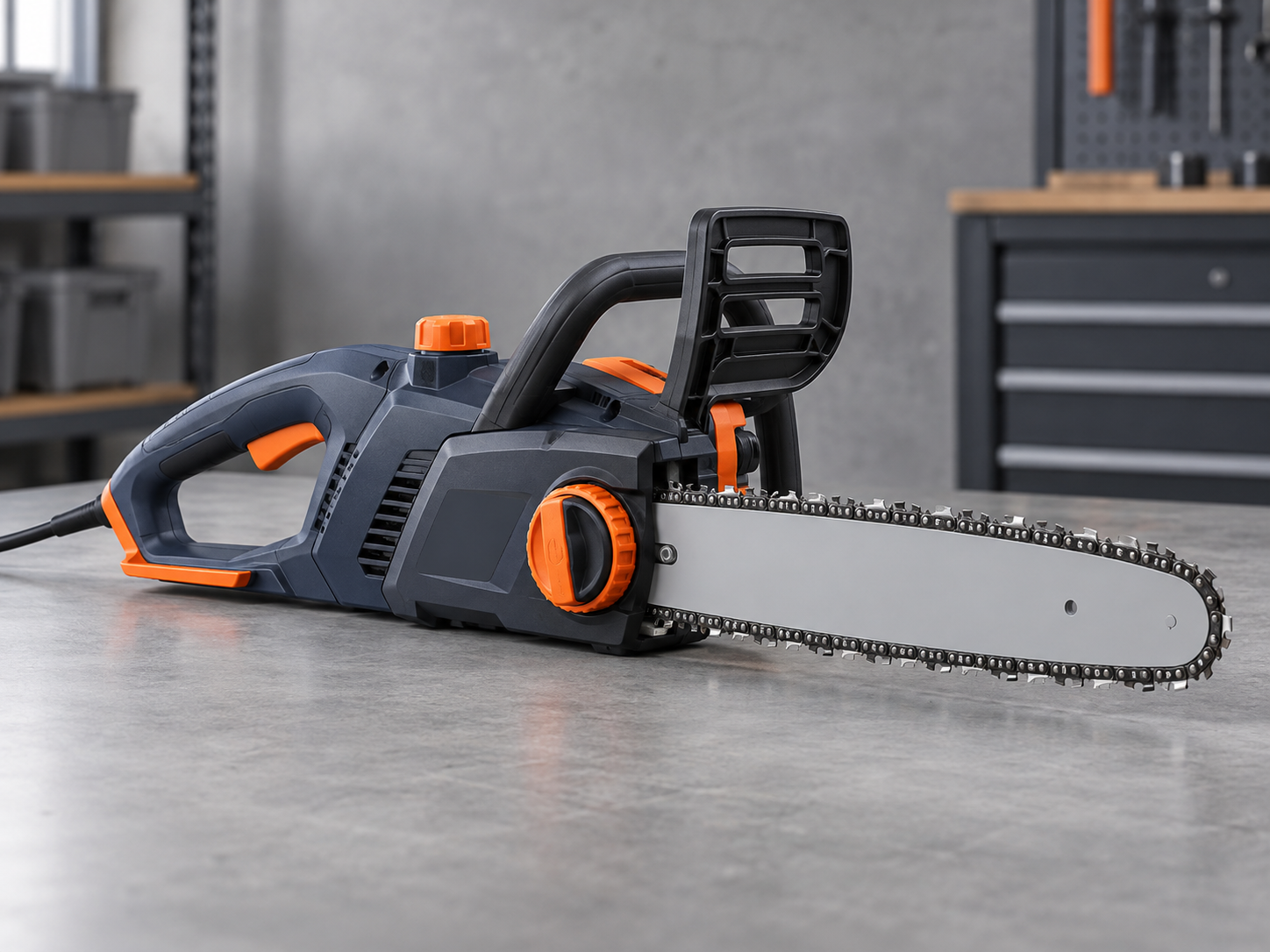
Caption: Oil-system inspection belongs alongside bar, chain and tensioner approval.
Distinguish automatic feed from automatic maintenance
An automatic oiler may deliver oil during operation, but the user still needs to fill the tank and confirm the system is working. “Self-lubricating” can mislead if it sounds as though no inspection or refilling is necessary. A retail listing should state the feed arrangement and direct customers to the manual for oil type and checking procedure.
Ask whether the pump is fixed-output or adjustable on the exact model. If adjustable, verify what the control does and how it is documented. Do not assume an adjustment present on a high-end sample is included in a cheaper production SKU. Check the filler cap seal, thread feel and risk of dirt entering during filling.
Oil leakage complaints require careful diagnosis. A small amount of oil may remain in the system after use and storage behaviour depends on design, temperature and handling. A buyer should test packaging and storage orientation according to a defined plan, record conditions and avoid promising “leak-free” without substantiation. A genuine tank, cap or hose defect must still be distinguished from residue and user handling.
Choose a realistic sample-check procedure
Use the specified oil and the approved bar-and-chain set. Document fill amount, orientation, application, run time and visible delivery check according to the saw manual. Observe whether oil reaches the cutting assembly as intended and whether the level can be monitored. Repeat after the tool has been stored in the intended shipping or retail orientation if leak risk matters to the channel.
A factory application test can identify a blocked line or faulty pump on the sample. It cannot establish lifetime reliability from a few minutes of operation. Ask the supplier what production controls apply to the pump, cap and passages, and what sample size will be checked before shipment. Put any accepted criteria into the order specification.
During shipment inspection, verify that the correct oil cap and related components are present and that cartons are clean and labelled. If the saw is shipped without oil, make that conspicuous in the box contents and setup instructions. Never let product photography imply that oil is included if it is not.
Mid-article sourcing CTA: Building an electric-chainsaw range? Send your bar length, channel and oil-system expectations to request a sample and configuration discussion.
Link lubrication to chain and bar compatibility
A correctly specified oil system works with an approved bar-and-chain configuration. If the bar length or chain type changes, review whether the whole cutting system remains suitable. The chain-tensioning guide covers another maintenance interaction; a poorly tensioned chain can complicate the customer's experience even when lubrication is adequate.
When offering replacement bars and chains, confirm that the oil holes and mounting arrangement match the saw. STIHL's guide-bar reference demonstrates why manufacturer-specific fit information matters. Do not describe all same-length bars as interchangeable.
Consider whether the destination market has expectations for bar-oil types or environmental handling. Do not prescribe a generic lubricant in article copy; the approved manual should name the acceptable specification. If the supplier proposes a bundled oil bottle, review packaging, transport and local labelling separately.
Prepare customer support for common questions
Retailers will hear questions such as “why is the tank empty?”, “why is there oil under the saw?” and “how do I know the chain is lubricated?” Give support staff an approved model-specific troubleshooting flow. It should start with safe power isolation and the manual's procedure, then direct suspected faults to qualified service. Avoid telling consumers to run a dry chain to see whether the system works.
Part identifiers matter. Stock or source the cap, seal, pump-related parts and hoses where serviceable. Record saw model and revision because a similar-looking cap may not seal an updated tank. The electric-chainsaw replacement-parts plan provides a wider support framework.
The ToolViron chainsaw product page can direct buyers to a model enquiry, but the quote should clarify oil-system type, actual box contents and available service parts.
Make the first-use check practical
For many customers, the first problem is simply knowing whether oil is required before the first cut. Put a short setup reminder on the packaging or quick-start card, consistent with the approved manual. State clearly if bar oil is not supplied. A retailer can then sell the correct consumable separately without implying that the saw is ready to operate dry out of the box.
During a sample review, ask someone unfamiliar with the product to locate the filler, identify the recommended oil information and find the check procedure. Do not coach them through an undocumented step. If they confuse the oil cap with another control or overlook the need to fill the tank, the instructions or labelling may need improvement. Record the observation as a usability finding, not as a judgment about the person.
Check whether the oil-level window, if present, remains visible in typical working and storage positions. A nominally transparent window can be too small or obscured by dark housing. If no window exists, determine how the manual tells users to monitor supply. A product manager should not advertise “easy oil monitoring” without looking at the actual tool.
Link complaints to specific evidence
When a customer reports poor lubrication, gather the saw model, oil type used, chain and bar identity, storage history and observed symptom. A dry chain, blocked passage, incorrect oil, empty tank or faulty pump can present differently. Support staff should not prescribe disassembly or continued cutting to “see if it improves.” Refer suspected faults to the qualified service route.
For leak reports, request a photograph of the tank and storage position if safe to do so. Compare it with a controlled retained sample under similar conditions. A small post-use residue and a failed cap seal should not be treated as the same issue. Keep records by batch; a pattern can reveal a component or packing change.
The factory's production check should focus on the actual parts it controls: correct cap and seal, clear passage, pump function and pack-out. A distribution team can verify box contents and external condition. Neither party should imply that a brief check proves the oil system will never require maintenance.
Review packaging and warehouse storage
An oil system can affect the carton even before the saw is used. Confirm whether the tool ships dry or with any residual test oil, and how that is managed. The factory should clean and inspect the unit according to its approved process so a new customer does not find a damaged or stained inner pack. At the same time, do not conceal a functional test that requires the system to be checked.
Run a storage-orientation trial on a production-representative sample if the channel is sensitive to leaks. Record duration, temperature range and orientation. The result will not predict every shipment condition, but it can expose a weak cap seal or an outlet path that drips into the carton. If the design requires a particular storage instruction, include it in the shipping and retail handling information.
Ask whether oil caps are secured against loosening in transit. A cap that is easy for a user to open is desirable, but it must also remain seated during ordinary packaging movement. Verify the seal material and replacement part number. A seemingly minor cap change can create a field complaint that affects the entire brand impression.
Distinguish product information from operator instruction
The retail listing should state the oiling feature and whether oil is included. It should not teach a shortcut for testing flow that conflicts with the manual. Some manufacturer instructions use a defined check method under controlled conditions; others differ. Refer customers to the exact approved procedure and protective measures for the model.
Similarly, a blog can explain that the chain and bar need lubrication, but it should not prescribe an oil viscosity or service interval for a tool that has not been specified. Those details should come from the manufacturer and may depend on conditions. If the exporter wants to make a region-specific oil recommendation, have the technical team review it for the product and climate.
The importer should keep oil-related claims modest. “Automatic chain lubrication” describes a mechanism; “maintenance-free” suggests something untrue. A system can be automatic during operation and still need refilling, cleaning and occasional repair. The distinction is important for both customer trust and accurate after-sales triage.
Example: reviewing two oiling designs
Suppose two electric saws have similar bar lengths and price, but one has a more visible oil-level indicator while the other has easier cap access. The buyer should test both with the same intended user group. Can a new user locate the filler and read the oil requirement? Can the cap be closed securely with gloves? Is the level visible in the normal handling position? These questions may matter more to customer satisfaction than a small difference in nominal tank capacity.
Run a defined cut with the approved bar and chain, then inspect the oil system according to each manual. Record the exact oil, material, duration and observations. Repeat the storage-orientation check on production-representative samples. If one tool leaves a mark on packaging, determine whether it is residual factory test oil, an operational characteristic or a defect before making a procurement decision.
The review should include the replacement path. A visible cap is of little help if it cracks and cannot be sourced. Ask for cap, seal and pump-related part numbers where serviceable. A buyer may accept one design over another for a particular channel, but the decision should be supported by sample results and service capability.
Keep oil-system claims consistent across teams
Marketing may call the feature “automatic,” technical staff may call it “fixed-output,” and customer support may describe it as “self-lubricating.” Agree on one accurate description for the exact model. State what the user must still do—fill, check and maintain the system according to the manual. This prevents a reasonable feature from becoming an exaggerated promise.
At shipment inspection, compare the actual cap, tank window and manual with the approved version. If a supplier changes the pump or passage, review the sample and documents. The model name alone does not guarantee identical behaviour across revisions.
Final approval questions
Confirm whether the retail carton includes oil, whether the cap and seal match the approved sample, and how the user checks the tank and flow according to the manual. Ask what production test verifies the pump or feed system and whether residual test oil is managed before packing. Record storage observations under defined conditions rather than promising zero leakage in every climate.
For service, obtain cap, seal and pump-related part IDs where available. Train customer support to collect model, batch, oil and symptom details before escalating a suspected fault. The product page can describe automatic delivery if the model has it, while still saying that filling and maintenance remain the user's responsibility. Clear expectations are often more valuable than an oversized tank claim.
Frequently asked questions
Does automatic oiling mean the customer never checks oil?
No. The user still needs to fill the tank and check the system as the approved saw manual directs.
Can tank size predict how long one fill will last?
Not reliably without a defined operating condition. Consumption varies with the design, bar-and-chain setup, oil and work pattern.
Is a small oil mark under a stored saw always a defect?
Not necessarily. Storage behaviour depends on design and conditions. Evaluate a complaint against the approved model's instructions and a repeatable inspection procedure.
Should oil be included in a retail carton?
That is a channel and logistics choice. If it is included, specify and label it correctly; if not, state the setup requirement prominently.
Conclusion
The oil system should be treated as a maintained product subsystem, not a single marketing bullet. A buyer who verifies fill access, delivery, storage behaviour, instructions and replacement parts can build a clearer electric-chainsaw offer and handle customer questions with evidence.
End-of-article CTA: Contact ToolViron for an electric-chainsaw catalogue and sample checklist. Tell us the target bar configuration, intended user and any oil-system features your channel requires.

Caption: Recording cap, pump and bar configuration helps repeat the approved setup at shipment.
Images illustrate product and inspection topics; they are not documentary evidence of a specific ToolViron test or customer project. Confirm the exact model and market requirements before ordering.