
An electric planer is often quoted by width, power and cutting depth. Blade type deserves equal attention. High-speed-steel (HSS) and carbide planer blades differ in sharpening, replacement approach, edge behaviour and cost, but the right choice depends on the tool design and customer material. A B2B buyer should not announce one material as universally superior.
This guide helps importers compare blade configurations for a private-label planer range. It focuses on the questions to ask during sample approval, the tests worth recording and the replacement plan needed after the sale.
Identify the exact blade system first
Before discussing HSS versus carbide, ask whether the proposed planer accepts reversible disposable blades, resharpenable blades or a proprietary holder. Record blade dimensions, mounting hardware, orientation and the maker's installation procedure. A blade material claim without the exact part design is too vague to support purchasing.
Bosch's planer-knife information and Makita's carbide-blade listing show that blade products are specified for particular tool systems. Those examples do not establish compatibility with a ToolViron model. A buyer needs the approved planer's own blade drawing and replacement-part number.
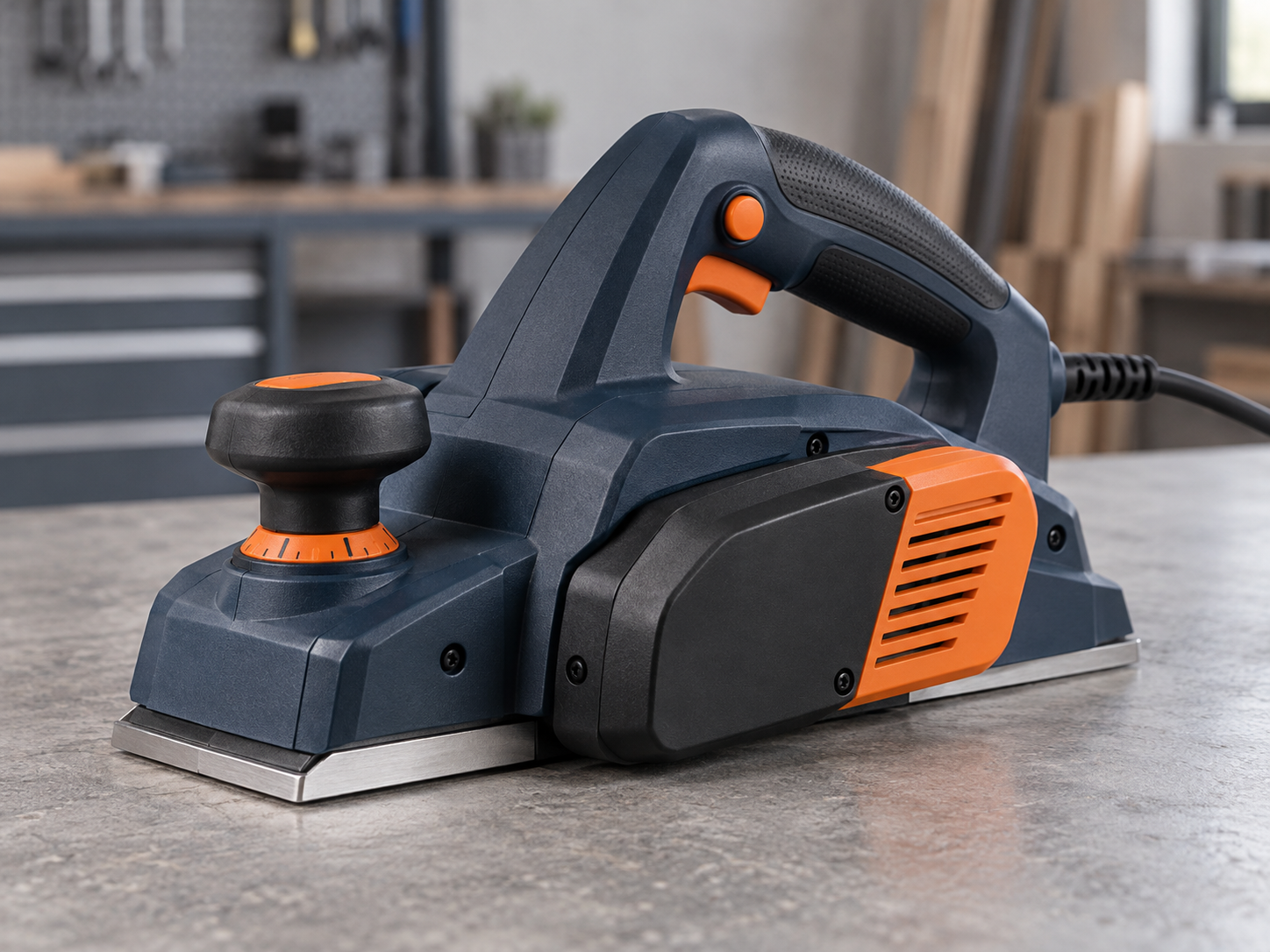
Caption: Blade comparison starts with the exact holder and dimensions, not just the material name.
Compare the trade-offs without slogans
HSS blades can be attractive where a user values a resharpenable edge and works in suitable wood, provided the tool's blade design and sharpening procedure support it. Carbide blades can offer wear resistance in applications for which they are designed, but may be less forgiving of impact with hidden metal or grit and may use a replaceable rather than resharpened format. These are general considerations, not a guaranteed lifetime ranking for every blade.
The substrate, coating if any, grind geometry and production quality also matter. A low-quality carbide blade is not automatically better than a well-made HSS blade. Compare samples using the same planer, timber and setup. Record the test conditions and inspect the resulting surface rather than relying only on an accessory label.
Ask how many cutting edges the blade offers, whether blades are sold as a pair, and whether both must be replaced together for balanced operation. The approved manual should explain replacement and alignment. Do not encourage a customer to improvise sharpening or grinding on a blade type not designed for it.
Define the customer's wood and finish requirement
A door installer, cabinetry shop and renovation retailer may have different priorities. Door fitting can involve occasional edge removal and predictable material. Workshop production may demand repeatable finish over more passes. Reclaimed timber may contain grit, coatings or hidden fasteners that damage blades regardless of material.
Ask customers what wood or board they actually plane, whether the finish will be visible, and whether they expect to sand afterwards. A smooth-looking demonstration on one softwood sample does not prove performance across hardwoods, laminates or engineered products. If the channel includes such materials, arrange separate sample checks with suitable safety controls and tool-manufacturer guidance.
The door-fitting application guide shows how blade choice fits a real end-user workflow. The ToolViron electric-planer page can start the model-specific quotation.
Design a fair sample comparison
Use identical timber pieces, a controlled blade condition and the same cutting-depth setting. Record planing width, grain direction, number of passes and visible tear-out or burnishing. Inspect the blade after a defined workload and photograph the surface. If comparing two blade materials, ensure that holder geometry and cutting angle differences are acknowledged; otherwise the result cannot be attributed solely to material.
Makita's KP0810 planer information demonstrates how a manufacturer describes a specific planer's width, depth and blade system. The lesson for importers is to keep performance claims model-specific and testable. Do not borrow a competitor's blade-life or finish claim.
Factory testing can check that the approved blade is installed correctly and produces an acceptable cut on a specified sample. Shipment inspection should verify that the actual blade part in the carton matches the approved bill of materials. Blade substitutions late in production can change finish, spare-parts compatibility and instructions.
Mid-article sourcing CTA: Choosing a planer blade configuration? Send the timber, finish expectation and replacement strategy to discuss sample options.
Plan replacements before launch
The blade is a consumable. Retailers need a straightforward replacement part number, packaging description and stock plan. Ask whether the supplier will provide blades independently of the complete tool, how a customer identifies the correct version, and whether a later planer revision changes compatibility.
If the range uses reversible blades, specify when and how the second edge is used according to the manual. If it uses resharpenable blades, clarify the required competence and any minimum dimensions or alignment steps in approved instructions. Customer support should not answer a sharpening question with a generic online tip that contradicts the tool's blade design.
For private label, put the blade type and included quantity in the box-contents list. Do not display an accessory pack on the product page if it is only an optional purchase. Create a replacement listing with exact model compatibility and a clear photograph of the actual blade.
Evaluate finish over a defined workload
For a serious blade comparison, set a workload relevant to the customer rather than making one attractive pass. A door-fitting buyer might test repeated shallow edge cuts; a workshop buyer might run longer full-width passes in a consistent timber batch. Record the blade part, starting condition, wood species, cutting depth, number of passes and visible finish at intervals. This makes the result more informative than a vague claim that one material “stays sharp longer.”
If the tool vibrates or leaves ridges, inspect blade seating and holder condition before blaming blade material. A poorly aligned pair of blades can create a bad surface even when the material is suitable. The supplier's assembly process should include a defined blade-installation check. Ask whether operators use a fixture or measurement method and what they do when a holder is out of tolerance.
Look at downtime as well as blade cost. A reversible disposable blade may be changed quickly if the system is designed for it. A resharpenable blade may offer a different cost pattern but requires sharpening capability and accurate reinstallation. The better commercial choice depends on the channel's service habits and replacement availability.
Write a buyer-facing blade specification
The final product sheet should state the installed blade type and exact compatible replacement part. If a pair must be changed together, the accessory package and manual should say so. Describe the material in terms the supplier can substantiate; avoid unsupported claims such as “cuts every hardwood” or a fixed lifetime in metres.
When the factory proposes a cost-saving blade change, ask for an application retest and revised service-part data. A blade substitution affects not only finish but also customer support and consumable sales. Keep samples from the earlier and later versions so a complaint can be traced to the actual shipped batch.
Training for retailers can explain the difference between a worn blade, unsuitable wood and an alignment issue. It should refer complex adjustment or service work to the approved manual or qualified service channel, not imply that every user should dismantle the cutting drum.
Compare blades across a meaningful material range
If your customer base works with several wood types, prepare separate samples rather than mixing outcomes into one average. Softwood, dense hardwood and engineered panels can produce different wear and finish patterns. Some coated or laminated materials may not suit the planer at all; follow the tool and material manufacturer's guidance before testing them. Record what the blade actually encountered, including any grit or finish on reclaimed material.
Use a clean baseline sample to establish that the tool and holder are functioning properly. Then run the target material under a defined setting and compare surface finish, chip formation and any edge damage. If a blade strikes a hidden fastener, record the event separately—it does not provide a fair comparison of ordinary cutting wear. A meaningful buyer report distinguishes normal workload from accidental impact.
When suppliers present laboratory lifetime numbers, request the protocol. What timber, moisture, depth, width and finish threshold defined end of life? Was the blade resharpened? Were several samples tested? Without these conditions, a percentage improvement cannot be responsibly used in retail copy.
Include blade handling in the ownership cost
The purchase price of a blade set is only one part of cost. Consider how often it must be replaced, whether the user can follow the replacement procedure, whether sharpening service is available, and how downtime affects the channel. A workshop with a sharpening partner may value a different blade format from a homeowner who wants a sealed replacement pair.
Check packaging of replacement blades. Sharp edges need protection in storage and shipment, and the accessory pack should identify the exact compatible planer model. If blades are sold as pairs, make that visible. A customer should not have to discover during a repair that one blade alone is not the intended replacement method.
Ask the supplier to support the first order with a reasonable replacement-blade plan. If the tool sells but compatible blades are unavailable six months later, the low initial quote has hidden a substantial ownership problem. Version-control the blade SKU when the holder changes and preserve older compatibility information for customers with earlier tools.
Example: choosing blades for two retail channels
Consider a home-improvement chain whose customers use a planer occasionally for solid-wood doors, and a specialist woodworking dealer whose customers run more frequent passes on varied timber. The first channel may prioritise a simple replacement pack and clear instructions. The second may ask about resharpening, edge consistency and the total cost of consumables. Neither channel can decide from “carbide” or “HSS” alone.
Prepare a separate trial brief for each. For the home-improvement chain, test first-use assembly and a few representative door-edge passes, then see whether a customer can identify the correct spare blade. For the woodworking dealer, define a longer workload and evaluate finish at intervals. Keep wood, setup and measurement conditions explicit so the observations can be compared fairly.
If one blade material appears to produce a better finish, check whether holder geometry differs. A change in blade angle or seating may be the true driver. Do not present the result as evidence that every blade of one material outperforms every blade of another. A careful supplier report can still help the buyer make a strong choice without exaggeration.
Supplier questions that affect long-term value
Ask who manufactures the blade, whether its dimensions and edge geometry are controlled, and how a replacement batch is verified against the approved sample. Request the replacement SKU, pack quantity and expected lead time. If the supplier proposes a proprietary blade, ask what happens when that model is discontinued. A planer with no replacement path can become unusable long before the motor fails.
Review the blade-change procedure with the actual carton. Are the required tools present? Does the manual identify blade orientation and alignment checks? Is the operation intended for a typical owner or qualified service? The answer affects retailer support and warranty handling.
Finally, keep cost comparisons transparent. Compare tool price plus a realistic number of blade replacements and service steps over the intended ownership period. You do not need to publish a speculative lifetime calculation; the internal model can still reveal whether a low-priced tool creates a high ongoing cost for the customer.
A final sample record for blade approval
Before signing off, photograph the installed blade and its packaging beside the planer model label. Record the blade material as specified by the maker, part number, holder type and replacement procedure. Attach the controlled sample-cut result and note the timber and settings. If a later batch delivers a different finish, the buyer can compare actual components rather than debating a broad material label.
Ask the factory how it prevents wrong blades entering assembly. Similar-looking strips can differ in size or edge geometry. A check at receiving and another at pack-out may be appropriate for a range with multiple planer models. Shipment inspectors should compare part IDs against the approved bill of materials, especially when spare blades are included in the carton.
For public content, keep the message simple: identify the blade format, typical intended materials and replacement route. Do not assert a fixed lifetime or universal superiority. A buyer can still present a confident product when the claims match the sample and the consumable is available after sale.
Frequently asked questions
Are carbide blades always better than HSS?
No. The answer depends on material, edge geometry, blade quality, replacement approach and the user's priorities. Compare approved samples under the target application.
Can all planer blades be sharpened?
No. Some systems use reversible replaceable blades, while others may support resharpening. Follow the exact blade and planer instructions.
Does blade width prove compatibility?
No. Thickness, length, holder design and mounting method also matter. Use the manufacturer's part information for the specific planer model.
What should shipment inspection confirm?
The installed and supplied blades should match the approved part ID, quantity and documentation. Any substitution needs review.
Conclusion
The blade decision connects product performance with the customer's ongoing cost and service experience. Buyers should specify the exact system, compare it in representative wood and secure a replacement path. “HSS” or “carbide” alone cannot carry that purchasing decision.
End-of-article CTA: Request a ToolViron electric-planer catalogue or blade sample discussion. Include the wood types, target finish and whether your channel prefers replaceable or resharpenable blades.

Caption: Record the blade part and sample-cut conditions so later shipments match the approved finish.
Images illustrate product and inspection topics; they are not documentary evidence of a specific ToolViron test or customer project. Confirm the exact model and market requirements before ordering.