
A flap disc and a grinding wheel may both fit an angle-grinder product range, but they are not interchangeable promises about surface finish. A grinding wheel is commonly selected for substantial material removal in a compatible application. A flap disc combines overlapping coated-abrasive flaps and can be chosen when the buyer wants removal with a more controlled finishing stage. The exact result depends on abrasive type, grit, disc design, workpiece and technique. A distributor should specify the operation first, then select and verify the accessory.
This distinction matters when a retailer bundles consumables with a grinder. A box that includes “one grinding disc” may be adequate for a rough preparation task but disappointing to a buyer expecting a finished visible weld. Conversely, a flap disc may not be the economical or appropriate first tool for every heavy removal job. The article focuses on range design and evaluation, not a universal claim that one abrasive is safer or faster than the other.
Start with the surface the customer needs to leave behind
Define whether the user is removing a weld bead, deburring an edge, cleaning a fabrication mark or blending a surface before paint. Ask how much material must be removed and what finish is acceptable at the end. A heavy weld-removal stage and a cosmetic blend may require a sequence of accessories rather than one disc. Norton Abrasives' right-angle abrasive comparison illustrates that the starting weld and target finish influence accessory choice; its product-specific findings should not be copied as universal performance numbers for another kit.
Also specify the metal. Carbon steel, stainless steel and other alloys can react differently to heat, contamination and abrasive selection. A buyer should not claim that a disc intended for one material is suitable for every metal because the diameter happens to fit. Ask the accessory supplier for its exact intended material, wheel construction and use instructions. Preserve those documents in the product file when deciding how to describe the retail kit.
The final user may value fewer accessory changes more than maximum removal rate. Another user may want the lowest consumable cost on repeated heavy work and accept a separate finishing step. The sales channel should identify which promise the package makes. A specialist metalworking distributor can explain a two-stage abrasive workflow; a general retailer may need a more focused starter kit with clear limits.
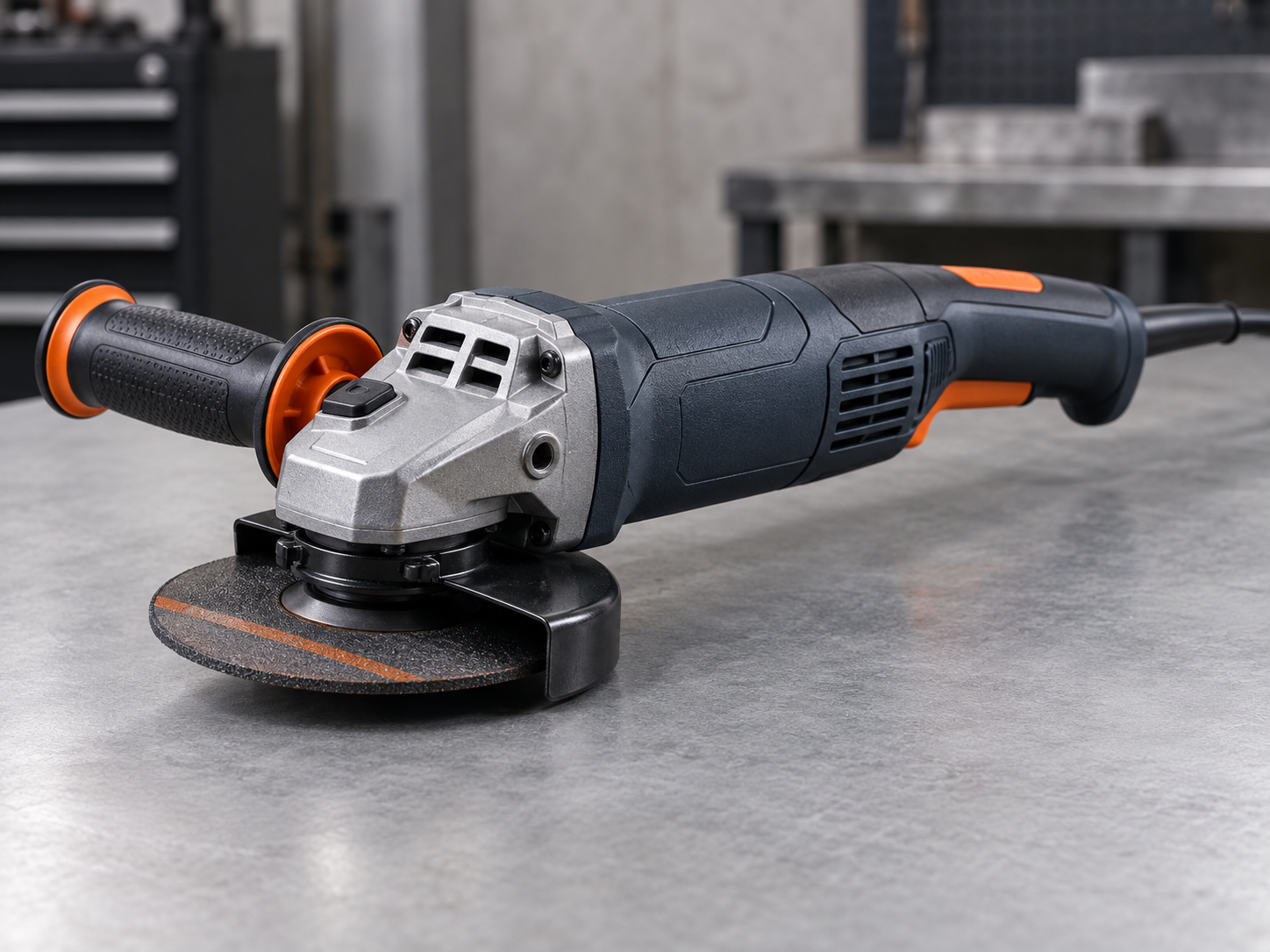
Caption: The target workpiece and desired finish should determine which compatible abrasive is evaluated.
Compare how the accessories do the work
A bonded grinding wheel and a coated-abrasive flap disc have different constructions and wear patterns. A grinding wheel may be selected for heavier stock removal on a task for which it is rated. A flap disc exposes overlapping abrasive flaps and can blend a surface while removing material. That is a category-level description; the abrasive grain, backing, grit and exact disc geometry still control the practical result. Norton offers a flap-disc guide explaining how abrasive and grit choices affect use.
Do not compare an aggressive coarse flap disc with a mild wheel, or a fresh premium product with a worn low-grade sample, and then publish the result as a category verdict. Prepare a method that controls accessory grade, state and workpiece. If two products inherently use different grit systems, state what was compared and why. The question should be “Which proposed kit meets our customer's finish and cost target?” rather than “Which disc type wins?”
Price per disc alone is also insufficient. A buyer may care about number of workpieces completed, usable life, time to target finish and the need for a second operation. Record these components of cost separately. Without a controlled method, a shorter grinding time may simply mean more pressure or more removed parent material, which can be unacceptable on a fabricated part.
Check grinder and accessory compatibility before any trial
Confirm nominal diameter, bore or mounting system, speed rating, guard, spindle, flange or hub, and the manufacturer's intended use. A disc that appears to fit can still be unsuitable for the grinder. The wheel RPM compatibility guide sets out the speed and diameter questions; the arbor and flange guide covers the mounting interface in more detail.
Use the correct guard and handle for the exact grinder and accessory. Do not remove a guard for a photograph or a sample test. OSHA's portable abrasive-wheel guidance emphasizes correct guarding, wheel condition and proper mounting. That U.S. workplace source is a safety reference, not evidence that every accessory is compatible with every market's tool. The manufacturer's instructions and applicable local requirements govern the specific setup.
Inspect discs before use and follow the supplier's storage advice. An abrasive damaged in transport can compromise a comparison and create a hazard. Record the lot of each sample disc, especially if the buyer plans to private label the accessory. A disc specification can change between bids; a consistent name such as “metal grinding wheel” does not ensure the same abrasive, structure or backing.
Mid-article sourcing CTA: Building a metalworking grinder kit? Send the metal, removal task and target finish to discuss the tool and accessory specification together.
Run a finish-oriented sample comparison
Prepare secured, repeatable workpieces with a defined starting condition. Mark the area and photograph it under consistent lighting. Use a qualified operator, correct PPE and the grinder's instructions. Define the target: for example, remove a specified excess weld area without visibly gouging adjacent material, or reach an agreed visual finish on a flat coupon. Do not ask the operator to keep grinding until one accessory seems to look better.
Record disc ID, grit or grade, wheel condition, tool speed setting if applicable, task time, number of passes, heat or discoloration observed, consumable wear and the finishing step still needed. Where surface requirements are critical, use the buyer's appropriate measurement method rather than an adjective such as “smooth.” A photograph helps but may not reveal dimensional loss or surface damage.
Rotate the order of testing to reduce learning effects. Give each accessory a fair workpiece. If a flap disc is positioned as a final blend, do not judge it solely on heavy initial removal. If a wheel is positioned for rough removal, do not penalize it for not leaving a cosmetic final finish it was never intended to deliver. The result may be a recommended sequence: rough removal first, blend second. That can justify a two-disc kit for a trade channel.
Translate the result into kit contents and instructions
Specify each supplied accessory by type, size, rating, intended material and quantity. The carton should show the actual disc, not a generic round shape. If the kit includes both a wheel and a flap disc, label the work step each supports. The manual must not imply that the same disc can be used for cutting if it was selected for grinding or blending. The existing cutting versus grinding disc guide explains why that distinction matters.
Make replacement supply part of the commercial plan. A retailer can sell a good grinder kit once, but repeat customers need compatible consumables that can be identified without guessing. Record the accessory supplier's item number, material scope and packaging revision. If a private-label disc is substituted later, repeat the compatibility and finish review rather than assuming all discs of a common diameter perform alike.
The product page should answer the customer question directly: “Which disc should I use for visible metal finishing?” Give a bounded answer based on the finish required and the exact accessory in the kit. Avoid an absolute “one disc does everything” claim, especially if the real workflow requires more than one step.
Carry the accessory choice into factory and shipment checks
During factory testing, the grinder's function, guard, handle and mounting interface should be checked against the approved configuration. For the abrasive bundle, verify disc identity, markings, visible condition and that the listed item is the one trialled and approved. These checks do not replace the accessory maker's own quality programme, but they prevent a packing change from silently altering the retail offer.
Shipment inspection should compare sample cartons with the signed-off bill of materials and artwork. Count the discs, inspect their package protection, confirm instructions and check that no accessory was replaced by an unapproved “equivalent.” A good finish result from a sample is commercially useless if a different abrasive appears in the shipped kit. ToolViron's quality overview can help frame this final cross-check.
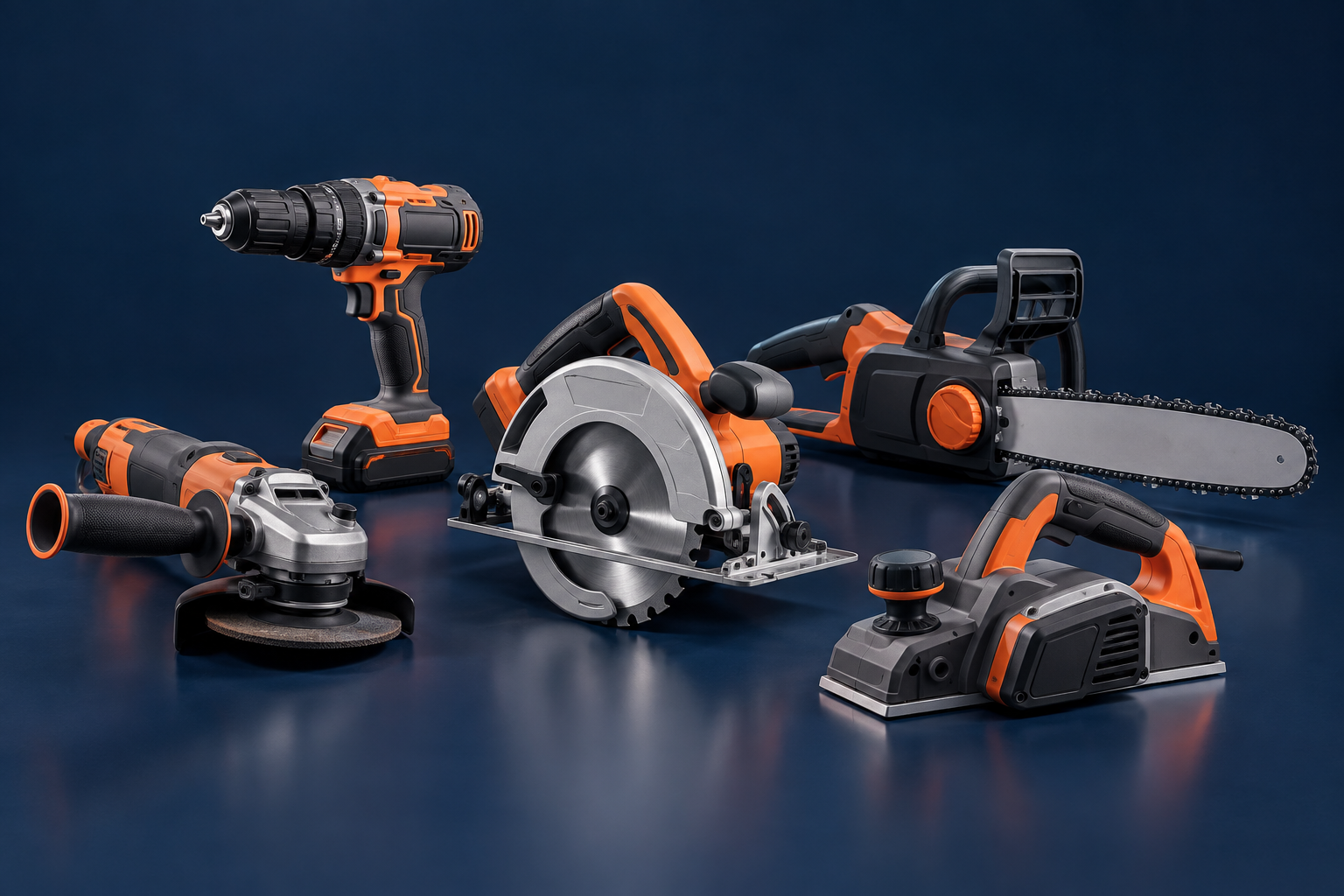
Caption: Illustrative range photography: accessory and safety details require model-specific review.
A metal-fabrication buyer scenario
Consider a distributor whose customers remove welds from mild-steel frames and then prepare the visible area for paint. A proposed grinder kit includes one bonded grinding wheel. The accessory may handle the initial removal, but the customer still needs a surface-preparation step. Before adding a flap disc, the buyer should ask how much weld metal is removed, what finish the painter expects and whether the intended user already stocks abrasives. That task description defines whether a one-disc entry kit or a two-stage kit is commercially sensible.
Prepare comparable welded coupons and define an acceptable endpoint. A qualified operator uses each proposed accessory in its intended role, following its instructions and the grinder's guard requirements. Record active work, accessory changes, disc wear and the condition of adjacent parent metal. If the bonded wheel removes the bulk quickly but leaves an aggressive scratch, the flap disc may have value as a subsequent blend. If a finer flap disc is asked to remove all the bulk, it may wear or take longer. The test should show the workflow, not crown a universally superior disc.
Now consider stainless fabrication. Contamination and finish appearance may have a different commercial cost than on painted mild steel. The buyer should obtain the abrasive supplier's material-specific guidance and avoid swapping a disc from a carbon-steel demonstration into a stainless claim. A low-cost kit that creates an unacceptable surface or requires unexpected rework is not cheaper for that channel. The RFQ should specify both metal and finish, not only “angle grinder disc.”
The resulting catalogue may offer a basic grinder with an appropriate grinding accessory and a trade bundle containing a documented finishing sequence. Product information should state what each disc is for and where additional consumables can be bought. If the retailer wants an illustrated “before and after,” use the actual tested material and label it. Stock photographs of a polished weld are not evidence that the packed disc can reproduce that finish.
Questions for accessory and tool suppliers
Ask for exact disc construction, intended materials, maximum speed, diameter, bore or hub, compatible guard and mounting method, storage guidance, packaging lot and replacement part number. Ask the grinder supplier to confirm the chosen combination, not merely the nominal disc size. Preserve the accessory instructions in the product file and check the final wheel markings before approving a private-label carton.
The buyer should also ask how an accessory substitution will be handled. If a supplier changes abrasive grain, backing or disc geometry, a quick visual comparison may miss a finish difference. Require notice and a relevant repeat trial. If a new disc requires a different guard or flange, treat it as a new system configuration. The same purchase-order discipline used for motors and switches belongs here because the accessory is central to the customer's result.
After shipment, log support questions separately for premature wear, poor finish, wrong material, fit issues and incorrect use. A cluster of finish complaints can signal that the kit was positioned too broadly, not necessarily that the grinder body is defective. Use the feedback to revise the bundle, instructions or sales channel placement in the next order.
Frequently asked questions
Is a flap disc always better for finishing than a grinding wheel?
It can be useful for blending, but the outcome depends on grit, abrasive, material and the target finish. A heavy removal task may call for a grinding wheel first. Compare proposed products under the customer task.
Can the same guard be used for every disc?
Do not assume so. Guard and mounting compatibility must follow the exact grinder and accessory instructions. Disc diameter alone is not an approval.
Should a starter kit include both disc types?
Only if the target user's workflow genuinely includes both stages and the retail price, instructions and replacement route support the bundle. Otherwise a focused kit may be clearer.
What should a buyer record in a sample trial?
Record workpiece material and starting condition, accessory identity, grinder configuration, target finish, task time, wear, photographs and any dimensional or surface observations relevant to the product claim.
Conclusion
Select a flap disc or grinding wheel by the removal task and finish the customer needs, then verify the exact accessory on the exact grinder. A controlled workpiece comparison and a precise packing list are more useful than a generic assertion about which abrasive is “best.” Make the chosen workflow visible in the kit, instructions and replacement catalogue.
Send your requirements
Share the metal, removal stage, finish target, grinder model and market. ToolViron can discuss a specification-led angle-grinder and accessory package. Send your requirements to begin.
Images illustrate product and inspection topics; they are not documentary evidence of a specific ToolViron test or customer project. Confirm the exact model and market requirements before ordering.