
International buyers searching for angle grinder product photography are usually trying to make a practical product, support or shipment decision—not collect another feature list. The decision in this guide is whether every published image accurately represents the approved product, accessory and safe application context. It affects quotation accuracy, sample approval, customer information and the evidence available when a shipment or warranty question appears. Create credible grinder images that show the approved guard, handle, accessory, PPE and realistic application setup. A visually dramatic image can contradict the manual, show an incompatible disc or normalize unsafe use. The method below is written for importers, distributors and private-label brands. It connects customer requirements with production-intent samples, factory testing, shipment inspection and after-sales records while keeping claims inside the evidence available. ToolViron manufactures drills, angle grinders, electric chainsaws and electric planers in Shenzhen. This article explains a buyer-side control method, not a statement that every check has been performed on every ToolViron model. The exact product, market, applicable standards, qualified test route and acceptance criteria must be agreed before an order is approved.
Direct answer: Decide whether every published image accurately represents the approved product, accessory and safe application context. Control the four factors listed below, follow a documented six-step workflow, and release production only when the specification, sample evidence, customer information and shipment criteria describe the same configuration.
Topic plan and search intent
- Blog title: Angle Grinder Product Photography: A Safety and Accuracy Checklist
- Target keywords: angle grinder product photography, grinder safety images, power tool marketing compliance, angle grinder guard photo, industrial product photo checklist, B2B grinder catalog
- Search intent: Marketing and catalog preparation by private-label grinder brands.
- Why this topic deserves a dedicated guide: A visually dramatic image can contradict the manual, show an incompatible disc or normalize unsafe use. This is a high-value B2B question because it sits close to a product selection, inspection, support or supplier decision. It is also suitable for Google AI Overview, GEO and AIO use because the answer is stated directly, limitations are explicit and each recommendation can be traced to a defined buying action.
Start with the customer requirement, not the sales phrase
Write down the destination market, user profile, selling channel, application, expected duty, included accessories and service promise. The same-looking tool can create different priorities in a trade channel, a garden-care retail programme or an occasional-use kit. Without this context, the factory may optimize a sample for the wrong task and the buyer may compare quotations that do not cover the same deliverable. Translate the customer request into an exact SKU. Identify voltage or power source, plug or battery platform, product revision, controls, accessories, labels, manual, retail pack and export carton. Mark each item as fixed, selectable or open. Open points must have an owner and deadline; silence should never be treated as approval. The central question is whether every published image accurately represents the approved product, accessory and safe application context. That boundary is intentionally narrower than asking whether the tool is high quality. It lets product, purchasing, quality and after-sales teams agree what evidence is needed and what the review does not prove.
Four decision factors to control
| Decision factor | How to use it in a buying programme |
|---|---|
| Guard and side handle match the intended wheel | Put this characteristic on the product brief and explain how it will be evidenced at sample approval. |
| Operator PPE and workholding are credible | Connect this point to the exact SKU and destination-market configuration so near-identical variants are not mixed. |
| Sparks and dust do not hide the configuration | Define the observation or measurement method, reference and decision boundary before results are available. |
| Captions do not imply untested performance | Carry this control into production, shipment inspection and the after-sales intake form where relevant. |
| Treat these factors as a focused risk register. Add model-specific hazards and commercial constraints with the relevant engineers, compliance advisers, factory team and destination-market service partner. The table does not replace the product manual, risk assessment or applicable regulatory work. | |
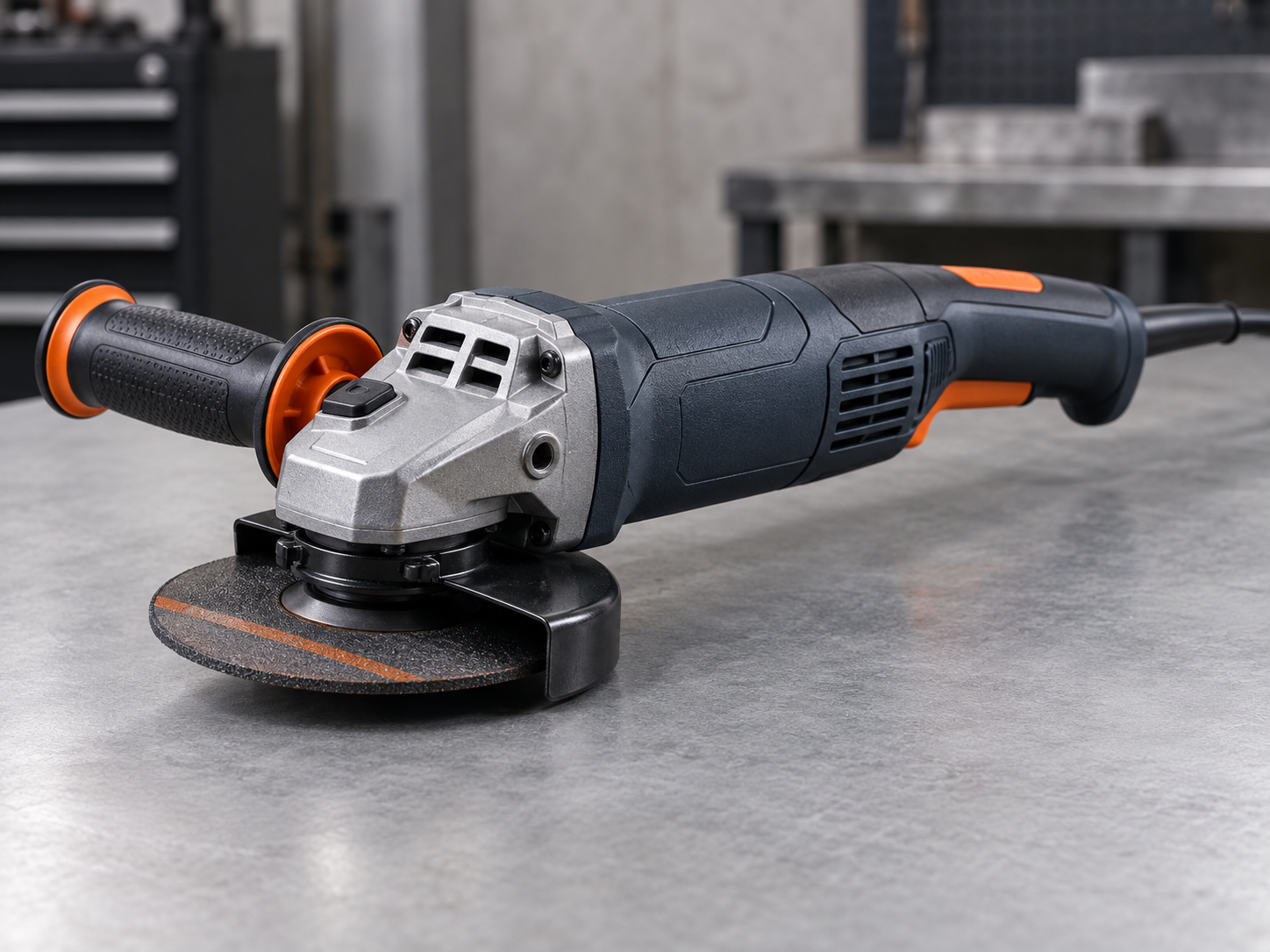 |
|
| Angle Grinder Product Photography: A Safety and Accuracy Checklist: review the exact production-intent configuration before approving the claim or control plan. |
Turn the requirement into an inspectable characteristic
An inspection point must tell the inspector what to examine, which sample or lot applies, what method to use and how to classify the outcome. Words such as secure, clean, strong or acceptable are too subjective unless an approved reference or measurable boundary explains them. Resolve ambiguity before the inspection visit, not while cartons are waiting for release. Separate design validation from shipment confirmation. A development test may establish whether a design and pack can satisfy a defined scenario. Pre-shipment inspection samples the produced lot for selected characteristics. Repeating a simplified check at shipment does not recreate the full validation programme and should not be represented as doing so. Photographs should show product identity, scale and the relevant condition. Preserve carton and lot traceability when a defect is found. If one observation suggests mixed revisions or systemic damage, expand containment before deciding whether the sampled result can represent the rest of the shipment. The outcome should be a decision record that another team can understand without attending the original meeting. Include product identity, sample status, method, observations, supporting files, limitations, disposition and the person authorized to close open issues. This improves trust because experience is presented as a repeatable process rather than an invented customer success story.
Mid-article sourcing CTA — Send Your Requirements: Send the destination market, intended application, target quantity, configuration and the decision your sample must answer. ToolViron can use that brief to prepare a focused product and inspection discussion. Send your requirements.
Six-step buyer and factory workflow
Step 1: Start from the approved regional SKU and accessory list
Record the exact sample, date, configuration and result. A photograph without product identity or an isolated number without method context is weak approval evidence. At this stage, relate the work back to grinder safety images without changing the approved configuration for convenience. If the result is unexpected, preserve the evidence and investigate before repeating the step.
Step 2: Have product and safety reviewers approve the shot plan
Compare the result with the written requirement and approved reference. If the requirement is unclear, hold the decision and close the specification gap before proceeding. At this stage, relate the work back to power tool marketing compliance without changing the approved configuration for convenience. If the result is unexpected, preserve the evidence and investigate before repeating the step.
Step 3: Use the correct guard, handle and wheel
Include variation by reviewing units, cartons or records from more than one point in production. A staged best sample cannot represent an entire order by itself. At this stage, relate the work back to angle grinder guard photo without changing the approved configuration for convenience. If the result is unexpected, preserve the evidence and investigate before repeating the step.
Step 4: Secure the workpiece and prepare realistic PPE
Close the loop with an accept, hold or reject decision, named owner and next action. Keep unresolved points visible to purchasing, quality, inspection and after-sales teams. At this stage, relate the work back to industrial product photo checklist without changing the approved configuration for convenience. If the result is unexpected, preserve the evidence and investigate before repeating the step.
Step 5: Review final images for editing errors
Define the owner, input and evidence for this step. Use the production-intent model and record any deviation so a later reviewer knows what the result actually covers. At this stage, relate the work back to B2B grinder catalog without changing the approved configuration for convenience. If the result is unexpected, preserve the evidence and investigate before repeating the step.
Step 6: Archive approval with the image and product revision
Keep the method safe and repeatable. Where electrical, high-speed, destructive or internal work is involved, use competent personnel and controlled equipment rather than an improvised demonstration. At this stage, relate the work back to angle grinder product photography without changing the approved configuration for convenience. If the result is unexpected, preserve the evidence and investigate before repeating the step.
Factory testing and production control
Factory testing is useful only when its scope is clear. Ask what is checked on incoming parts, during assembly, on every finished unit and on sampled units. Identify the method, equipment, acceptance rule and reaction to failure. A statement such as “100% tested” is incomplete until the buyer knows which characteristics are covered and which remain sample-based or outside the factory check. Convert sample decisions into controlled production documents. The bill of materials should identify the important parts and regional variants. Work instructions should capture assembly or setup points that influence the decision in this guide. Reference samples, photographs, measurement limits and inspection forms should carry revision status so an obsolete approval is not used for a current order. Use a pilot production run to confirm that ordinary line conditions can reproduce the intended product. Review units from different production times, not only a sample prepared by the project team. Record nonconformities, containment and corrections before authorizing mass output.
Shipment-inspection points
Pre-shipment inspection should confirm selected characteristics of the completed lot against the current purchase order and approved references. It cannot repair an unclear specification and does not replace design validation, compliance assessment or proper process control.
Shipment point 1: Confirm photographed accessories match packed contents
When the point fails, contain potentially affected goods and define corrective work before reinspection. Do not overwrite the original finding after rework. For this order, the report should state whether photographed accessories match packed contents and show the relevant evidence.
Shipment point 2: Confirm carton artwork uses the current product revision
Give the inspector an approved reference and a clear defect classification. The report should identify sampled cartons, product revision and supporting photographs. For this order, the report should state whether carton artwork uses the current product revision and show the relevant evidence.
Shipment point 3: Confirm claims beside images remain within verified evidence
Sample from the completed lot according to the agreed plan, preserving carton and batch traceability. A sampled inspection is a release aid, not proof that every unit was checked. For this order, the report should state whether claims beside images remain within verified evidence and show the relevant evidence.
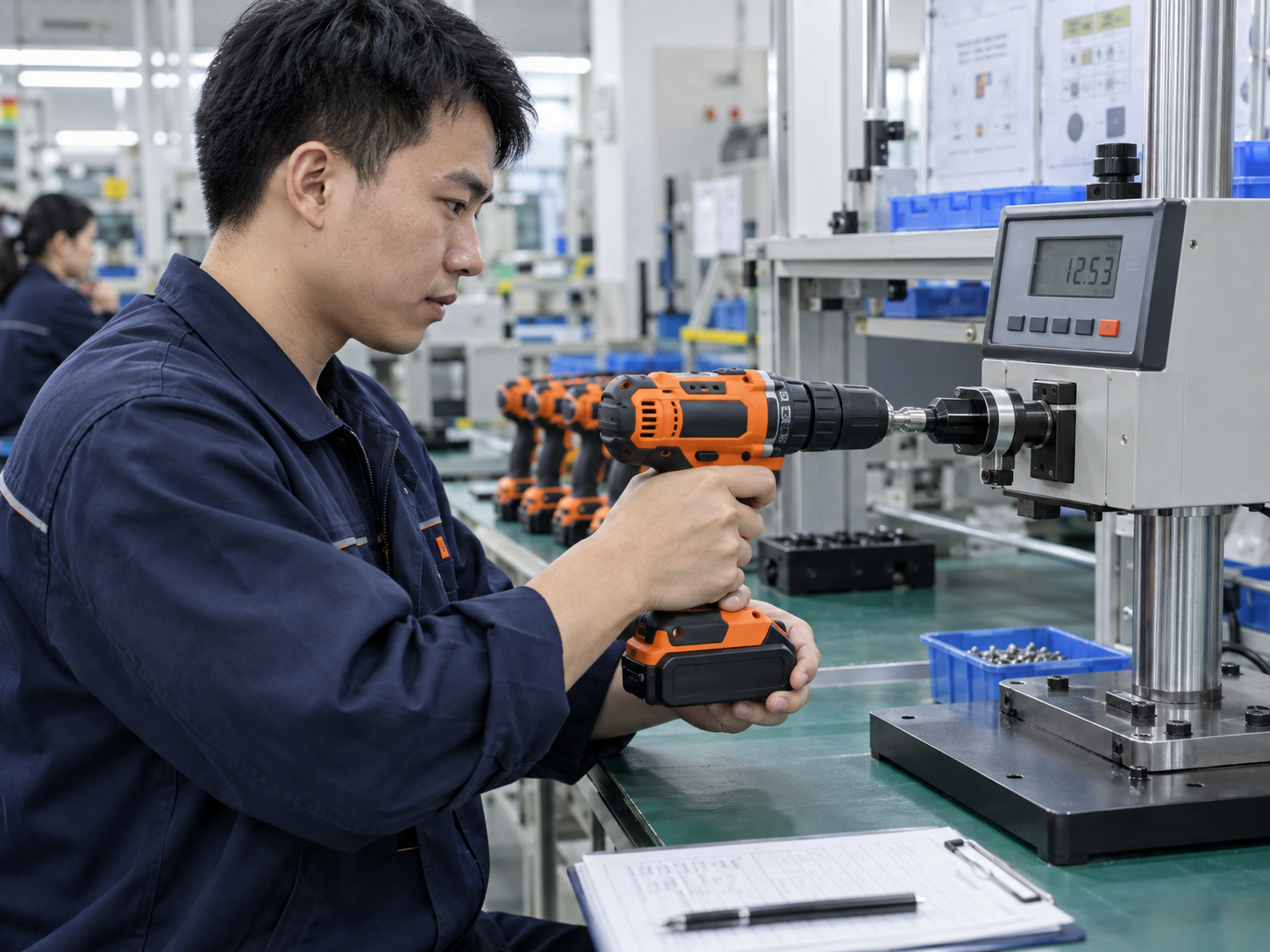 Angle Grinder Product Photography: A Safety and Accuracy Checklist: document the factory or shipment check against an approved reference.
Product claims, instructions and installation preparation
The safe claim boundary for this topic is: Label illustrative scenes honestly and never remove protective parts digitally to create a cleaner image. Put that boundary into product copy, distributor training and customer-support scripts. Do not let a narrow sample observation become a universal durability, safety, compatibility or performance promise. Installation preparation includes the final tool, accessories, consumables where applicable, current manual, warnings, labels and support route. Ask a person who was not part of development to review the unopened final pack and identify each component without factory coaching. Questions at this stage often reveal a missing adaptor, ambiguous diagram, optional accessory shown as included or compatibility statement that is too broad. Where the topic touches electrical safety, high-speed components, batteries, cutting systems or internal repair, use the exact manufacturer instruction and qualified personnel. Commercial inspection staff should not dismantle or operate a product beyond their competence. A hold decision is better than unsafe improvisation.
After-sales evidence and corrective action
Prepare an intake form around the same factors used at approval. Capture model and lot, market, accessory or paired component, application, operating condition, timing, visible evidence and any stop-use advice. Preserve returned units in as-received condition before disassembly. A customer video or photograph can guide triage, but it rarely establishes the technical cause by itself. Code confirmed causes separately from customer symptoms. Trend the data by model, lot, component revision and market. When a repeated issue is confirmed, examine both the occurrence cause and the escape cause. Replacing a unit may close the customer case, but the corrective-action record should still explain how recurrence and shipment escape will be controlled.
Authoritative source and related ToolViron guidance
OSHA angle grinder safety guidance provides authoritative context for this subject. It does not certify a ToolViron model and should not be used as a substitute for the exact product manual, applicable standards, destination-market rules or qualified testing. Continue with Build a distributor-ready power-tool catalog and the ToolViron angle grinder page. These internal links connect the specific question to a broader product, factory-control or sourcing cluster.
Enquiry popup plan
- Trigger: Show once after 40% scroll or 30 seconds of engaged reading; use exit intent on desktop only and do not repeat after dismissal during the session.
- Popup title: Need a Production-Ready Power Tool Configuration?
- Popup copy: Send your market, application, quantity and required configuration. ToolViron will use the details to structure a relevant product and quotation discussion.
- Required fields: Name, Email, Phone. Add Company, Country/Market, Product, Estimated Quantity and Requirements as recommended fields.
- Submit button: Send Your Requirements The popup should not interrupt the first answer or obscure safety guidance. Keep consent and privacy wording appropriate for the markets in which leads are collected.
Frequently asked questions
Can the guard be removed for a cleaner grinder photo?
No. Product imagery should represent the approved configuration and should not normalize removal of protective parts. Confirm the exact model, application and market before turning this general guidance into a purchase, service or compliance decision.
Should every photo include sparks?
No. Sparks may distract from product details and can imply an application or result that was not evaluated. Confirm the exact model, application and market before turning this general guidance into a purchase, service or compliance decision.
What should image approval record?
Keep the SKU, accessory, shot purpose, reviewer, date, final asset and any limitations or disclosure. Confirm the exact model, application and market before turning this general guidance into a purchase, service or compliance decision.
Can AI-generated application images be used?
They should be clearly illustrative, technically reviewed and free from false factory, customer or testing claims. Confirm the exact model, application and market before turning this general guidance into a purchase, service or compliance decision.
Conclusion
Angle Grinder Product Photography: A Safety and Accuracy Checklist should be managed as a documented buying decision. Define whether every published image accurately represents the approved product, accessory and safe application context, control the four factors, use production-intent samples and carry the approved criteria into factory testing, shipment inspection and after-sales support. The strongest evidence is specific, traceable and honest about limitations. It connects the customer requirement to the exact SKU and gives purchasing, quality, marketing and service teams one controlled reference. When qualified engineering, laboratory or local compliance input is needed, pause the commercial conclusion and obtain it.
End-of-article CTA — Get a Quote: Share your destination market, product application, estimated order quantity, branding needs and inspection priorities. ToolViron will use the information to prepare the next sourcing discussion. Get a quote from ToolViron.
Images illustrate product and inspection topics; they are not documentary evidence of a specific ToolViron test or customer project. Confirm the exact model and market requirements before ordering.