
A retailer receives a request for a replacement chain for a “16-inch electric chainsaw.” That description is not enough to pick a safe, compatible part. Pitch, gauge and drive-link count must fit the guide bar and drive system. A B2B buyer therefore needs a replacement-chain matrix attached to each saleable saw SKU, not a generic bin labelled by bar length. This is a service and inventory decision as much as a technical one.
Husqvarna's chain-size explanation identifies pitch, gauge and drive-link count as the core fit dimensions and notes that two chains for the same nominal bar length can differ. This article applies that principle to inventory planning; it does not authorize substituting a Husqvarna chain or dimension on an unrelated saw without its manufacturer's approval.
Build the matrix from the approved saw configuration
List each chainsaw body, guide bar and drive sprocket combination. Record the original chain maker and part number, pitch, gauge, drive-link count, cutter style where specified, bar length, packaging and any market-specific restriction. The bill of materials and the operator's manual should agree. If a saw is offered with two optional bar lengths, the replacement-chain matrix needs separate rows, not one generic “fits this model” entry.
Use the exact production-intent guide bar and sprocket for the approval check. A sample photo can be misleading if the bar or drive component changes in later production. Record revision and affected serial or lot range. A retailer should be able to identify the correct replacement from the product label or support record without guessing from appearance.
The existing bar-and-chain selection guide helps with the initial saw configuration. The stock-planning question goes further: which complete replacement SKUs must remain available after sale, how will staff identify them and what happens when a component revision changes compatibility?
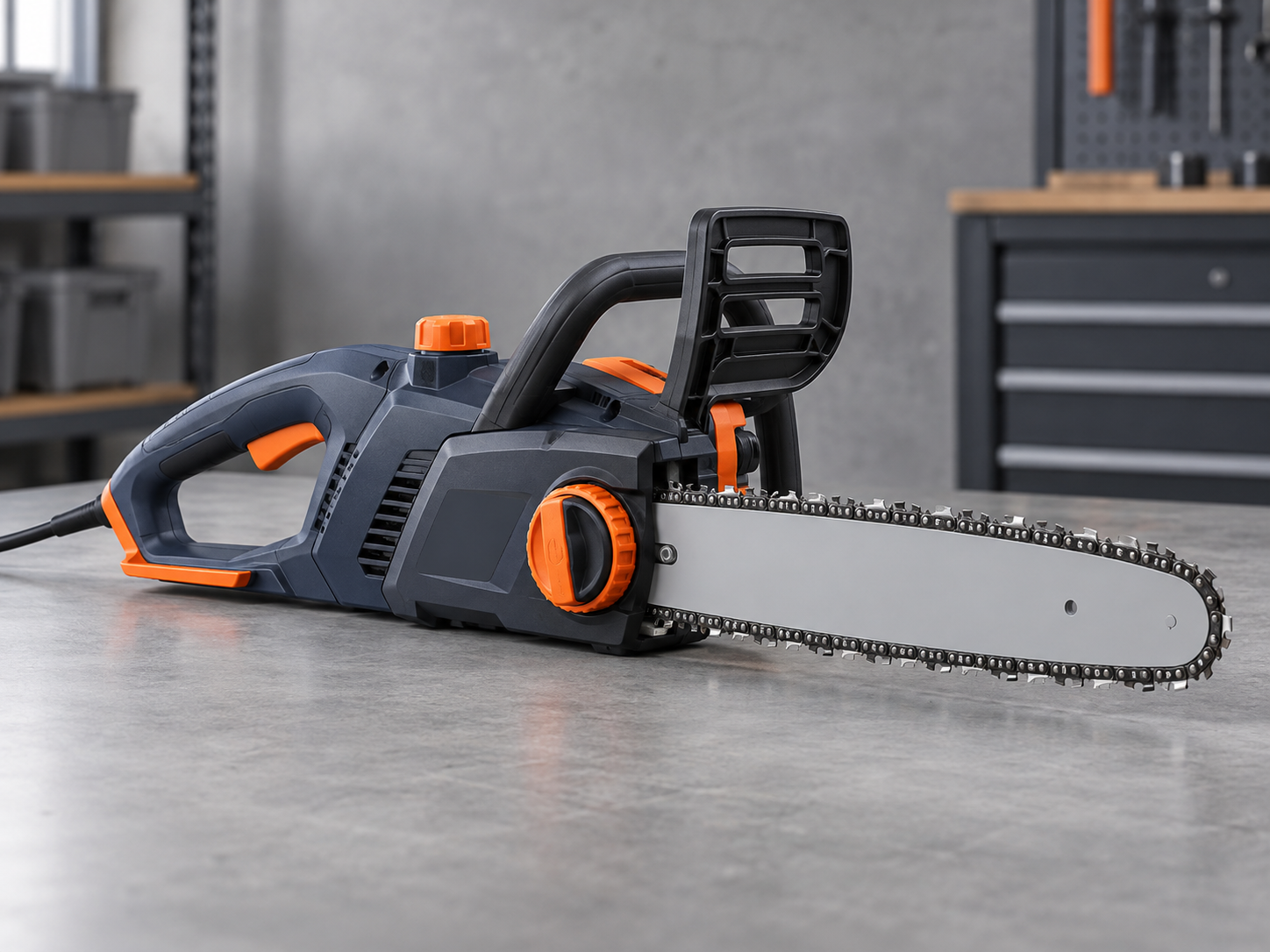
Caption: Nominal bar length alone cannot identify the replacement chain.
What each dimension controls
Pitch describes the spacing that must match the drive sprocket and, where relevant, the bar-tip sprocket. Gauge is the thickness of the drive link that runs in the guide-bar groove. Drive-link count determines the loop length for the particular bar and mounting geometry. All three must match the approved combination. A chain with the right bar-length label can still be too loose, too tight or wrong for the drive system.
Ask the supplier how the dimensions appear on physical parts and retail packaging. Some bars and chains are stamped, while others rely on a part number or manual. Where markings are hard to read, the importer should provide a lookup method. Retail staff should not infer pitch from a photograph or choose gauge by how closely a chain “seems to fit.”
If an alternate chain brand is proposed, obtain its compatibility confirmation for the exact saw/bar/sprocket configuration. Dimensional match is necessary but not the only consideration: cutter type, safety-related characteristics and the maker's approved combinations may matter. The buyer should not declare interchangeability based on three numbers alone.
Avoid a confusing assortment
A small range of saws can produce a surprisingly large replacement-chain assortment if bar, pitch or gauge differs between models. Before adding a new saw SKU, compare its service parts with the existing range. Sharing a chain platform can simplify inventory, but only when the approved cutting systems truly match. Do not force a common chain to meet a buying target if it compromises the saw's intended configuration.
Build a table visible to service and sales teams:
| Record field | Why it belongs in the stock file |
|---|---|
| Saw model and revision | Determines which cutting system was shipped |
| Bar part number and length | Connects the chain to an approved guide bar |
| Pitch, gauge, drive links | Controls physical fit |
| Chain part and cutter type | Controls approved application and replenishment |
| Serial or lot range | Allows a later revision to be separated |
| Replacement source and lead time | Protects after-sales availability |
Retail packaging should print the exact model compatibility and chain dimensions where appropriate. Avoid an overly broad “fits most 16-inch saws” claim. If an online marketplace requires a shorter title, keep the complete compatibility table in the listing body and support pages.
Test a proposed replacement part safely
Use trained personnel, the exact saw and bar, and the manufacturer's installation instructions. With the power source isolated, verify that the proposed chain can be installed and adjusted within the intended tensioning range. Check its travel by the method in the manual, without exposing staff to the cutters. Then carry out any functional verification required by the maker in a controlled area.
Document the part numbers, dimensions, fit observation and any restriction. Do not accept a loop that can be forced onto the bar but does not track correctly. Do not grind drive links or modify the bar to make a replacement fit. If an alternative part is needed, return to the approved cutting-system specification and obtain the right one.
For stock receiving, sample packaging labels against the parts inside. A supplier can mislabel a bag while the chain itself is correctly manufactured for a different SKU. Trace the lot and hold suspect stock if the label and physical count disagree. A chain packed under the wrong identifier can create many returns even without a manufacturing defect.
Mid-article sourcing CTA: Building a service-parts range for electric saws? Send the saw, bar and chain identifiers for a replacement-stock matrix discussion.
Forecast stock without overbuying
Initial spare-chain demand depends on saw sales volume, expected duty, local service habits and the retail channel. A garden specialist may sell replacement chains routinely; a general e-commerce seller may see fewer planned sales but more support inquiries. Begin with a modest, documented forecast and replenish from actual consumption. Do not treat a universal “one spare per saw” ratio as a law of the category.
Keep the replacement route alive for the period promised to buyers. Agree lead time, minimum order and end-of-life notification with the supplier. If a chain design is discontinued, identify an approved successor and update listings and service files before old stock disappears. An unannounced substitution is a change-control event, not just a purchasing convenience.
The electric chainsaw replacement-parts plan covers broader service components. Chain stock should be treated as a particularly visible subset because a customer may need a replacement long before any motor repair.
Use returns to improve the lookup system
If replacement chains are frequently returned as “too short,” investigate whether the drive-link count was wrong, the saw model was misidentified, the bar was previously changed or the customer misunderstood the tensioning sequence. Do not immediately blame the factory. Capture the physical bar marking, old chain part, new chain label and saw model before deciding.
Another common complaint is that a chain “fits but cuts badly.” That may involve sharpness, cutter type, installation direction, lubrication or a worn bar and sprocket. A compatibility matrix cannot fix maintenance, but it can separate a wrong part from a correct part used on a worn system. The crooked-cut diagnosis addresses one performance symptom in more detail.
Track reasons for return by replacement SKU. Repeated wrong-size purchases can justify clearer packaging or a barcode lookup. Repeated physical mismatches in one lot call for a supplier investigation. The useful feedback loop connects retail support to the controlled cutting-system record.
Design a lookup customers can actually use
A replacement matrix is only useful if the retailer can connect a customer's saw to the right row. Put the model number where it can be read on the tool and carton. Train support staff to ask whether the guide bar is still the original. If the bar has been replaced, the current bar marking and drive setup matter more than the original sales carton. A barcode or QR lookup can help, but the underlying part data must remain correct when a website changes.
Use plain language in the lookup: “Confirm saw model, bar part, pitch, gauge and drive-link count before ordering.” Do not present bar length as the sole selector because two products may share that length. A support page can show where the relevant markings are located without implying that every manufacturer stamps them in the same place.
Test the lookup with a store employee who did not build it. Give them a physical saw, old chain pack and mock customer question. If they cannot confidently select the approved part, improve the data or the labels before launch.
Handle alternate suppliers without losing control
An importer may want a second chain source to reduce lead time. The alternate should be reviewed for dimensions, approved cutter characteristics, packaging, labeling and application on the actual saw. A dimensional match alone is not evidence that the entire cutting behavior is equivalent. Keep the original and alternate part numbers in the same controlled record, with an approval date and affected saw revisions.
Do not mingle the two suppliers' chains in one unmarked retail bin. If returns increase, the team needs to know which part and lot the customer received. A cost saving that removes traceability can be expensive once a performance or safety question appears. If the alternate requires a different file size or maintenance instruction, update the after-sales offer before selling it.
Forecast by installed base and use
Initial stock can be planned from saw units sold, expected cutting intensity, seasonal demand and replacement lead time. A professional tree-care channel may use more chains per saw than a light garden channel; do not apply one ratio to both. Watch actual sell-through and returns, then revise reorder points. A slow-moving rare chain may still be essential to honor service support for a small installed base.
The buyer should also decide whether chains will be stocked centrally, regionally or at dealers. Central stock reduces duplication but increases delivery time; local stock improves immediacy but can create obsolete variants. A compatible common platform helps only if the approved fit truly matches across saws. Document the commercial trade-off instead of forcing technical interchangeability.
Check the first replacement sale
The first replacement-chain order after launch is a valuable reality check. Trace it from customer question through lookup, warehouse pick, package label and physical part. Can the support agent identify the chain without calling engineering? Does the package carry the same model and dimensions as the approved matrix? Does the warehouse system distinguish it from a near-identical loop? Record any hesitation or mismatch and correct the process before volume grows.
This small walkthrough also reveals whether the promised spare is actually available in the destination market. A supplier may have stock at the factory but a customer may wait weeks for a single loop. The importer should choose a practical service route—regional stock, dealer stock or direct shipment—and set honest expectations in product information. After-sales support is part of the original saw buying decision.
Keep chain identification visible at every handoff
A replacement-chain matrix is only as reliable as the information printed on the saw, bar, manual and service listing. Compare all four against the approved bill of materials for each saleable variant. If the bar can be changed by the owner, the service page should direct them to identify the installed bar and chain rather than assuming the original carton configuration still applies. Avoid a generic claim that any chain of the same nominal bar length will fit.
During pilot packing, take one finished saw from the line and ask someone outside engineering to order its correct replacement loop using only the consumer-facing information. Check pitch, gauge, drive-link count and the manufacturer's compatibility guidance. Then physically compare the picked chain package with the approved bar specification before recording the result. This is a workflow test, not a recommendation for an untrained person to fit or operate the chain.
For a market with several bar options, maintain separate spare-part identifiers and clear product photographs. A seller can put the correct chain in stock and still ship the wrong one if two near-identical listings share a title or image. Review returns labelled “does not fit” as possible data-quality problems as well as product complaints.
Frequently asked questions
Is bar length enough to choose a chainsaw chain?
No. Match the saw and bar's approved pitch, gauge and drive-link count, then confirm the chain type and manufacturer compatibility. Nominal bar length is only one descriptor.
Can two electric saws use the same chain if they have the same pitch?
Not necessarily. Gauge and drive-link count may differ, as can approved cutter type and bar geometry. Verify the complete cutting-system combination.
What if a replacement chain fits physically but is not listed in the manual?
Do not assume it is approved. Ask the saw or chain maker for compatibility confirmation for the exact model and configuration before selling it as a replacement.
How should a retailer handle a “wrong chain” return?
Record the saw model, bar part, old chain dimensions, replacement package and observed mismatch. That evidence helps distinguish a listing error, changed bar, mispacked stock or user misunderstanding.
Conclusion
Replacement-chain planning begins with the exact saw, bar and sprocket combination, then carries that identity through labels, inventory, support and change control. A clear pitch–gauge–drive-link matrix prevents many avoidable returns and helps customers buy a part they can use safely.
Send your requirements
Share the electric saw models and bar configurations in your intended range. ToolViron can discuss the cutting-system records and replacement-parts planning needed before launch. Send your requirements to begin.
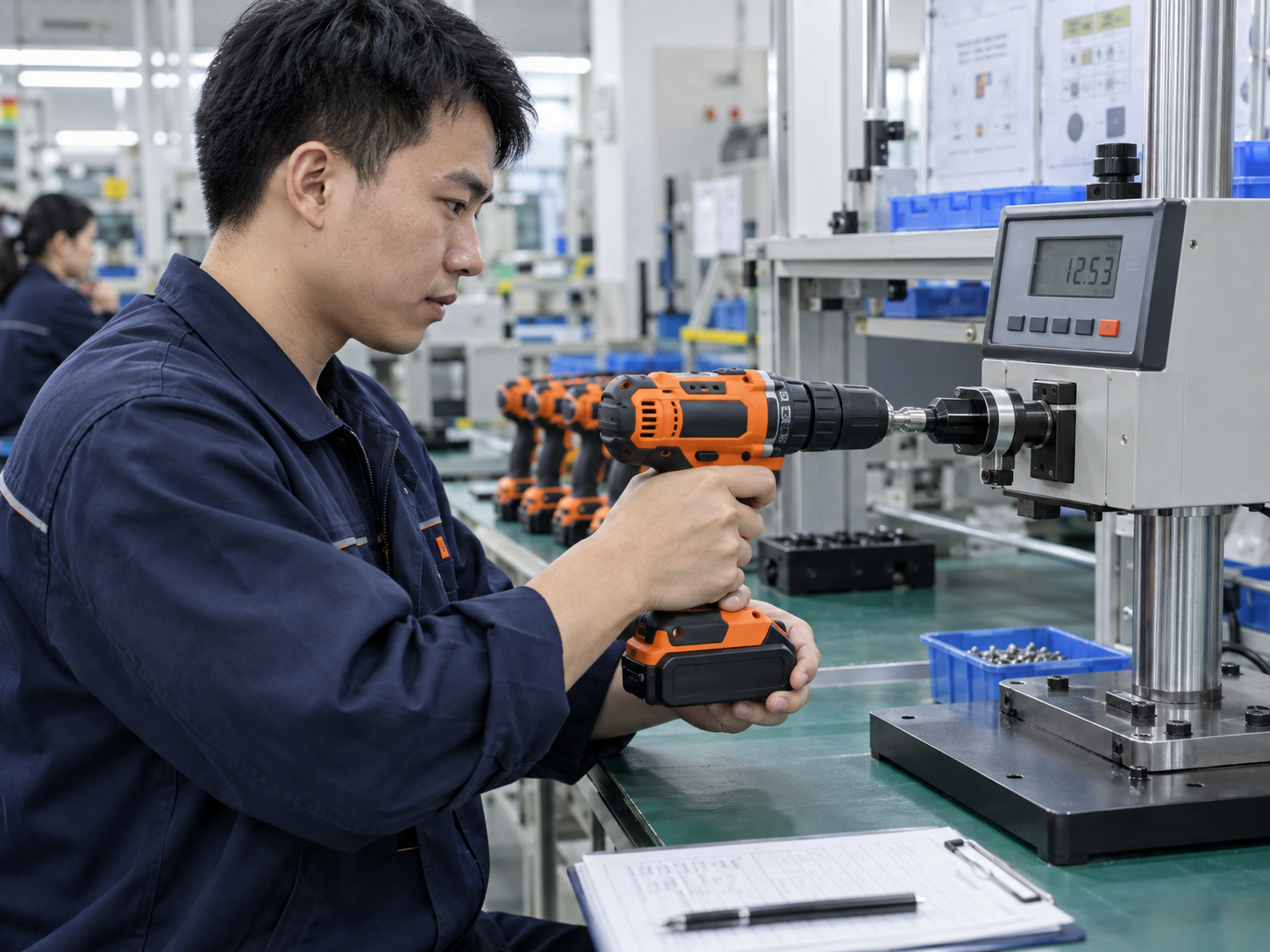
Caption: Physical part checks should agree with the chain dimensions shown on the retail pack.
Images illustrate product and inspection topics; they are not documentary evidence of a specific ToolViron test or customer project. Confirm the exact model and market requirements before ordering.