
An electric chainsaw customer reports that every cut curves to one side. The retailer may send a replacement saw body, only to see the same complaint when the old bar and chain are reused. A crooked cut usually requires investigation of the entire cutting system: tooth condition and symmetry, guide-bar rails, chain tension, lubrication, sprocket fit, workpiece support and operator method. The motor is only one possible contributor.
Husqvarna's crooked-cut troubleshooting note identifies uneven sharpening and guide-bar wear among common causes. This article translates that logic into a distributor's intake and sample-review process. It is not permission to operate a saw with a suspect chain or to attempt unsafe repair. Follow the exact saw's manual and use qualified service where needed.
Define the symptom before taking parts apart
Ask whether the saw drifts left or right from the start of a cut, only in deep cuts, or only in certain timber. Does the complaint occur with the original chain or after a replacement? Has the bar been rotated or replaced? Does the chain stay seated and lubricated? These questions reveal whether the problem is consistent, progressive or linked to a specific component change.
Ask for photographs of the stopped, isolated saw and a representative cut if safely available. Do not ask a customer to film a dangerous cut to prove the issue. Record the saw model, serial or lot, bar and chain part numbers, workpiece and number of prior sharpening cycles. “Cuts crooked” without this context is not a useful failure code.
Separate an actual curved kerf from a rough, wandering entry. A small branch that moves or a log that pinches the bar can make a cut difficult even if the chain tracks correctly. Use a secured test workpiece when a qualified service team evaluates the saw. Do not treat one uncontrolled field video as a calibrated alignment measurement.
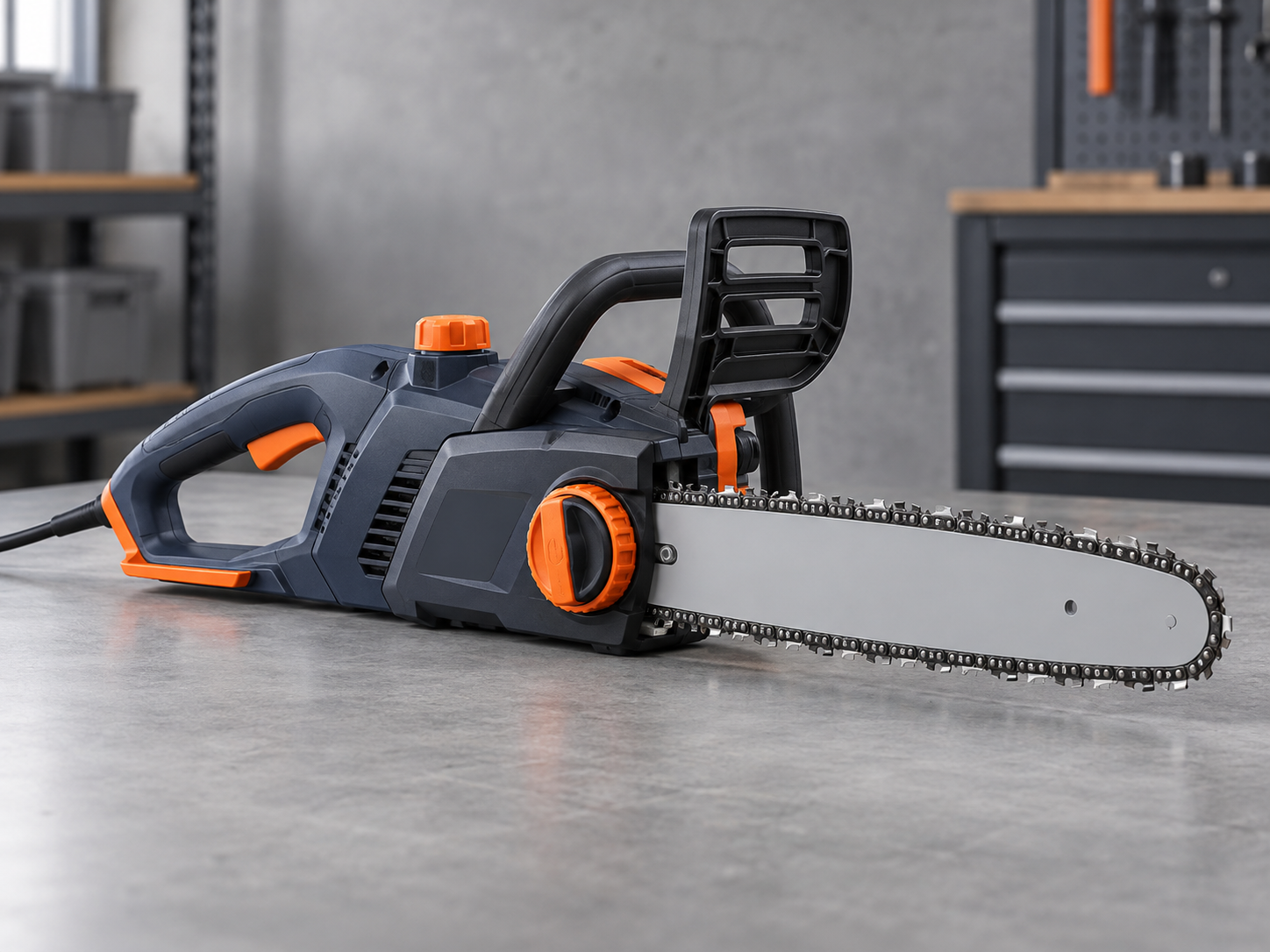
Caption: A crooked cut should trigger a cutting-system check, not an automatic motor replacement.
Inspect the chain first
With the power source isolated, inspect the chain according to the maker's instructions. Unevenly worn, damaged or differently sharpened left and right cutters can make one side remove more material. A dull chain may also cause the operator to push harder, increasing deflection. Examine whether several cutters are chipped and whether the chain matches the bar and sprocket.
If the chain has been sharpened, compare the quality and consistency of both sides. Do not attempt to correct badly damaged cutters with arbitrary filing; follow the chain maker's limits or replace the chain. The electric chainsaw sharpening-kit article explains why file size and guidance matter to the customer experience.
Confirm chain tension by the model-specific method. A chain that is too loose or too tight can affect tracking and wear. A replacement chain should be checked against pitch, gauge and drive-link count, not just nominal bar length. The replacement-chain stock guide provides a matrix for that fit.
Inspect the guide bar and drive system
Look at the bar groove, rails, oil holes and nose region if the bar design includes a sprocket. Uneven rail height, burrs, bending or a widened groove can permit the chain to lean. Husqvarna's guide-bar maintenance article lists crooked cutting and rapid chain wear among signs that inspection is needed.
Do not assume a worn bar can be made acceptable by tightening the chain harder. Excess tension can create other problems. The service team should compare the bar with the maker's criteria and replace it when required. A bar rotated periodically according to its instructions may wear more evenly, but rotation cannot reverse severe damage.
Check the drive sprocket and chain compatibility as part of the same system. A badly worn or mismatched sprocket can cause poor engagement and abnormal wear. A service shop can assess it against the manufacturer's specifications. For a buyer, the important point is to include the sprocket in the diagnosis rather than repeatedly replace chains on a damaged drive system.
Review lubrication and cutting method
Insufficient chain oil can increase heat and wear at the bar and chain, which may eventually affect tracking. Check oil level, oil passages and delivery using the method specified by the saw maker. A visible oil tank is not proof that the chain receives oil. The bar-chain oil-system guide covers this review.
In a controlled service test, use timber that is stable and within the saw's intended application. The operator should follow the manual's cutting techniques and PPE requirements. A supported log can still pinch the bar when its weight shifts, so the test setup must be planned rather than improvised. If the cut binds or the saw behaves unexpectedly, stop and investigate.
Record the chain condition, bar condition, tension, lubrication and workpiece before any powered test. Then observe whether the cut tracks straight under the approved method. A new approved chain on the same bar can help isolate the chain; a verified bar-and-chain set can help isolate the bar. These comparisons should be done by qualified personnel using manufacturer-approved combinations, not by swapping random parts.
Mid-article sourcing CTA: Receiving crooked-cut complaints on an electric saw range? Send the saw, bar and chain identifiers plus the observed symptom for a structured support review.
Make the result useful to a supplier
An effective supplier report distinguishes the confirmed finding from a hypothesis. “Three returned saws from lot X cut to the right with their original chains; the same bodies cut straight with approved replacement bar-and-chain assemblies” is far more useful than “motors defective.” Preserve the original cutting parts, photos and service records. If the issue clusters in one chain lot, trace that lot to shipments and spare stock.
Do not use a successful replacement chain as proof that the original chain was a manufacturing defect. It may have been worn, incorrectly sharpened or damaged in service. A qualified assessment and usage history are needed. Equally, do not dismiss all complaints as user maintenance if multiple new units show the same pattern.
The response may involve revised instructions, better accessory packaging, a different approved chain supplier, improved bar inspection or a production correction. If the supplier changes the cutting system, perform a full change-control review so the manual and replacement-stock matrix stay accurate.
Train retail and service teams
Give support staff a short question set and photo guide that shows where to find the bar and chain identifiers. Provide a safe stop-use instruction for damaged or derailing chains. The aim is not to turn retail staff into saw mechanics; it is to collect enough evidence to route a case correctly and avoid selling an incompatible replacement part.
For new customers, include basic chain tension, lubrication and sharpening guidance from the maker in the onboarding materials. If the original kit lacks a file or replacement chain, say so clearly. A customer should understand what maintenance items are needed before the first season of use.
At shipment inspection, check that the installed bar and chain match the approved configuration, the manual names the right parts, and the packaging protects the bar. A bent bar or damaged chain before first use can create a complaint that looks like a product-design problem.
Build a controlled comparison without overcutting
For a service investigation, a short set of cuts on stable material can be more useful than an extended endurance test. Mark the intended cut line, photograph the bar-and-chain condition and have a trained operator make a limited number of cuts within the model's instructions. Stop if the chain binds, derails or the cut pulls strongly. The test is to isolate a symptom, not to demonstrate cutting speed.
Change one approved component at a time. If a new chain resolves the issue, inspect the original chain before declaring it defective. If a new bar resolves it with the same approved chain, inspect rail wear and straightness. If neither changes the result, look at sprocket, mounting and workpiece setup with qualified technicians. Each swap should be logged with part number and condition so the conclusion can be revisited.
The service report should state what remained constant. Otherwise, a result may be misleading: the operator might also have changed timber, support or chain tension. A simple table of trial number, chain, bar, material and cut direction can prevent this confusion.
Separate wear from new-product nonconformity
A crooked cut after a season of heavy work may reflect ordinary cutting-system wear. A crooked cut on several newly unboxed saws from one lot suggests a different concern. Age alone is not proof; check service history and physical evidence. Look for asymmetric cutter damage, bar rail wear, packaging impact and the exact part numbers.
Do not close a new-unit complaint as “needs sharpening” without inspecting the factory-fitted chain. If the chain was dull or uneven at first use, the factory or accessory supplier may need a corrective action. Conversely, a returned tool with a heavily altered chain should not be assessed as if it still represented the original shipment.
Keep warranty decisions and technical findings separate. A market may have customer rights that apply even when the technical cause is still being investigated. Support should resolve the customer case while preserving information useful to the product team.
Prevent repeat cases through clearer support
A brief maintenance card can show the customer how to recognize a dull chain, find the approved replacement part and identify symptoms that require service. It should point to the full manual and avoid risky shorthand instructions. Better initial information can reduce forced cutting, which may wear the bar or worsen the problem.
Retailers should stock the correct chain and bar or provide a clear ordering route. If the approved parts are unavailable, customers may fit a near match and create a new fault. Review service-part lead time when choosing the original saw range, not only after complaints rise.
When a confirmed production issue is corrected, retest the revised cutting system and update the replacement-parts matrix. A technical fix that leaves old support information online can create a second wave of mismatches.
A simple escalation rule for retailers
Retail staff can safely gather model, chain and bar information, but they should not diagnose an unstable saw by trial cutting in a store. If the chain derails, the bar is visibly bent, the brake or control behaves abnormally, or the saw pulls strongly in a controlled service test, stop ordinary support and route the product to qualified review. If a customer reports injury or a near miss, follow the market's incident procedure immediately.
For less urgent performance complaints, provide a checklist of what to photograph on the stopped saw and which maintenance history to capture. A precise intake can save repeated shipping of a sound motor body while the worn bar remains with the customer. It can also reveal a batch of factory-fitted chains that genuinely needs containment. The rule should help people recognize the boundary of their competence, not turn every retailer into a saw technician.
Distinguish a one-off complaint from a pattern
For an importer, a single crooked-cut report is an intake problem; several similar reports from the same lot may be a containment problem. Record the saw model, serial or lot range, supplied bar and chain part numbers, first-use date and whether a replacement chain was fitted. Keep photographs of both sides of the stopped bar and the cutting edges where safe to obtain. Do not ask customers to continue cutting merely to produce video evidence.
Compare complaints with the approved production configuration and shipment records. If the same symptom appears on untouched saws from one batch, arrange qualified examination of retained or returned units and consider holding unsold stock while the cause is assessed. If only heavily used saws are affected, maintenance, bar wear and chain sharpening remain possible factors, but that is not proof of customer fault. The distinction should follow evidence, not a default warranty position.
Communicate the next step plainly: stop use if the saw is unstable, identify an authorized service route and explain what information will help the review. A diagnosis tree should make escalation faster without implying that a remote support agent can certify the saw safe to operate.
Frequently asked questions
Is a crooked cut proof that the electric motor is misaligned?
No. Chain sharpening and wear, guide-bar condition, tension, lubrication and workpiece support are more direct things to check first. A qualified service team should isolate the cause rather than assume the motor is at fault.
Can a new chain solve every crooked-cut problem?
No. A worn or bent bar, mismatched sprocket or unstable cutting setup can still cause trouble. Use an approved replacement chain and inspect the rest of the cutting system.
Should a customer keep cutting if the saw pulls strongly to one side?
No. Stop and follow the manufacturer's inspection guidance. A strong pull can signal damaged or mismatched cutting parts and may lead to unsafe handling.
What evidence should a distributor send the factory?
Provide saw and cutting-part identifiers, lot or serial data, photos of stopped parts and cuts, maintenance history, and a controlled service observation. Distinguish what was observed from what remains a hypothesis.
Conclusion
Crooked cutting is a diagnostic problem, not a one-part verdict. Inspect the chain, bar, lubrication and approved fit, then test safely on a stable workpiece. A distributor that records those steps can resolve more cases correctly and give the supplier information that supports real improvement.
Send your requirements
Share your saw model and cutting-system configuration if you are preparing a new range or investigating repeat complaints. ToolViron can discuss the sample and service checks to include in the programme. Send your requirements to begin.
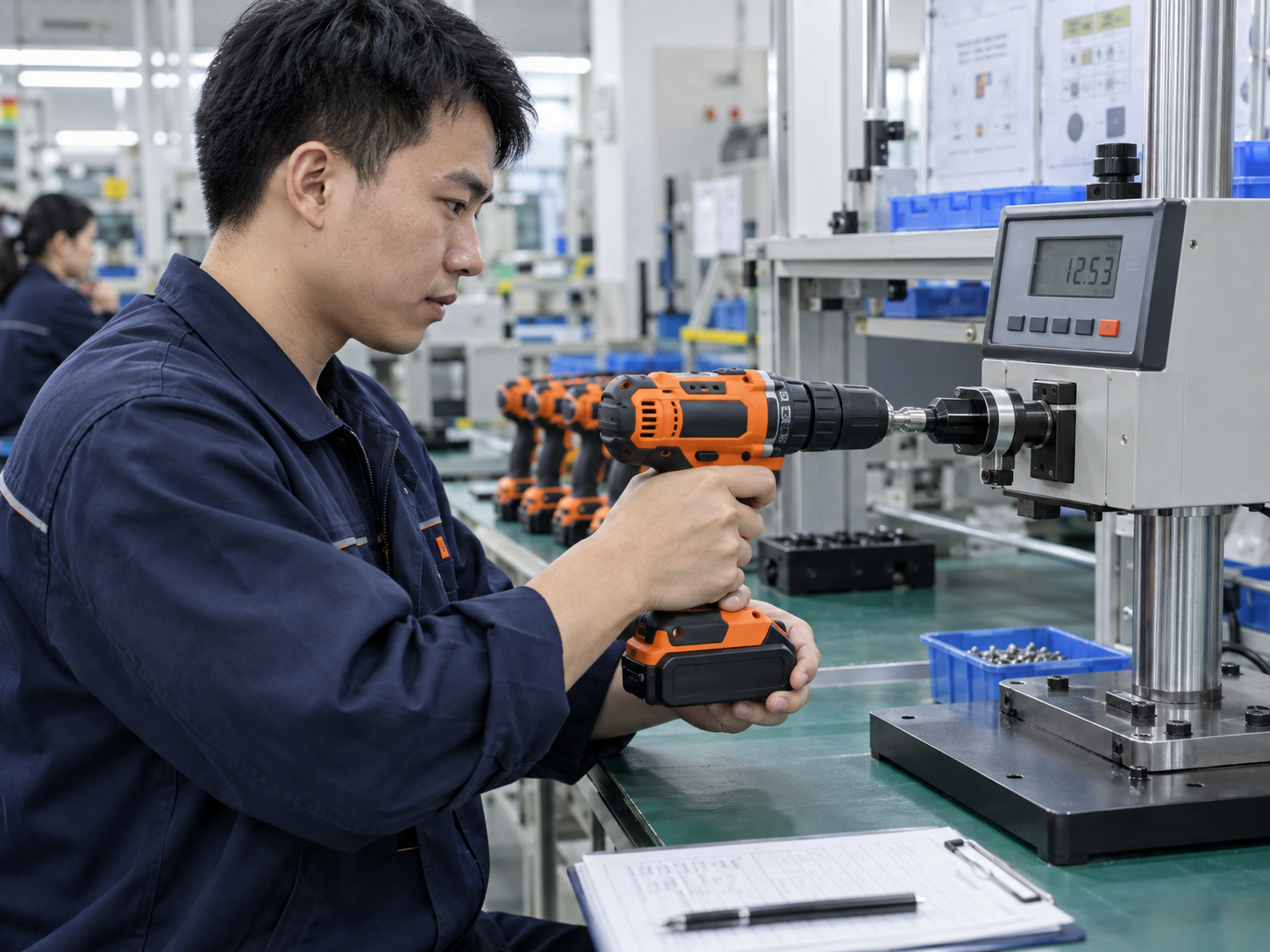
Caption: Controlled inspection should identify the cutting component behind a repeat complaint.
Images illustrate product and inspection topics; they are not documentary evidence of a specific ToolViron test or customer project. Confirm the exact model and market requirements before ordering.