
A drill driver and an impact driver are not interchangeable answers to the same fastening brief. A drill driver rotates a conventional chuck and normally offers a selectable clutch for controlled screwdriving as well as drilling. An impact driver usually holds a hex-shank bit and adds rotational impacts as resistance rises. For a distributor, the useful question is not which tool has the larger published torque figure. It is which combination of drilling, pilot-hole preparation, fastener size and operator control the customer actually needs.
The distinction matters at the retail shelf. A customer may buy an impact driver because the name sounds like a more powerful drill, then discover that ordinary round-shank drill bits do not fit. Another may buy only a drill driver for repeated long structural screws and find the workflow slow or tiring. A responsible assortment makes the two jobs, the compatible accessories and any deliberate overlap visible. This article is a buying framework, not a claim that ToolViron sells every impact-driver configuration described here.
Start with the fastening task, not a tool name
Write a task list before comparing samples. Include the substrate, screw type and length, pilot-hole requirement, drilling diameter, number of fasteners in a session and work location. A furniture assembler driving small screws into prepared panels has a different control requirement from a deck installer driving long screws into structural timber. A maintenance buyer may need one compact tool to drill and drive; a contractor may benefit from a two-tool kit so the bit does not need to be changed for every pilot hole.
The driver category also depends on the accessory system. A drill driver accepts a compatible bit in its adjustable chuck and can be set up for many drilling and driving tasks. An impact driver generally accepts an appropriate hex-shank accessory. Some special adapters allow drilling with an impact driver, but that does not make it the most convenient or controlled choice for every hole. DEWALT's impact-driver support note explicitly discusses impact-ready bits and adapters; an importer should identify exactly what its own proposed kit includes.
Do not turn an accessory possibility into a universal product promise. A listing that says “drills all materials” without naming the bit interface, permitted accessories or work pattern is an invitation to returns. Instead, give the customer a brief route: frequent hole-making plus controlled screwdriving usually points to a drill driver; repetitive higher-resistance fastening may justify a separate impact driver; mixed installation work can justify both.
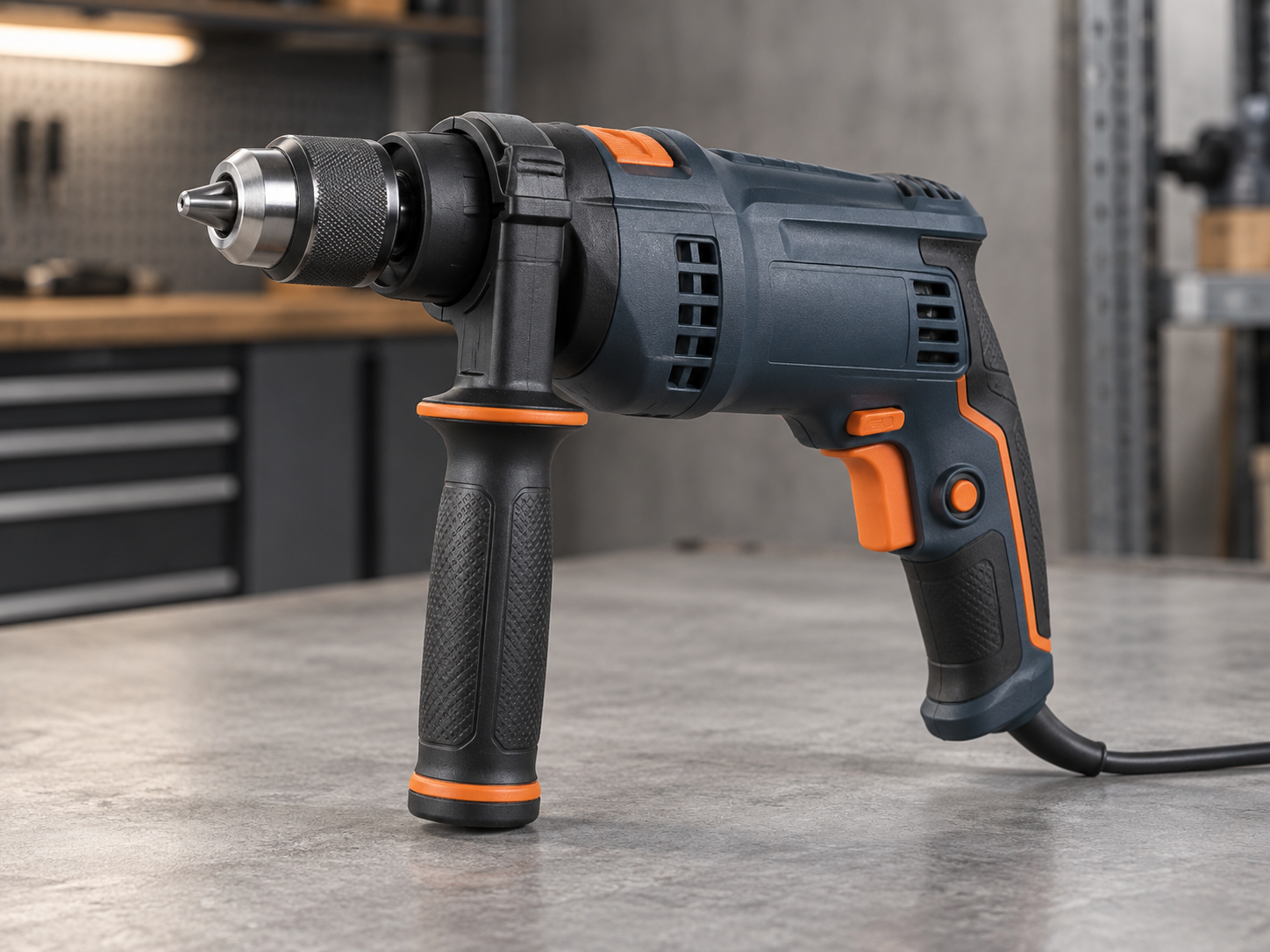
Caption: A buyer should compare tools using the intended fastener and matching bit, not catalogue torque alone.
Compare control before maximum torque
The clutch on a drill driver is valuable when the customer must stop at a repeatable setting to avoid overdriving a small screw or damaging a work surface. It is not a calibrated torque wrench. The same setting may behave differently with a changed battery state, screw size, substrate or bit condition. The practical sample test is to select a setting, drive a series of representative screws, inspect seating depth and repeat after the operator changes material or screw length.
An impact driver can make resistant screws easier to drive because the mechanism applies rotational pulses. That characteristic does not remove the need for control. An inexperienced user can still damage the fastener, bit or workpiece by holding the trigger too long. Check the exact sample's variable-speed trigger, mode selection if present, bit retention and handling. An advertised “precision mode” needs a defined demonstration on the actual model, not an assumption based on a category name.
The difference is especially important for customer service. When a complaint says “the tool strips screws,” the cause may be the bit profile, screw quality, pressure, driving angle or choice of tool rather than a defective motor. A useful product page and instruction insert should explain the tool's intended fastener range and recommend a pilot hole where appropriate. The related clutch-setting guide explains how to brief a controlled screwdriving test.
Check the complete bit and fastener system
A drill driver with the wrong screwdriver bit can cam out and look weak. An impact driver with an unsuitable accessory can fail in a different way. Specify the bit shank, profile, length, holder, impact rating where relevant and the replacement route for local customers. A generic “20-piece accessory kit” tells the buyer little about compatibility or durability. The sample sheet should identify every supplied bit and what job it is for.
Inspect the chuck or hex holder with the power source isolated. Check that the accessory seats fully, is retained as intended and can be removed without a confusing sequence. Then test with the battery or mains supply connected in a controlled work area. The tool must be evaluated with a realistic bit and fastener; it is not meaningful to compare a fresh premium bit on one sample with a worn, poorly fitting bit on the other.
If the range includes both tools, decide whether the same battery platform is a commercial benefit. Shared batteries can simplify a two-tool kit, but only when pack, charger and compatibility are genuinely consistent. Do not infer cross-compatibility from a common colour or voltage label. Keep a variant-controlled parts list for each kit and verify the actual battery interface during sample approval. The cordless drill kit guide covers these supporting decisions.
Build a fair side-by-side sample test
Create a small test panel that reflects the target channel. For a furniture retailer, use its common board type and screw lengths. For an installation distributor, include timber or sheet material, the intended fasteners and a pilot-hole task. Record the material, number of fasteners, new versus used bits, tool mode and operator. The purpose is to see a work pattern, not to publish an unsupported laboratory-style speed claim.
Run the same sequence with both products where the task is within each tool's instructions: mark positions, drill any required pilot holes, change or install the driving bit, drive fasteners, inspect seating and note battery or thermal interruptions. Record the time spent on accessory changes as well as the actual driving time. A drill driver may be slower on one long fastener but more efficient for a sequence requiring repeated pilot holes and controlled finishing. That workflow distinction is more useful to a buyer than a single “fastest” label.
Observe ergonomics and user information too. Can a new user distinguish forward and reverse? Is the work light useful at the intended angle? Can an operator maintain control at the end of a fastener? Does the tool fit the proposed case with its bit holder and battery? These details determine whether the product is ready for a beginner-facing retail channel or better suited to a knowledgeable trade distributor.
Keep the test conclusion bounded: “Under the stated material and fastener conditions, sample A gave better small-screw control; sample B reduced effort on the long-screw sequence.” A buyer can use that statement to position two products honestly. Avoid presenting a local sample observation as a universal engineering result or a guarantee for every material.
Mid-article sourcing CTA: Planning a drill-and-driver assortment? Send the intended fastener schedule, target market and kit contents for a configuration and sample-review discussion.
Translate the difference into a retail offer
The simplest range may include one versatile drill driver and one specialist impact driver, but a compact assortment is not automatically better. A hardware retailer serving DIY users may need the drill driver first because it covers drilling and controlled screwdriving. A trade counter serving installers who already own a drill may sell an impact driver as an addition. An e-commerce bundle can present the two-tool workflow explicitly: drill the pilot hole with one, fasten with the other, and specify the included batteries and bits.
Use separate category labels and photographs. “Impact drill,” “hammer drill,” “impact driver” and “rotary hammer” are not synonyms. A buyer can confuse axial percussion for masonry drilling with rotational impact for fastening. The impact drill versus rotary hammer guide addresses the masonry pair; keep those terms out of a fastening comparison unless clearly explained.
Carton claims should be checked against the approved configuration. If the packaging photograph shows two batteries, an impact-rated bit set or a case, each must be present in the retail unit. If a model changes to a different chuck or holder, update the product data, instructions and web listing before the next shipment. This is a common place where a technically acceptable tool becomes a poor customer experience.
Make factory and shipment checks relevant
For a drill driver, agree checks for chuck operation, clutch or mode selection, speed control, reverse, battery seating or cable connection, visible finish and accessories. For an impact driver, add the hex holder, retention, mode function if offered and the specified bit set. This is a product-specific inspection discussion, not a promise that every unit is subjected to every possible performance test.
Before shipment, compare packed units with the approved sample and bill of materials. Inspect the tool identity, power source, accessory count, labels, manual language, case or carton and any claims printed on the packaging. A photographed sample approval and a clear packing checklist make it easier to investigate a later complaint about a missing bit or wrong battery. ToolViron's quality overview describes the checkpoints that a buyer can put into an agreed plan.
Where the destination market has product-safety or documentation obligations, confirm the exact model and applicable requirements with qualified advisers. The general safety scope for electric hand-held tools is described by IEC 62841-1, but the applicable product-specific parts and national adoption must be checked for the final configuration. The article should not be read as certification of a ToolViron model.
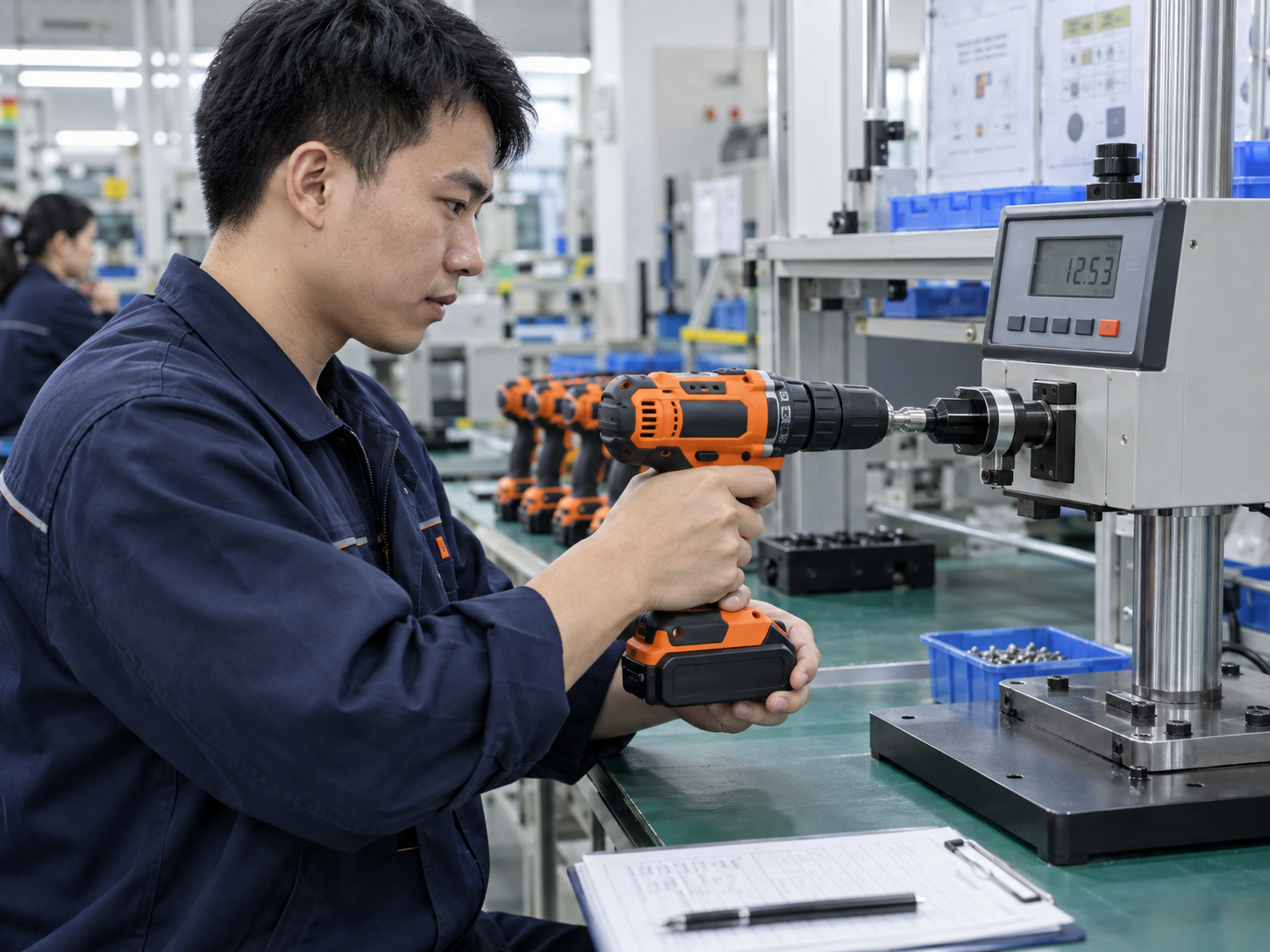
Caption: Illustrative test-bench photography: a buyer should request records for the exact model.
A worked assortment decision for an installer channel
Imagine a distributor serving teams that install shelving and interior fixtures. Its first brief says “one tool for everything,” but the task list reveals two different sequences. In one, workers mark, drill small pilot holes and drive screws into finished panels. In the other, they repeatedly drive longer structural fasteners into framing. The buyer should not jump to a single winner. It can test a drill driver on both sequences, then ask whether a second impact driver changes the total workflow enough to justify a two-tool kit.
The comparison should include the time spent changing bits and setting the clutch. If the same tool alternates between pilot drilling and driving, the operator may change accessories often. If the team uses two tools, one can keep a drill bit and the other a driving bit fitted. That advantage must be weighed against the higher kit price, extra battery or charger planning and the training needed to explain which tool does what. The outcome is a range decision rather than a performance contest.
Suppose the smaller screws sit consistently with the drill driver's clutch but are overdriven by the impact driver in a hurried trial. That does not mean the impact driver is poor; it may be the wrong primary tool for finished panels or the operator may need a different bit and control method. Conversely, if the drill driver completes long screws only with uncomfortable effort, it may not be the best single-tool offer for the framing task. Report each observation with its fastener, timber and bit details.
The final catalogue could offer a drill-driver kit as the general installation entry point and a separate impact-driver add-on for frequent resistant fastening. Or a two-tool bundle might be the best trade offer if the channel already supports the shared battery platform. Both positions are defensible when the customer task is visible. Neither should be sold with an unrelated masonry “impact drill” label, which would blur the very distinction the test established.
Questions to resolve before purchase order approval
Ask each supplier to specify the chuck or hex holder, compatible supplied bits, battery and charger IDs, switch or mode details, replacement accessory route and packed contents. Request one controlled sample for every promised retail SKU. The buyer should retain the fastener and material used in the approval trial or at least a complete record of them. A quotation that names only peak torque and tool length leaves the most important user-system decisions unresolved.
Check the retailer's return script as well. Can a service representative explain why a round-shank bit does not enter an impact-driver holder? Can they identify which battery belongs to each kit? Can they distinguish a bit-fit problem from a motor fault? These questions indicate whether the assortment and product information are mature enough for broad distribution. A clear answer is a commercial asset: it reduces avoidable returns without pretending every complaint is user error.
Finally, agree what changes require re-approval. A new chuck, bit holder, battery or electronics revision can alter the traits that led the buyer to choose the sample. A new accessory bundle can change the truth of the carton photograph even when the tool remains identical. The purchase order should refer to the approved configuration and a written change route; the shipment inspector should then compare real packed units against that reference.
Frequently asked questions
Can an impact driver replace a drill driver?
Not for every task. Impact-ready hex-shank drilling accessories exist, but ordinary round-shank bits usually require an adapter, and controlled drilling or small-screw work may still favour a drill driver. Compare the exact tool, accessory and task rather than assuming one category replaces the other.
Which tool is better for long screws?
An impact driver can be useful for repeated resistant fasteners, provided the bit and fastener are compatible and the operator follows the tool instructions. Pilot holes, material and screw design still matter. A sample trial should measure a realistic sequence, not only one dramatic screw.
What is the main buying risk in a two-tool kit?
The risk is an incomplete system: mismatched batteries or chargers, missing impact-rated bits, unclear tool roles or packaging that depicts items not supplied. Approve the bill of materials and packed sample, then compare production units with that reference.
Is a drill driver's clutch an exact torque setting?
No. It is a useful repeatable control within a defined setup, not a calibrated torque measurement. Test a representative fastener, material and battery condition before promising a particular seating result.
Conclusion
Choose a drill driver, impact driver or two-tool kit by the customer's sequence of drilling and fastening tasks. Validate the exact bit interface, control behaviour and accessory set with representative materials. Then make the distinction clear in the product title, carton, manual and after-sales guidance. This gives a distributor a defensible assortment instead of two products differentiated only by an impressive number.
Send your requirements
ToolViron can discuss the drill-driver portion of a fastening range and coordinate the questions a buyer should resolve before sample approval. Share your fastener types, substrates, market, power platform, accessory plan and estimated order. Send your requirements to start the conversation.
Images illustrate product and inspection topics; they are not documentary evidence of a specific ToolViron test or customer project. Confirm the exact model and market requirements before ordering.