
An electric planer may be sold with a sharp pair of blades and still become an after-sales problem if the customer cannot identify or replace them correctly. Blade material, dimensions, seating method, fasteners, setting gauge and instructions vary between models. A distributor should treat replacement as part of the original product offer: the right service parts must be available, and the manual must match the exact cutterhead shipped. A generic “compatible planer blades” statement is not enough.
This is a sourcing checklist, not a step-by-step repair tutorial. Planer blades can cause serious injury, and incorrect installation can damage the tool or create unsafe operation. Maintenance must follow the exact model's instructions and be performed by a competent person where required. The article explains the questions to settle before launch so customers and service staff are not left to improvise.
Identify the installed blade system precisely
Record the planer SKU and revision, cutterhead design, blade material, exact blade dimensions, edge style, fixing parts, seating features and approved replacement identifier. A pair of blades that look similar may have a different profile or setting method. Do not infer interchangeability from cutting width alone. The HSS versus carbide blade guide explains why blade construction is a range choice, not just a consumable name.
Ask the supplier whether the blades are reversible, resharpenable or intended for replacement after wear. The answer is model- and blade-specific. A retailer should not promise resharpening merely because a similar-looking blade from another brand allows it. Bosch's hand-planer manual distinguishes blade types and paired replacement for its own model; it illustrates the precision required, not a procedure to copy onto ToolViron products.
Create a blade compatibility matrix before purchase order approval. It should list the planer model and revision, approved blade part number, quantity per change, required fixing parts or guide, approved instruction revision and where a buyer can reorder. If a production revision changes the blade seat, decide whether old and new service parts can coexist safely. If not, the revision must be visible to support staff and customers.
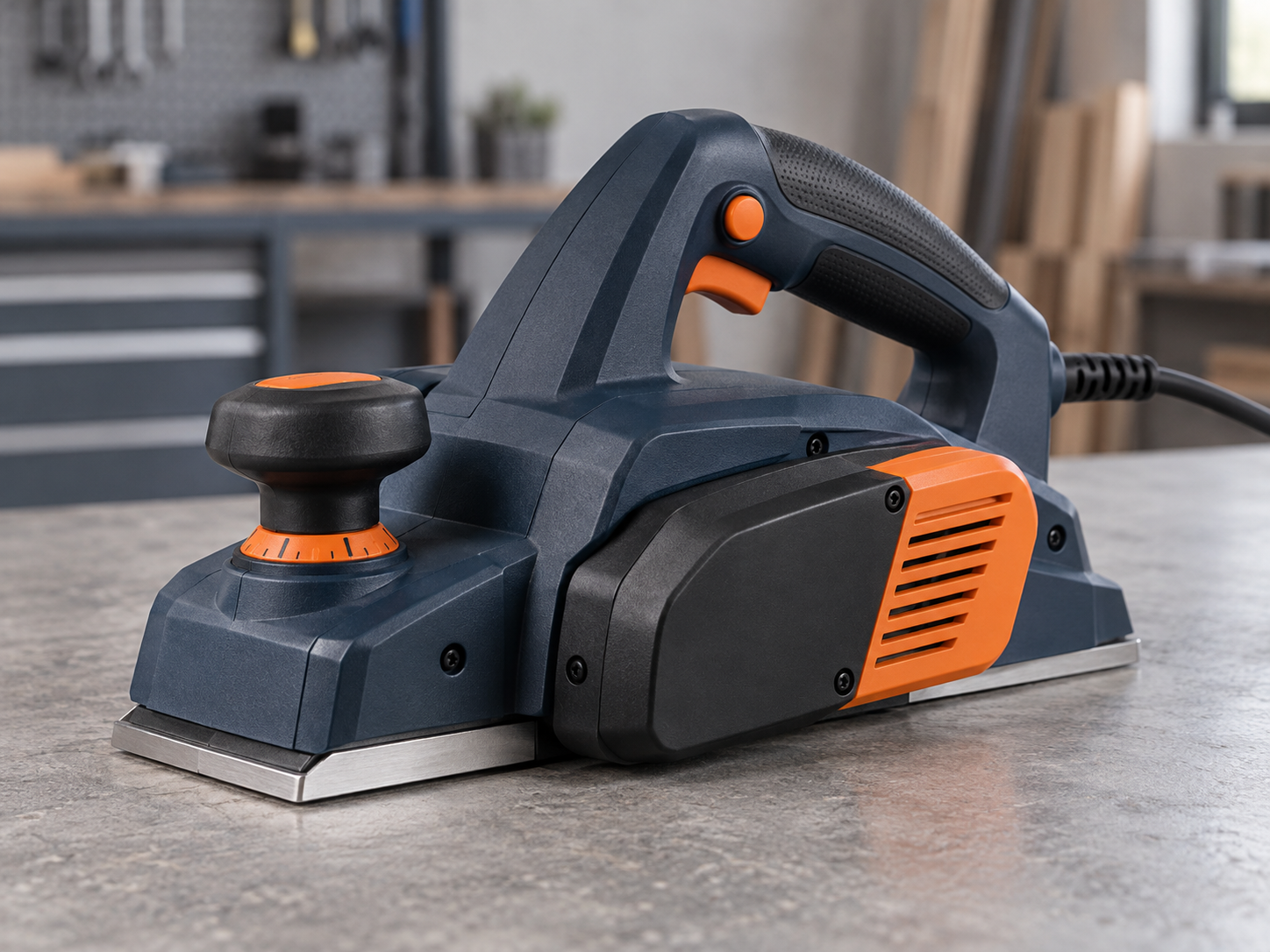
Caption: Blade identity and setting method are part of the approved planer configuration.
Decide what a replacement kit should contain
The minimum kit may be a matched pair of blades in protective packaging. Some designs may also need screws, clips, a setting guide or a specific key. Do not include hardware simply for perceived value; include what the model's service procedure actually requires. Conversely, do not omit an essential gauge and assume the customer can set blades by sight. The buyer should ask a technician to complete the exact approved change using only the manual and parts intended to be sold.
Package sharp parts securely so the blades cannot cut through their sleeve or damage other items in transit. Clearly label the correct model and blade type. If two very similar packs are sold, use distinct part numbers and avoid relying solely on colour coding. For online buyers, publish a compatibility table rather than broad tags such as “fits most 82 mm planers.”
Think about channel differences. A trade distributor may stock blades as a routine consumable, while a general hardware retailer may prefer a service kit with clearer visual instructions and a local support route. A private-label importer should decide who will answer customer questions and whether blade replacement is described as a user operation or service-centre operation for the exact model. That decision must align with the manual and market obligations.
Review the service procedure before committing to a SKU
Use an unpowered, de-energized sample and a qualified technician. Verify that the instruction booklet identifies all parts, warning steps and fastening or alignment details specific to the tool. Time the review only as an internal service planning aid, not a consumer guarantee. Note where the technician hesitates, whether a fastener is easily lost and whether the new blade can be seated consistently. Resolve ambiguity with engineering before printing the service insert.
Do not replace only one blade in a two-blade cutterhead unless the exact manufacturer's instructions allow it. An unmatched pair can affect balance and finish. Keep a record of the parts used and the result of a controlled test cut after servicing, following the tool's procedure. If the surface shows ridges, chatter or uneven width, investigate setup before declaring the replacement blade unsuitable.
The planer depth-setting test guide gives a method for observing cut behaviour after a configuration change. A replacement trial should use identified timber and a consistent pass. The goal is not to show a showroom-perfect board; it is to verify that the service kit restores the intended function under documented conditions.
Mid-article sourcing CTA: Planning an electric-planer service offer? Send the cutterhead and blade details to discuss a compatible replacement kit and support plan.
Make user information accurate and localised
The instruction sheet should show the exact model, blade orientation and service parts without borrowing diagrams from an unrelated tool. Warnings should be readable in the destination market's required language and consistent with the main manual. Avoid a QR code as the only place essential safety information appears unless the applicable rules and customer access have been properly reviewed. Printed labels and digital support can reinforce each other, but one should not contradict the other.
Use genuine product photographs or accurate technical illustrations. A generic image of a blade pair can conceal a different locating groove or fixing clip. If the kit contains a reversible blade, the instructions should explain that feature for the exact design; if it does not, avoid implying the user can flip it. The support team should have the same part number and revision information as the customer-facing page.
Where a retailer sells a complete planer and replacement blades separately, link the two pages. The ToolViron electric planer product page can act as the hub for a clear service-parts route when the exact stocked configuration is known. Do not publish a universal compatibility promise until each variant has been checked.
Control substitutions during production
Blade supplier or material changes may affect seating, edge life or finished surface even when nominal dimensions remain the same. Put blade changes under the same approval discipline as a motor or switch change. Request revised samples and test cuts before an “equivalent” blade enters production. Record which batch received which blade so later complaints can be investigated by part and lot rather than the broad product category.
Factory testing should include an assembly or inspection checkpoint for correct blade seating and a relevant functional or sample-cut check. The exact method and frequency depend on the model. A final shipment inspection should confirm installed blade identity, any spare pair promised in the carton, service kit part number, manual revision and packaging. A sharp sample with the wrong spare blades in the retail box is not an approved kit.
The ToolViron quality overview describes the broader sequence from approved configuration to shipment. Apply it here by giving the inspector a photograph and part list of the blade system. Small consumables are easy to substitute unnoticed if the acceptance record names only the planer body.
Decide how returns will be diagnosed
When a customer says the planer leaves ridges or tears timber, the service desk needs to ask about blade condition, replacement history, material and depth before deciding a motor or gearbox fault exists. The tear-out diagnostic guide and uneven-edge guide help classify symptoms. The aim is not to blame the user; it is to route the case safely and identify any recurring product or instruction problem.
Retain returned blades and the tool's model and batch identifiers when a pattern emerges. A repeated seating complaint across one production lot could indicate a component issue; isolated wear after extensive use suggests a different response. Without part-level traceability, the importer may replace entire tools when a service kit or instruction revision would be more appropriate.
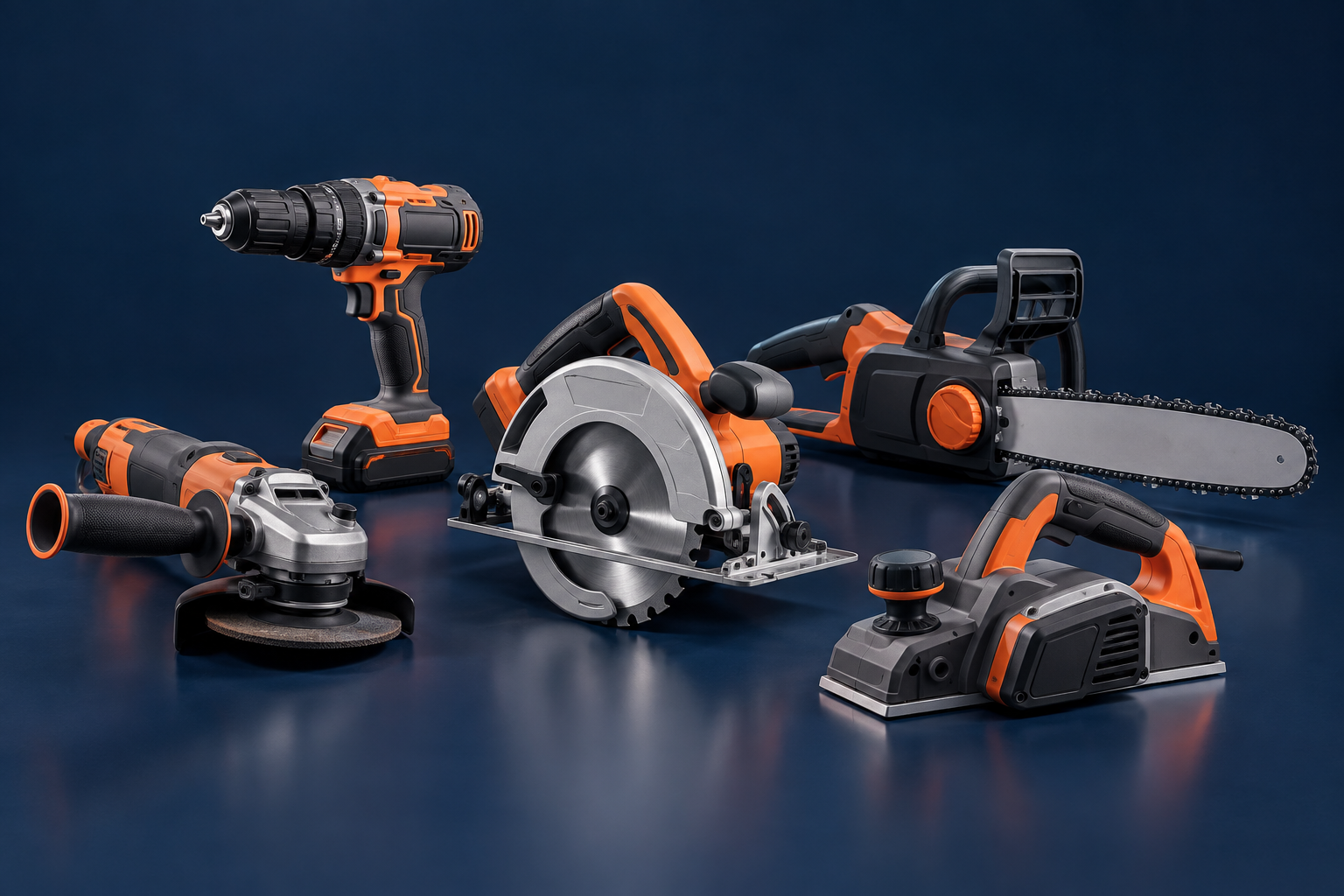
Caption: Illustrative range photography: blade and cut-quality decisions require a real sample.
A spare-parts decision before the first order
Consider an importer launching two planers that look similar but use different cutterheads. The supplier offers one low-cost replacement-blade pack for both. A buyer should test the claim on de-energized production-intent samples, not accept a catalogue cross-reference. If one design needs a locating groove or setting gauge the other lacks, a shared pack could be unusable or unsafe. It may be better to stock two clearly labelled service SKUs than one supposedly universal pack.
The sales forecast should include replacement demand and lead time, even when precise consumption rates are unknown. A blade may be a small part but a long stockout can make the entire planer range hard to support. Ask whether the manufacturer can reserve or reorder the exact blade during the model's planned selling life. If a supplier change becomes necessary, require a fit and finish review on each affected tool revision. A service consumable cannot be changed casually simply because its invoice value is low.
Set a customer identification path. The tool label and manual should show a model or revision code that maps to the correct blade kit. The product page should link from the planer to that kit and list what is included. If the retailer sells through marketplaces, put the exact model compatibility in the accessory title and images. A small photograph of a generic blade silhouette is not enough for someone choosing a sharp rotating-machine part.
The importer may decide that users should not perform blade replacement on a particular design, directing them to qualified service instead. If so, the retail page and support script should say that clearly, and the service network must actually exist. It would be misleading to market easy home replacement while supplying no setting method or local parts. The buying decision is about the entire service ecosystem, not only the initial tool cost.
A model-specific service-kit approval sheet
An approval sheet can list the planer SKU and revision, blade kit ID, blade dimensions and profile, quantity, included clips or screws, required tools, instruction revision, protective packaging and supported markets. Attach photographs of the installed and unpacked parts. Have a qualified technician sign off the physical fit and a controlled sample cut after replacement. Record any uncertainty rather than assuming a similar supplier drawing is enough.
At receiving, inspect sharp parts safely without removing all protective covers. At packing, confirm the correct blade kit is placed with the right tool where a spare is promised. At shipment inspection, sample both the tool carton and standalone service kit. A service kit can fail independently through missing components, wrong language or damage in transit. Give the inspector both approved photographs and part identifiers.
After launch, use warranty and support records to test the plan. If customers consistently buy the wrong kit, the compatibility communication is insufficient. If trained technicians struggle to seat the approved blade, the design or instruction may need revision. If finish complaints rise only after blade replacement, investigate the parts and method before attributing the pattern to motor durability. A clear service record can turn these signals into specific product improvements.
Keep service parts available after a model change
When a planer is replaced by a revised model, the importer should plan support for units already sold. A new blade kit may not fit older cutterheads, even if the retail product name stays similar. Keep an explicit old-model replacement route and tell service staff how to distinguish revisions from the tool marking. If the older blade becomes unavailable, investigate a qualified compatible alternative or a service solution before offering a generic substitute. This lifecycle planning belongs in the original supplier agreement, because replacement demand continues after the initial production run ends. A buyer should not treat consumable availability as a minor issue that can be solved by a later search for something that looks similar.
Frequently asked questions
Can blades of the same width be used in any electric planer?
No. Blade profile, thickness, locating features and setting method vary. Use the exact model's approved part number and instructions.
Should a replacement kit include one blade or a pair?
Follow the cutterhead design and manufacturer's service instructions. Many two-blade designs require matched replacement to maintain balance and cut quality, but the exact model governs the decision.
Can a customer resharpen every planer blade?
No. Some blades are designed for replacement or reversal rather than resharpening. The blade material and manufacturer's instructions determine the permitted service method.
What should the shipment inspector verify?
Confirm the installed blade system, included spare parts if promised, service-kit identifier, manual and carton claims against the approved sample and bill of materials.
Conclusion
Blade replacement is part of the planer's long-term product design. Identify the exact blade system, test the service kit with a qualified technician, publish a precise compatibility route and control substitutions through production and shipment. A well-supported replacement blade can preserve the customer's experience long after the original sample was approved.
Send your requirements
Share the planer model, blade type, channel and expected support arrangement. ToolViron can discuss compatible service parts and approval checkpoints. Send your requirements to start.
Images illustrate product and inspection topics; they are not documentary evidence of a specific ToolViron test or customer project. Confirm the exact model and market requirements before ordering.