
“Cuts per charge” looks like a simple way to compare cordless chainsaws, but the number changes with the wood, cross-section, chain sharpness, bar-and-chain setup, battery, temperature and cutting technique. A retailer that places an unexplained maximum on a product page may be comparing a thin, dry branch with a customer's much heavier firewood task. A useful runtime claim must name the test conditions and the exact retail configuration; otherwise the better customer information may be a realistic application description without a numeric promise.
This article sets out a safe purchasing framework for sample evaluation. It does not offer chainsaw-operating instructions, invent a ToolViron test result or guarantee a cut count. A qualified operator should follow the exact saw and chain manuals, site risk assessment and applicable rules. The importer should use recorded observations to decide whether the proposed kit fits its customer, then publish only claims justified by the evidence.
Translate the customer job into a test question
Identify whether the saw is for occasional pruning, preparing branches for disposal, cutting pre-supported firewood or a professional groundskeeping task. These are not the same workload. A small branch offers different resistance and handling demands from a dense log. The retailer should ask which task generates most sales and support questions, then design a test around that task. The pruning versus firewood assortment guide explains why one battery saw should not automatically be marketed for both patterns.
Write the claim question narrowly. For example: “How many cuts through a secured timber sample of the specified species and diameter can the approved saw-and-battery kit complete before the agreed stop condition?” Do not switch to a smaller sample mid-test to obtain a more attractive total. If several wood types are commercially important, run separate protocols and report each context rather than blending results into one number.
Safety and realism take precedence over volume. Prepare stable supports, an exclusion zone and appropriately trained personnel. Avoid an unsafe pile of loose logs arranged simply to speed up counting. The U.S. OSHA working safely with chainsaws guide reinforces the need to inspect equipment and follow manufacturer instructions; it is not a recipe for this article's sample test or proof of a particular model's performance.
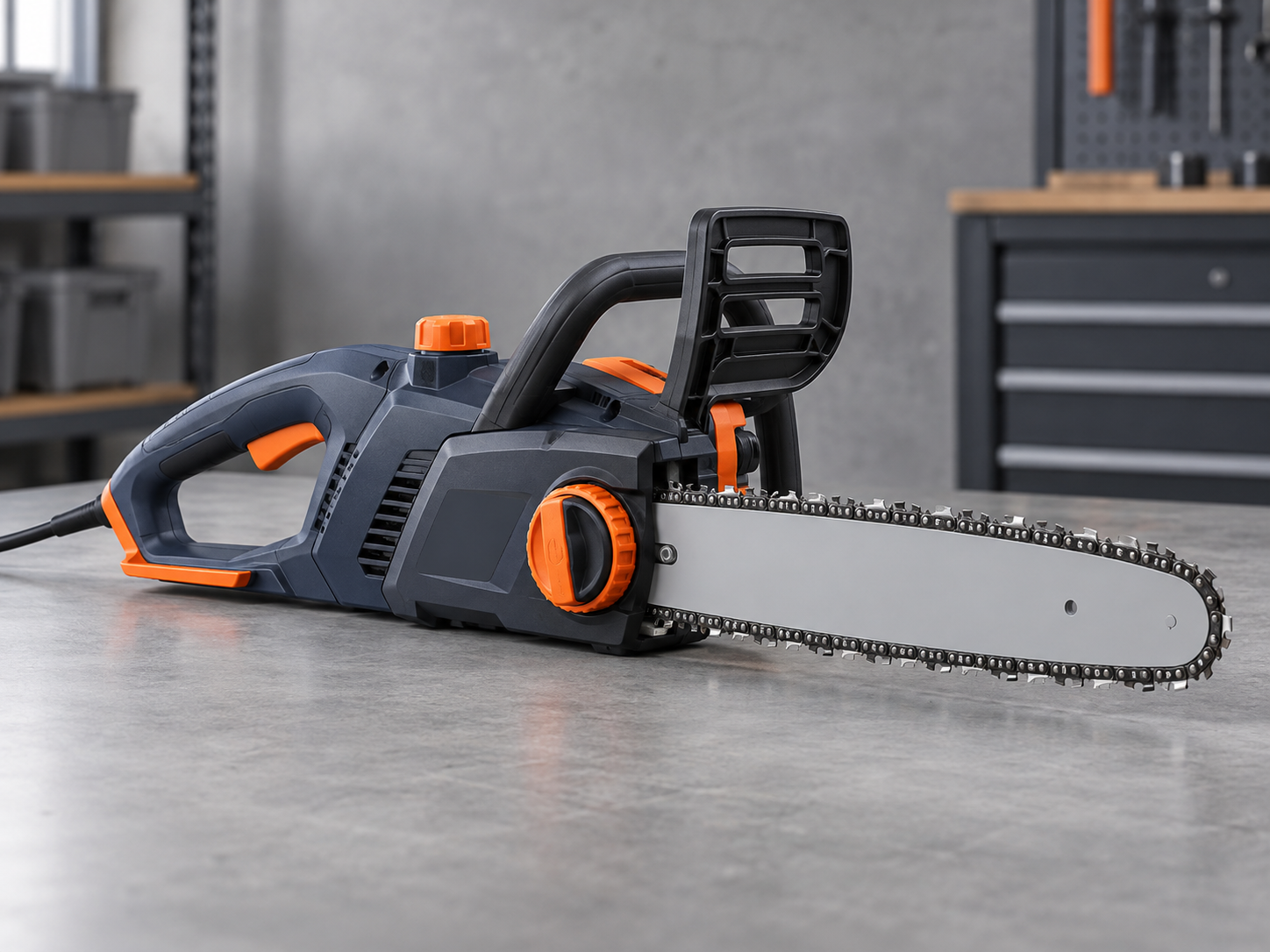
Caption: The test workpiece, chain and battery are part of any credible cuts-per-charge statement.
Fix the saw and cutting-system configuration
Record model and revision, bar length and part number, chain pitch, gauge, drive-link count, chain condition, tension setting and bar-oil arrangement. The chain's sharpness can change observed cutting effort dramatically. A comparison using a new chain on one sample and an old, poorly maintained chain on another is not fair. Use a documented preparation method and, if chains are replaced during the test series, record the replacement rule.
The saw's own controls and safety features must remain in their approved state. Do not defeat a brake, alter lubrication or change to a longer bar to make a comparison more dramatic. Any published result should describe the configuration actually sold, not a laboratory hybrid assembled from components the retailer will not supply. The bar-and-chain selection guide covers how these parts form a system.
Check the chain-oil level and the exact oil guidance before testing. A dry or incorrectly lubricated chain can change cutting behaviour and damage parts. The bar-oil guide addresses the product-information questions behind lubrication. Never hide oil refills or maintenance pauses when describing a work session.
Identify the battery and start state
Log battery model, rated capacity, batch or serial identifier, age, charging method and starting state. A “battery saw” claim without pack identification has little value: retail kits can contain different pack sizes. The charger and spare-battery arrangement also shape real customer use. A kit with one smaller pack and no spare has a different workflow from one with two matched packs, even when the saw body is identical.
Prepare packs according to their own instructions and allow appropriate conditions before the run. A cold pack or a pack already heated by an earlier sequence may not behave like a prepared test pack. Define the stop rule in advance: first protection stop, inability to complete a full cut under the protocol, or another stated condition. Do not keep resetting or bypassing protection to increase the count. Record any rest or cooling period as part of the observation.
Use multiple production-intent packs where practical. One unusually strong or weak pack should not establish a public claim. A test programme can start with screening runs and then repeat the final protocol on more than one pack. The exact repetition plan depends on the intended claim and resources, but it must be chosen before seeing the best result.
Control and record the wood samples
Specify species or at least a clearly identified material, approximate diameter or cross-section, moisture condition where relevant, support method and cut position. Wood is variable, so photograph and number the samples. A knot, branch junction or frozen section can cause an outlier; do not silently exclude it. Record why a cut was stopped or repeated. If a customer will use the saw on green branches, a dry softwood test may be a poor proxy.
The operator should be competent and use a consistent, safe technique. Rotate the test order between competing saws where possible to reduce learning and fatigue effects. Log every completed cut, elapsed task time, interruptions, chain maintenance, pack changes and observations about handling. A cut count alone can conceal frequent thermal pauses or difficult control. The buyer needs a decision about the customer's workflow, not a single large integer.
Inspect the chain and bar between runs according to the manufacturer's instructions. If a chain becomes dull, stop and record the event. Replacing it can be appropriate, but then the published method must say so. Do not stretch an accessory beyond its serviceable condition just to reach battery depletion. The trial should not create an unsafe setup or a misleading result.
Mid-article sourcing CTA: Reviewing a battery-chainsaw kit? Send the target wood, cut size, battery and market so sample testing can be discussed against a real retail application.
Analyse the outcome without turning it into a universal claim
Summarise the spread across runs, not only the maximum. Did all packs finish similar work? Were there thermal interruptions? Did chain condition change? Was one workpiece materially different? A result may show that the saw is suitable for intermittent pruning but not the proposed firewood positioning. That is valuable insight even when it reduces the number the marketing team hoped to print.
If a numeric claim is used, put the conditions near it. “Up to X cuts” still needs a tested workpiece, bar and chain, battery and method. Without evidence, choose non-numeric language describing the intended task and kit contents. An importer should also check market-specific advertising requirements with appropriate advisers before placing comparative or quantitative claims on cartons.
Avoid comparing a saw with a different bar length, chain type or pack as though only the motor changed. The test record should allow a future product manager to reconstruct the original setup. When a supplier revises the pack, chain, bar or controller, re-evaluate the claim. A photograph of the old test rig is useful, but a written configuration is essential.
Carry the test into production control and shipment
The factory does not need to repeat a long cuts-per-charge test on every unit, but it should control the components that made the approved sample perform as expected. Define checks for correct saw model, battery ID, charger, bar, chain, oil-system components, labels and instructions. Establish how a deviation is recorded and whether it requires a new sample test or a narrower copy change.
During shipment inspection, open selected retail cartons and compare them with the approved kit. A bar or chain substitution can alter work and maintenance expectations, and a battery substitution can invalidate runtime copy. Verify that carton imagery and manual match the packed components. The ToolViron quality page provides a general checkpoint structure that should be adapted to the specific saw order.
Lithium battery transport is another product-specific workstream. Confirm the exact pack and shipping configuration with the carrier and relevant professionals rather than assuming a successful cutting test says anything about freight acceptance. The battery shipping guide lists the documentation and packing questions to raise.
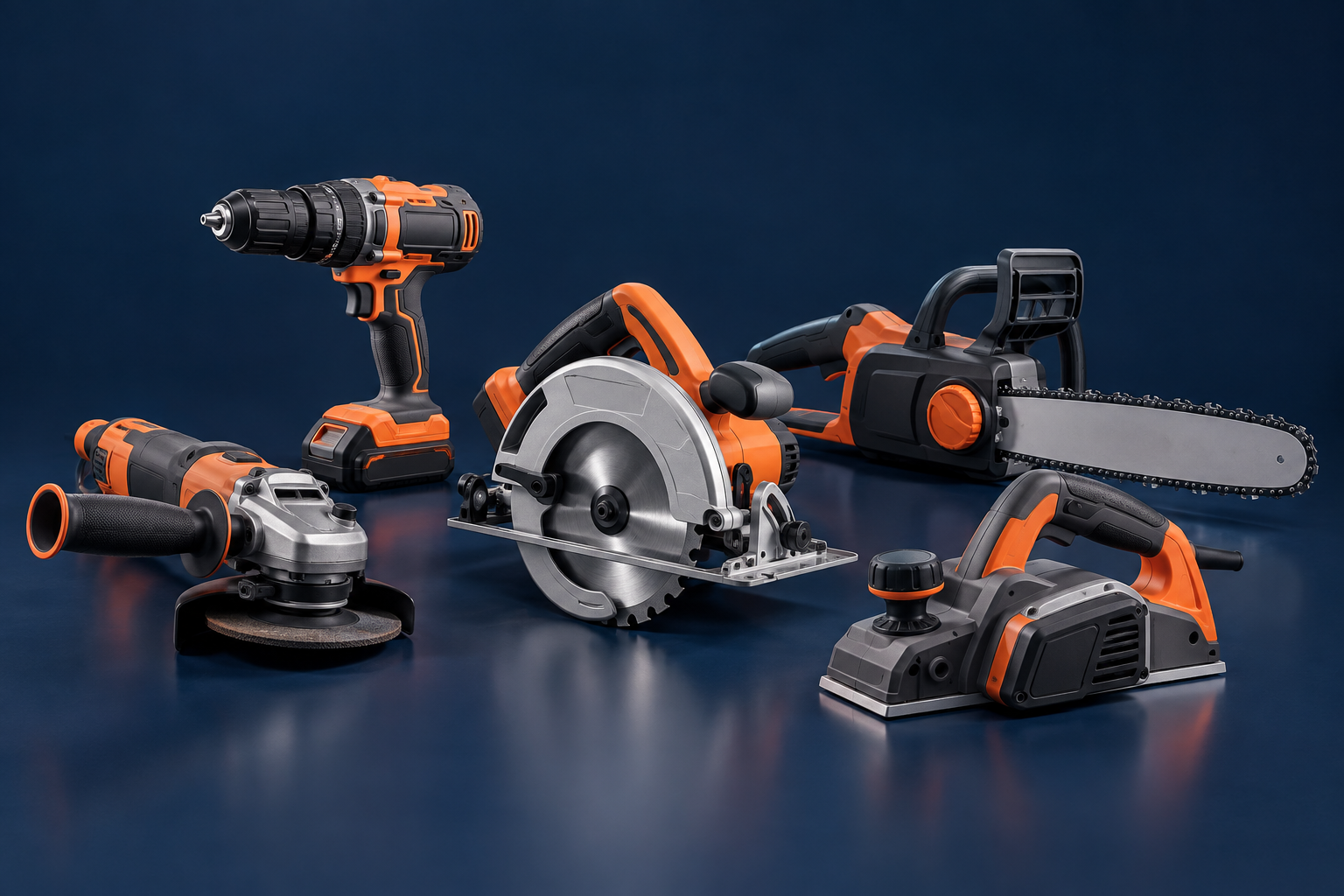
Caption: Illustrative range photography: bar, chain and power configuration must be checked on the actual SKU.
A sample claim decision with two workpieces
Suppose a retailer wants one cuts-per-charge figure for a cordless saw marketed to both pruning and firewood buyers. Its first test uses thin, dry branches and produces a large count. A second test with larger supported logs produces far fewer cuts and more pauses. Neither result is inherently wrong; they answer different customer questions. The buyer should resist choosing the higher number simply because it is more attractive on a carton. It can describe the pruning result with its conditions, describe the firewood test separately, or avoid a numeric claim altogether.
The review should ask whether the chains and batteries were comparable across the two trials. If the firewood test occurred after the chain had become dull, a repeat with a prepared chain may be justified. If the larger logs were a different species or moisture condition, state that distinction. A practical report can include the distribution of outcomes across several runs, not only an average. The spread itself may indicate that a headline number would be misleading for ordinary customers.
Now imagine the supplier proposes a higher-capacity battery for the second shipment. The original claim cannot simply remain on the box without review, even if the new pack appears likely to perform better. It may affect weight, handling, transport documentation and the conditions under which a pack stops. The importer should repeat the relevant workpiece protocol or choose a narrower statement that remains supportable. A configuration change can alter both performance and customer experience.
The sales page should explain what is in the box: tool, bar and chain, one or more batteries, charger, oil or other accessories if supplied. A “cuts per charge” statement is especially confusing when the page depicts two packs but the number was measured on one different pack. Match claim, image and kit contents. If no usable evidence is available yet, make the application and battery specification clear and defer the quantitative claim.
A buyer's test-record template
Use a table with columns for saw revision, bar and chain IDs, chain-preparation status, battery ID and capacity, charger, wood species and condition, cross-section, number of completed cuts, interruptions, rest periods and operator notes. Attach photographs of the workpiece setup and finished cuts. A separate column should record why a run ended. This lets an engineer distinguish battery depletion from thermal protection, chain damage or an unsafe condition that stopped the trial.
Do not erase outliers. If one pack underperforms, test whether it has a measurable fault or whether the workpiece was harder. The investigation can support a purchasing decision even if the marketing claim is postponed. Likewise, record oil refills and chain maintenance. A customer performing a day's work experiences those pauses; excluding them from a total-task narrative would hide a meaningful part of the workflow.
Finally, specify which production attributes must stay fixed for the claim to remain valid. A new chain supplier, bar length or electronics revision can matter as much as a battery change. The shipment inspector should compare the actual components with the test record's configuration and flag substitutions. A reliable claim is maintained through production control, not frozen forever by a single successful prototype test.
Keep the operator's safety visible in the data
A buyer should never reward a test team for a higher cut count achieved by forcing the saw, ignoring a protection stop or using unsupported logs. The test record needs a field for safe-stop reasons and an explicit right to terminate a run. A lower count under controlled, repeatable conditions is more valuable than a dramatic figure that cannot be reproduced safely. Product teams should review the photographs and operator notes before approving copy, because a number detached from the work setup can hide a poor or hazardous method.
Frequently asked questions
Can cuts per charge be compared between brands directly?
Only when the workpiece, saw-and-chain configuration, battery, conditions and stop rule are comparable and disclosed. Different marketing methods make headline figures unreliable for a purchasing decision.
Does a larger battery always double the cut count?
No. Capacity can increase available energy, but load, temperature, electronics and handling can change the outcome. Test the actual pack used in the retail kit.
Why does chain sharpness affect a runtime claim?
A dull chain can require more effort and change cutting time. Record chain preparation and replacement during a test series so the result reflects a controlled setup.
What if the saw stops before the battery appears empty?
Record the reason and follow the product instructions. Protection events, heat or mechanical issues are part of the observed workflow; do not bypass them or discard the run without explanation.
Conclusion
A trustworthy cordless-chainsaw runtime statement comes from a named job, workpiece, cutting system and battery. Test safely, repeat the method, preserve all outcomes and publish wording no broader than the evidence. If the product configuration changes, revisit both the sample result and the retail copy.
Send your requirements
Share the saw kit, target application, battery and market. ToolViron can discuss what to capture during a sourcing sample and shipment check. Send your requirements to start.
Images illustrate product and inspection topics; they are not documentary evidence of a specific ToolViron test or customer project. Confirm the exact model and market requirements before ordering.