
An electric chainsaw marketed for “garden work” may be asked to do very different jobs. Pruning involves branches, changing positions and often short intermittent cuts. Firewood preparation involves repeated cuts on supported material, a different work rhythm and often larger cross-sections. One saw can serve both in some circumstances, but that should be established for the exact configuration and user. A retailer should not use bar length or motor input alone as proof that a model is equally suited to both tasks.
The point of a two-position assortment is customer clarity. A homeowner who needs occasional branch reduction does not necessarily need the same kit as a property owner preparing a winter stack. This guide gives importers a practical route from application brief to sample test and product information, without treating chainsaws as simple lifestyle products or making unsafe task recommendations.
Separate the two tasks in the product brief
For pruning, ask what branch diameters are typical, whether cuts are made from stable ground, how often the saw is moved and what weight or reach constraints exist. Do not market an ordinary hand-held chainsaw as a substitute for a proper elevated-work method. Users should follow the manufacturer's instructions and applicable training requirements, and a buyer should not show an operator on a ladder reaching into a canopy simply because that image sells the idea of pruning.
For firewood, record log species, approximate diameter, number of cuts per session, support method, work location and access to power. Repeated cutting can expose limits that a short pruning demonstration does not. The importer should ask whether the tool and chain are designed for the stated duty, whether consumables are available and how users will maintain the bar, chain and lubrication system.
The U.S. OSHA chainsaw safety guide stresses trained use, inspection and following the saw manufacturer's instructions. That is relevant to both task categories, but it is not an endorsement of a particular product. A retail product page should convey the intended use and limits rather than offer a technique tutorial to untrained customers.
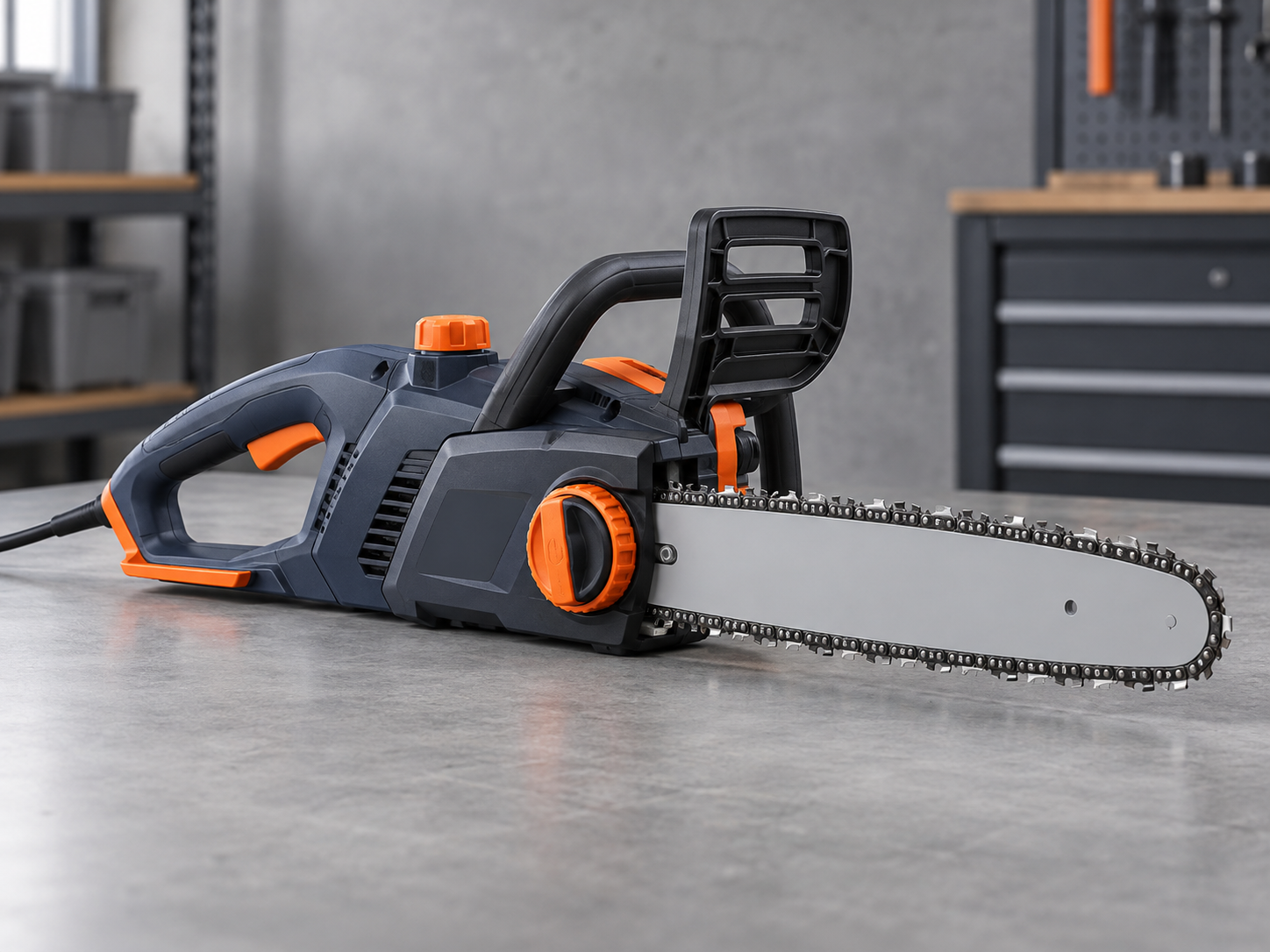
Caption: Branch and log tasks need different sample workpieces and customer information.
Choose a platform by location and duration
A corded saw can be sensible where an appropriate supply is nearby and the cable can be routed safely. It is less attractive when the customer needs to move across a large property away from power. A cordless saw provides mobility but requires battery, charger, runtime and freight planning. The corded-versus-cordless chainsaw guide explores those platform trade-offs in more detail.
Do not equate cordless automatically with pruning and corded automatically with firewood. A battery system may support some repeated cutting when correctly configured; a corded saw can also be used for certain yard tasks. The real decision depends on the exact model, material and work pattern. If the buyer wants a numeric cuts-per-charge claim, run a controlled protocol as described in the battery-chainsaw runtime guide.
Check the total kit. A pruning-oriented retail offer might prioritize straightforward handling and clear maintenance information, while a repeated-cutting offer may place more weight on power access, service consumables and replacement chains. These are examples for assortment design, not categorical prescriptions. Approve the actual saw, bar, chain, battery or cable, oil guidance and packed accessories before deciding what to print on the carton.
Treat bar and chain as part of the application
Bar length can influence reach and the material a saw can practically address, but a longer bar is not a universal performance upgrade. Chain specification, balance, motor and available power also matter. The bar-and-chain selection guide describes the dimensions a buyer should record. Do not promote a longer replacement bar unless the exact saw is designed and approved for it.
Pruning users may encounter small branches, irregular angles and frequent repositioning; firewood users may cut repeated sections from stable logs. In both cases, a correctly tensioned, lubricated and sharp chain is essential to the product experience. The chain tensioning guide and bar-oil guide cover maintenance decisions that belong in a retailer's support plan.
The importer should ask how replacement chains and bars will be identified. A consumer who buys an entry chainsaw for pruning still needs compatible parts after the initial chain wears. A product family with several nearly identical housings should not hide different chain dimensions. Put the exact chain and bar identifiers in the product data sheet and after-sales system.
Prepare two realistic sample sequences
For pruning positioning, set up a safe, ground-based test with secured branch material in the intended size range and a competent operator. Observe setup, handling, visibility, cutting and transitions between cuts. Do not simulate an unsafe elevated cut. For firewood positioning, use safely supported logs of defined species and diameter, then evaluate several repeated cuts with planned pauses and maintenance. Record the workpieces and conditions so the result can be reviewed later.
The two tests may produce different buying conclusions. A saw could handle the small-branch sequence cleanly yet be uncomfortable or slow under repeated larger-log work. Another could perform the repeated sequence well but be unnecessarily heavy or awkward for occasional pruning customers. These are application observations, not universal rankings. Write them with boundaries and avoid claiming a tool is “professional” solely because it has a larger numerical rating.
Include the whole customer setup. How long does it take to assemble or inspect the bar and chain, fill approved oil, connect power or fit the battery, and understand the brake and switch? A saw that cuts adequately but has confusing instructions may not be right for a first-time retail audience. Record questions that arise during the sample walkthrough; they often identify missing packaging or manual content.
Mid-article sourcing CTA: Building a garden-saw assortment? Send the branch or log task, power preference and destination market to discuss a suitable sample plan.
Write a product page that helps customers choose
Give each SKU a job statement rather than a generic “all-purpose chainsaw” promise. For example, a product description can state that a model is intended for the specified category of ground-level yard work, subject to the manufacturer's instructions. Another may be positioned for repeated cutting of suitably supported firewood if the sample and specifications support it. Avoid exact diameter or productivity claims unless the conditions and evidence are documented.
Use a short comparison table with intended task, power source, supplied bar and chain, battery or cord arrangement, weight with working configuration, maintenance items and replacement-part route. This helps both search users and sales staff answer the same question. It also prevents a customer from comparing only the largest bar photograph or lowest price.
Product photography should reflect safe use. Show protective equipment, supported workpieces and a guarded or appropriately configured saw. Do not stage an operator holding a branch in one hand and a running saw in the other. If the site's existing images are illustrative, say so; do not imply they document a specific ToolViron customer project or factory test.
Build after-sales support for both use cases
Pruning customers may ask how to select a compatible replacement chain, whether the chain needs sharpening and how to store the saw between seasons. Firewood customers may have more frequent chain, bar and oil questions. Classify questions by task, model and part ID so support staff can see whether one SKU is being sold into a workload beyond its intended scope.
The chain-sharpening kit guide describes an optional service offer. Do not add a file set to every box without checking that it matches the exact chain. A compatible spare chain and clear replacement information may be more useful to some channels. Service parts should be considered before the first order rather than after consumers begin requesting them.
If sales feedback reveals repeated misuse, revise the product page and retailer training promptly. Not every complaint requires a new saw design. A mismatch between a generic “garden” claim and the customer's actual task may be the root cause. Conversely, an unusual rate of mechanical issues in one batch needs a traceable product investigation, not a copy edit.
Carry the choice into production and shipment checks
Factory checks should confirm the approved saw variant, bar and chain, tensioning and lubrication-related parts, switch and brake functions, labels and instructions. Exact acceptance methods are model-specific. A pre-shipment inspection should verify that the packed product matches the application claim: correct power source, battery or cord, bar, chain, oil or accessory inclusion, manual and carton art.
Make the two SKUs visibly distinct if they share a housing. A customer receiving the wrong bar or battery kit may not notice until attempting the intended work. The product manager should preserve signed sample records and a bill of materials for each application position. The ToolViron quality page offers a general structure for aligning factory and shipment checks with the buyer's brief.
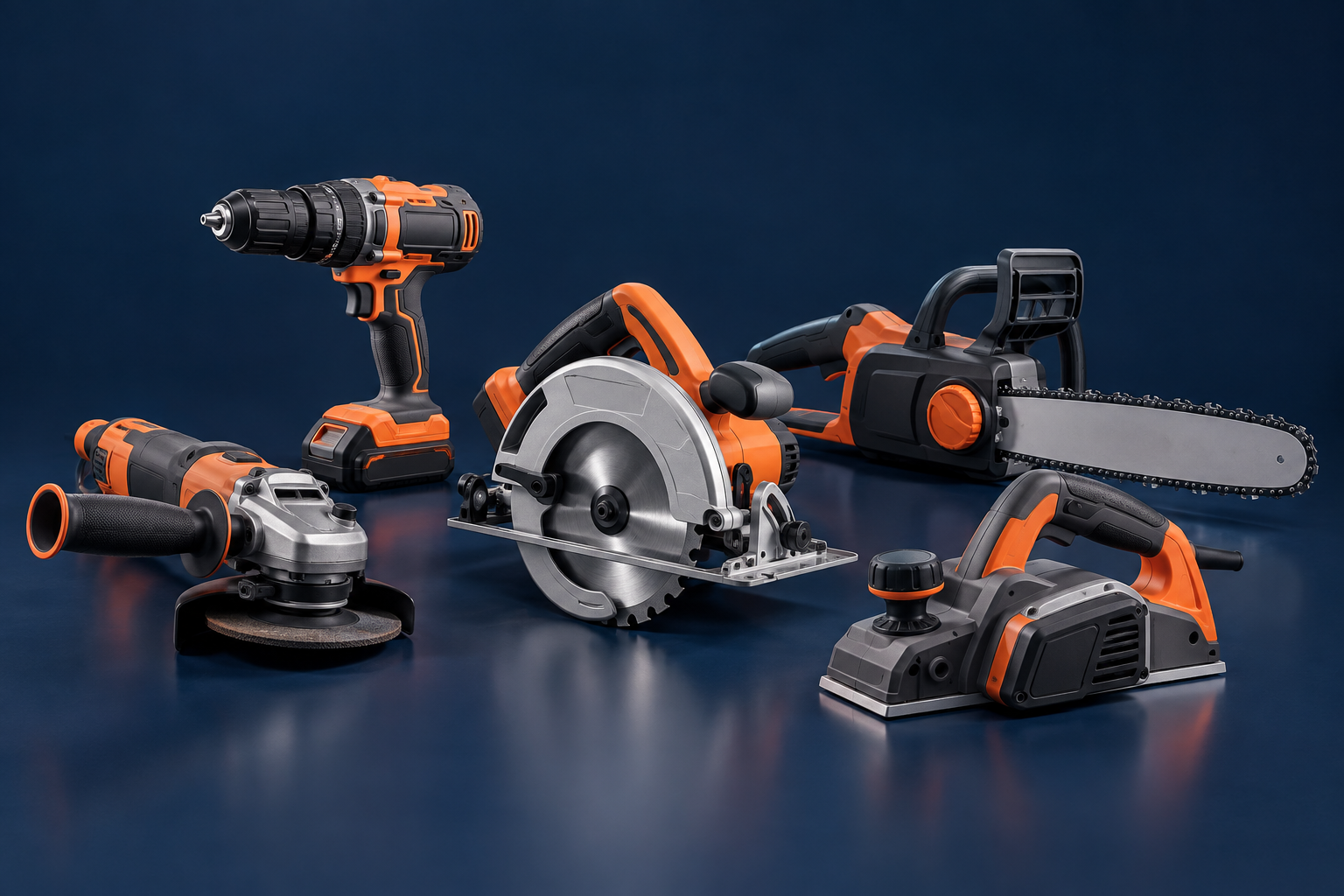
Caption: Illustrative range photography: bar, chain and power configuration must be checked on the actual SKU.
A practical two-SKU range example
Consider a retailer whose current catalogue lists two saws as “electric garden chainsaw,” differing only in bar length and price. Customer service reports show that buyers choose the shorter-bar model for firewood and the longer-bar model for occasional small branches, assuming bar length alone defines the task. The importer should interview the channel and build application briefs for both SKUs. It may discover that power source, configured weight, repeated-use comfort and replacement-part availability matter more than the simplistic length ladder.
For a pruning-oriented offer, prepare a ground-level branch task under safe control and evaluate carrying, setup, visibility and a short series of cuts. For a firewood-oriented offer, use securely supported logs and a repeated sequence, recording pauses and chain condition. The outcomes may still support selling one versatile saw, but that conclusion should arise from the actual trial. A larger bar shown in a glossy photograph is not a substitute for verifying the saw's approved bar range and the user's work pattern.
Now price each offer as a complete kit. A cordless pruning model may include one pack and charger; a corded repeated-cutting model may exclude an extension cord but require detailed setup information. A different battery count, bar cover or service-chain route can change value more than the saw-body price. Put the exact inclusions in the comparison chart and train sales staff to ask about power access and typical material before recommending a SKU.
The retailer should also define what not to claim. “Cuts any tree” is not meaningful or safe. “Suitable for all firewood” hides species and log size. “Safe for overhead pruning” can invite hazardous use. A bounded product description can state the intended category and refer users to the exact manual and local work practices. Helpful SEO content answers the customer's question without turning a marketing article into unqualified operating advice.
Support and inspection questions before launch
Ask the saw supplier for the approved bar and chain options, brake and switch design, power arrangement, oil guidance, chain-tensioning method, replacement identifiers, manual and packaging. If two SKUs share a housing but differ in chain, a generic spare-parts page is not adequate. The service team should be able to select a correct chain from the product code and explain when a saw should be referred for repair rather than further use.
The factory check plan should reflect the two distinct configurations. A swapped bar, wrong charger or mixed manual can make the application promise false even when the motor runs. At shipment inspection, open cartons from both SKUs and compare their contents, labels and images with the approved samples. If a bar or battery supplier changes, assess whether the task positioning and any performance claim remain valid.
After the first sales season, review support categories by application. Are pruning customers asking about weight and reach? Are firewood customers reporting excessive pauses or rapid chain wear? A trend can reveal poor positioning, an accessory problem or a batch-specific defect. Link each report to model and lot before acting. This feedback is the foundation for a stronger second order and more precise search content.
Frequently asked questions
Can one electric chainsaw be sold for both pruning and firewood?
Possibly, if the exact model, bar and chain, power system and instructions support the defined work patterns. Test both tasks separately and avoid implying that all branches or logs are within scope.
Does a longer bar make a saw better for firewood?
Not by itself. Motor, power supply, chain, balance and manufacturer-approved bar options matter. Do not fit an unapproved longer bar to improve a retail claim.
Is cordless always better for pruning?
No. Mobility can help, but battery runtime, weight and work location also matter. A corded saw can be viable where a suitable supply and safe cable route exist.
What should a retailer show in a comparison chart?
Show the intended task, power arrangement, working configuration, supplied bar and chain, maintenance needs and replacement parts. Use actual SKU data rather than broad category assumptions.
Conclusion
Pruning and firewood are distinct buying jobs. A distributor should define each customer task, test the proposed saw with representative material and communicate the product's limits honestly. Clear positioning, compatible maintenance parts and configuration-specific shipment checks create a stronger range than one generic “garden chainsaw” claim.
Send your requirements
Tell ToolViron the target task, customer, market, power source and desired kit contents. Send your requirements to begin a product-selection conversation.
Images illustrate product and inspection topics; they are not documentary evidence of a specific ToolViron test or customer project. Confirm the exact model and market requirements before ordering.