
A hand-held electric planer's stated maximum cutting depth is not a promise that every hardwood can be planed at that depth for an extended session. Dense wood, grain, moisture, blade sharpness and feed technique change the load. A buyer comparing two planers on a convenient softwood offcut may miss the limits that matter to a joinery customer. The useful question is whether the exact model produces an acceptable cut on the target timber at a realistic setting and work rhythm.
This guide describes a controlled purchasing trial, not a universal duty rating or evidence that ToolViron has measured a particular planer. No one should force a motor past its instructions to make a more dramatic comparison. The output should be a bounded sample decision, a truthful product description and a production configuration that can be inspected before shipment.
Define the hardwood application precisely
Name the wood species or a representative range, workpiece size, grain characteristics, intended cut depth, number of passes and target finish. “Hardwood” includes materials with very different density and working behaviour. A door-fitting contractor trimming an oak edge may need fine adjustment and good control; a workshop buyer roughing out stock may prioritize a different workflow. Both should identify whether a final sanding or hand-finishing step is expected.
Ask what the user actually removes in one pass. The depth dial's top marking may reflect a mechanical range rather than the most comfortable setting on dense material. The buyer should start with a conservative setup permitted by the manual and compare how the tool performs at realistic depths. Makita's power-planer instruction manual illustrates that model-specific guidance can call for reduced depth and slower advance under demanding conditions. Those instructions belong to Makita's model; obtain the exact proposed planer's manual for the trial.
Do not confuse motor input rating with useful cutting ability. Blade geometry, cutterhead, sole, feed and chip clearance also matter. A higher-watt tool can still leave poor finish if the blades are dull or the workpiece is unstable. A lower headline rating may be acceptable for lighter, controlled passes in the target channel. Test the configured system, not an isolated number.
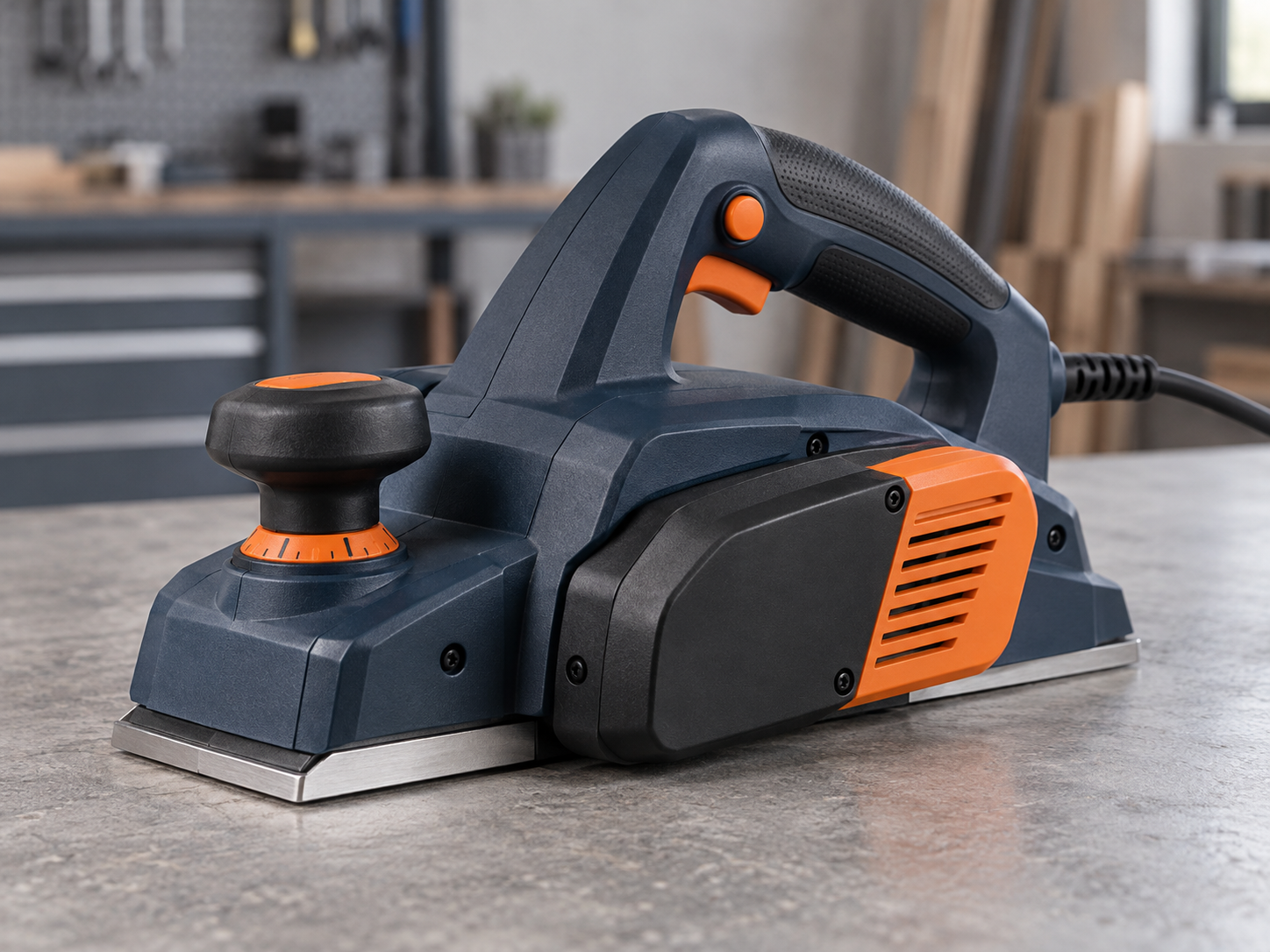
Caption: Hardwood load should be evaluated at a stated species, blade condition and pass depth.
Prepare timber and blades for a fair trial
Use identified boards with reasonably comparable grain and moisture conditions. Label each board and photograph defects or knots before cutting. Secure the workpiece properly. An unstable board changes contact with the planer and may create both poor results and unsafe handling. Record the width of cut, whether a guide is used and the board's starting profile. Avoid measuring a few random scraps as if they form a controlled sample set.
Inspect blades before each series, with power isolated and using the exact manual. A dull or chipped blade can make a planer seem weak or cause tearing. If different models ship with different blade materials, report that as part of the commercial configuration; do not quietly swap both to a premium accessory that will not be included in retail. The HSS versus carbide guide explains why blade choice can affect cost and maintenance as well as finish.
Check the chip-ejection or extraction route. Dense material at a deeper setting can produce a different chip volume and may expose a poor ejection setup. Keep the path clear according to the tool instructions; never reach into a running cutter or use an unsafe workaround. The chip-ejection guide treats this as part of the configured system.
Establish a repeatable pass protocol
Define pass length, target depth setting, number of passes, rests, operator and stop rules. The tool should be used only within its instructions and with a qualified operator. Start at a reasonable setting for the material. Record actual material removed where practical, because the dial position alone may not equal a precise cut on each board. Compare the finish, chip flow, tool control and whether the motor or protection system interrupts the work.
Do not let one operator push harder on a weaker-feeling sample until both appear to cut at the same pace. That changes the work, safety and finish. The purpose is to see how each proposed kit handles the intended job under a consistent, appropriate technique. Rotate sample order if heat or operator learning could matter. Note ambient and supply conditions where relevant, especially for cordless samples.
Record more than pass time. A fast pass that leaves severe tear-out or a tapered edge may require extra rework. A slower controlled pass that produces a usable surface can be commercially better. Use the tear-out guide and uneven-edge diagnostic to classify defects instead of calling every rough board “insufficient power.”
Mid-article sourcing CTA: Sourcing planers for joinery or hardwood work? Send the species, expected cut and finish target to scope a representative sample review.
Interpret heat and interruptions cautiously
A warm housing after use is not by itself a defect; an unusual smell, repeated protection stops or abnormal noise should prompt a controlled halt and investigation. Follow the model's operating and cool-down instructions. Do not bypass a thermal or overload function to finish a test. If the product needs frequent pauses during the customer's normal workflow, that may indicate the wrong positioning even if the tool remains within a technical limit.
Distinguish battery limitations from body limitations on cordless planers. Log pack ID and capacity, charge state and any battery protection event. A low-capacity demonstration pack may understate the performance of a production kit, while a premium pack not included in retail may overstate it. For a corded unit, verify the correct supply configuration and do not attribute a poor result to motor design until power and cable suitability have been checked.
Summarize the trial with its boundaries: “At the stated shallow setting on the identified hardwood, sample A completed the pass with acceptable finish; a deeper setting led to a less controlled cut.” This is useful for procurement without claiming a universal operating limit. Do not extrapolate from one species to all hardwoods or from one new blade set to long-term edge life.
Decide the correct range and product claim
If the buyer's customers mostly trim painted doors or softwood, an aggressive hardwood claim may be unnecessary. Position the product honestly for the work it can support. If the channel serves joiners who routinely plane dense timber, consider the blade system, extraction, support, service parts and possibly a different product class. The best commercial decision can be to decline an overbroad claim rather than increase the unit price to chase an application the channel rarely needs.
Product pages should explain the intended material and practical setup in plain terms, with any numeric performance claim tied to its test method. Avoid “planes any hardwood effortlessly.” It implies more than a controlled sample can prove and may lead users to take deeper passes than the tool instructions support. If a maximum depth is published, make clear that the effective pass depends on material and blade condition.
Replacement blade supply matters to the real customer experience. A product that cuts well on day one but has no readily identifiable blades later is a weak wholesale offer. The blade replacement kit guide sets out the parts and instructions to approve before launch.
Build factory and shipment checks around the approved setup
Control the motor, blade, cutterhead, sole, adjustment mechanism and chip path that were present in the chosen sample. A blade or electronics change could alter the hardwood observation. Define which assembly and function checks are performed in production, and whether a representative cut test is required for the lot or revision. If so, use identified timber and acceptance criteria rather than an informal demonstration board.
Pre-shipment inspection confirms the packed tool's blade type, accessories, labels, manual and carton claims against the approved configuration. A reseller may later use the article to guide customers, so the actual shipped model must match the discussion. The ToolViron quality overview can support an agreed inspection sheet, but acceptance methods must be set for the exact model.
The general IEC 62841-1 safety scope is background for electric hand-held tools; it does not validate a particular hardwood performance claim. Applicable product-specific standards and destination-market duties should be reviewed separately by qualified personnel.
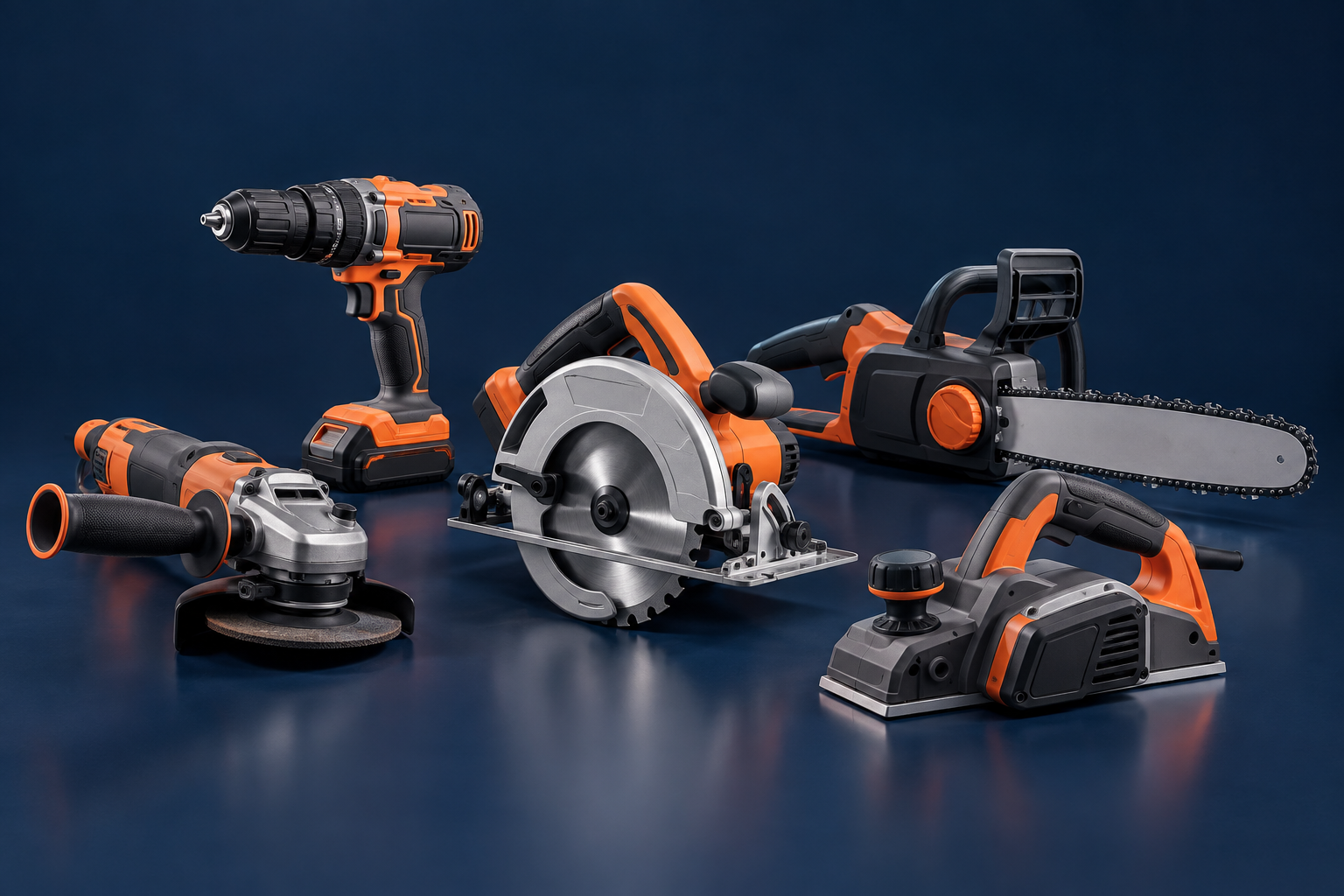
Caption: Illustrative range photography: blade and cut-quality decisions require a real sample.
A realistic range-positioning exercise
Suppose a wholesaler wants to market a compact planer as “hardwood ready” because it made one attractive pass on a small oak sample. A disciplined buyer asks what the customer's normal job looks like: repeated door-edge trimming, short joinery corrections or substantial stock removal? The team prepares labelled boards of the relevant species and length, then runs a series of shallow passes under the tool's instructions. It records finish, tool control, interruptions and time spent clearing chips. The single showroom board becomes one data point rather than the whole evidence base.
If the tool performs well on short trim work but requires frequent pauses during sustained removal, that result can still support a valuable product position. The buyer might describe it for installation adjustments rather than heavy workshop surfacing. If the channel truly needs long, repeated passes in dense timber, it may require a different planer or workflow. The goal is to select honestly, not to force an entry tool into a job because the category page uses the word “hardwood.”
Compare cutting-system options carefully. A sharp replacement blade may improve the finish, but the production kit and landed cost must then include or support that blade. A shallow pass may take longer while producing a better surface; a deeper pass may look efficient but create tear-out and rework. Record the entire task result, including finishing still required. A short time-to-first-chip metric does not tell the buyer whether the customer can complete the job acceptably.
If a supplier proposes changing the motor or electronics after a weak trial, keep the rest of the setup fixed for a fair repeat. If several elements change, the buyer may have a better product but no knowledge of which change mattered. Preserve both test sheets and approve the new configuration explicitly. The same principle applies to a new battery or charger on a cordless planer.
Sample report and shipment-control fields
The sample report should name the wood species, board ID, grain direction, moisture context, blade type and age, depth setting, measured removal, number of passes, operator, rest periods and visible finish. Attach images under consistent light. If a motor or battery protection event occurs, record the operating context and safe stop; do not delete the run. A reviewer can then tell whether the problem was a material outlier, accessory wear, application mismatch or product concern.
For the purchase order, list the exact blade and cutterhead revision that supported the decision. Ask how the factory checks blade seating and depth control in production. If a representative cut test is used, confirm that the test material and acceptance criteria are realistic and available. A factory demonstration on an easy softwood board cannot by itself validate a hardwood positioning approved on a different sample.
At shipment inspection, verify the packed blade, manual, depth-control information and accessories. A mismatch between a sample approved with a particular blade and goods shipped with a cheaper substitute should be treated as a technical change, not a cosmetic difference. This protects the importer from making a claim based on a configuration customers will never receive.
Separate screening from a public performance claim
A quick hardwood pass can help reject an unsuitable sample, but a public claim needs a defined and repeated method. The buyer should mark screening observations as internal and avoid copying an unusually good result into a carton headline. If several boards produce mixed outcomes, report the variation and investigate grain, moisture and blade state. A narrow statement about a specified application may still be useful; it does not need to become a universal assertion that the planer handles every hardwood at its maximum setting.
Frequently asked questions
Does the maximum depth dial setting apply to every hardwood?
No. The useful cutting depth depends on the exact tool, blades, wood and work rhythm. Test realistic shallow passes first and follow the manufacturer's instructions.
Is a higher wattage planer always better for dense wood?
No. Blade condition, cutterhead, sole, chip clearance and handling affect the result. Compare complete models on representative timber.
Should a buyer test on one board?
One board can screen a sample but is weak support for a broad claim. Repeat on identified boards with recorded grain and conditions, and preserve all outcomes.
What if the tool stops during a load trial?
Stop and follow its instructions. Record whether the event was a battery, thermal, electrical or other interruption; do not bypass protection or erase the run from the report.
Conclusion
A fair hardwood evaluation defines the timber, blades, pass depth and target finish before comparing planers. The buyer should observe controlled work, record interruptions and select a product for the channel's genuine use case. That produces a defensible claim and gives production inspectors a clear configuration to verify.
Send your requirements
Share the target hardwood, workpiece, blade preference and market. ToolViron can discuss a planer sample and inspection plan. Send your requirements to begin.
Images illustrate product and inspection topics; they are not documentary evidence of a specific ToolViron test or customer project. Confirm the exact model and market requirements before ordering.